

themeistersinger
Footballguy
Why Ukraine’s counteroffensive is the toughest path to victory
The nascent Ukrainian campaign is under way. A key goal will be to persuade Russian President Vladimir Putin that this is a war he cannot win.

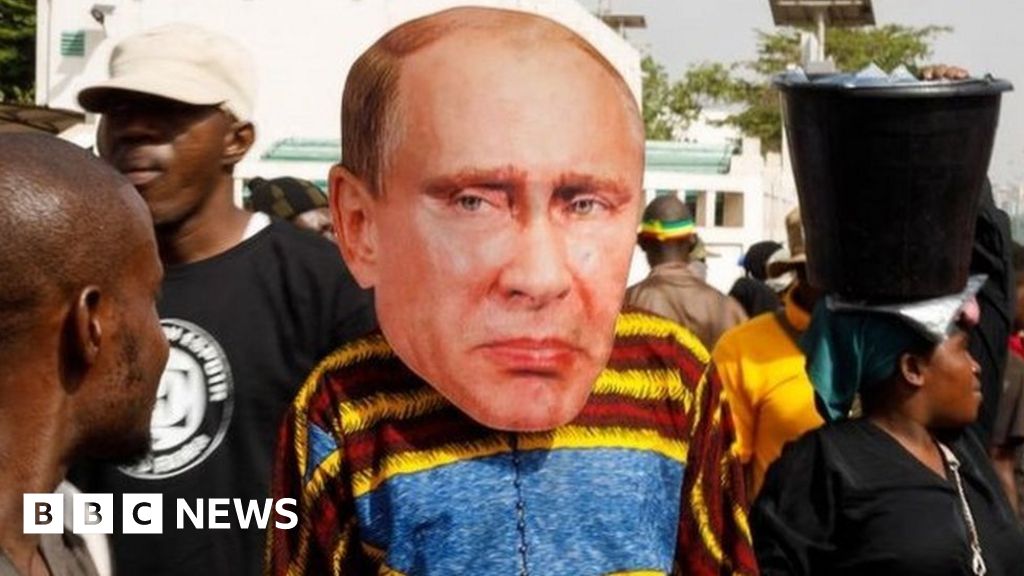
Early in the war around social media, I noticed a high amount of Africans commenting in general about how the West was lying and full of propaganda in reporting the Russian failures. That the Russians were winning etc. To the point that I wondered if the Russians had for some reason generated a ton of bots made to look like they were Africans. After some time, those simply seemed to disappear as the laughable positions were just untenable. It seems that some of the reason for this may originate from the Cold War.Zelensky calls out the African delegation publicly, and to their face.
Watching these peacocking Putin puppets shift uneasily as he speaks is pretty awesome.
 www.wsj.com
Ukraine destroyed a major Russian ammunition depot in an occupied part of the country’s south on Sunday, as it launches fresh advances along the southern and eastern parts of the front line in a bid to break through strong Russian defenses.
The Ukrainian Air Force said explosions at the facility in Rykove village—deep in Russian-held territory and just north of the Crimean Peninsula seized by Russia in 2014—were the result of a successful attack.
“The less ammunition there, and the more fire and the more detonations of enemy depots, the less of this will hit our defenders,” Air Force spokesman Yuriy Ihnat said in a TV interview.
More decisive, close-in attacks are a significant change in aviation tactics compared to previous months, when attack helicopters mostly fired afar, avoiding Ukrainian front line air defenses, said Pavel Aksenov, a Russian military reporter and expert with the BBC’s Russian service.
Moscow in recent months appeared to tighten its command structure and discipline, which seemed to be in chaos for much of last year. Since fall, Valery Gerasimov, chief of the general staff, has led the overall war effort and offensive operations to little success. But his subordinates — Gen. Sergei Surovikin and Col. Gen. Mikhail Teplinsky — appear to have patched up some initial flaws and managed to boost morale in some key forces, like the airborne troops.
Analysts interviewed by The Washington Post said it’s too early to make any predictions about the outcome of the counteroffensive as the Ukrainian army is still facing its main test: breaking through to Russian lines and persevering in large-scale infantry fighting.
“There’s a theory that if Ukrainian forces come into contact with actual Russian soldiers, they’ll have another Kharkiv-like collapse,” Massicot said. “Russia doesn’t want to take that bet. So their goal is to keep them as far away as possible with mines and artillery strikes.”
Wagner Group financier Yevgeny Prigozhin continued to signal his disinterest in formally subordinating the Wagner private military company (PMC) to the Russian Ministry of Defense (MoD). Prigozhin sarcastically criticized the MoD’s formalization efforts on June 17 after previously portraying himself as compliant with the Russian MoD’s order for volunteer formations to sign formal contracts by July 1 and claimed he attempted to submit a contract to formalize Wagner under the Russian MoD.[19] Prigozhin implied that the Russian MoD will confiscate weapons that volunteer units obtained outside of the Russian MoD’s weapon deliveries and noted that inexperienced Russian commanders with higher military education will replace what he claimed are more combat-effective volunteer commanders.[20] Prigozhin added that formalization will destroy hierarchies within volunteer formations and force volunteers to serve in the military without the Russian MoD respecting military contract deadlines. Prigozhin noted that the Russian MoD will not provide sufficient supplies or weapons for volunteers and will mistreat irregular forces. Prigozhin did not discuss the contents of his claimed formalization contract with the Russian MoD on June 17, but a Wagner-affiliated milblogger suggested that Prigozhin demanded a series of powers and concessions from the Russian military command discussed in the force generation section of this update.[21] Prigozhin’s behavior indicates that he is unlikely to subordinate Wagner forces to the Russian MoD unless such a move would grant him more political power within Russia.

 www.thetimes.co.uk
In private, Ukrainian officials admit that their armed forces do not have the capacity to restore Kyiv’s sovereignty across all its occupied land. The Russian military has used the winter months to dig in across the entire frontline. The impact of such powerful weapons as Britain’s Storm Shadow cruise missiles remains unknown.
Instead of liberating the entire swathe of territory in Russian hands, the Ukrainian military will probably attempt to weaken its opponent’s strategic grip over the occupied areas as much as possible with the aim of provoking a crisis in Moscow itself. “The more pain Ukraine is able to inflict on the Russian military,” one western diplomat argued, the higher the likelihood of a political meltdown in the Kremlin and a weakening of Putin’s power. Or so the theory goes.”
 www.thetimes.co.uk
The movements suggest Ukraine’s eventual aim is to punch south through occupied Zaporizhzhia to reach the Sea of Azov near Melitopol and Berdyansk and cut off Russia’s land corridor to Crimea, though this could yet prove to be a feint to disguise an attack further east, towards the port of Mariupol.
This “route one” scenario would require taking the heavily defended city of Tokmak, a key Russian supply node, Clarke predicted.
“This is a test case of Russia’s layered defences,” he added, referring to the 25km band of minefields, concrete “dragon’s teeth” barricades, fortified positions, ditches and razor wire that Russian forces have built along its side of the front, barring the way to the sea.
“So we’ll find out how well the Ukrainians use the temporary bridges and bulldozers we’ve provided them to get across. And we’ll also see if their rockets are enough to knock out the covering Russian artillery fire. Because this is where they’ll feel their lack of aircraft to attack those, the close air support which F-16s would do very well [if the West supplied them].”
But Dr Jack Watling, a senior research fellow at the Royal United Services Institute, said in a briefing that the offensive was “some way from its decisive phase”.
Ukrainian troops had “broken through initial fighting positions along a broad part of the front, but remain some distance from Russia’s main defence line”, he said. Both sides were now engaged in “an intense counterbattery duel … trying to strike each other’s logistics, command and control, reconnaissance and artillery systems”.
(3/3) In the south, Russian forces often conduct relatively effective defensive operations. Both sides are suffering high casualties, with Russian losses likely the highest since the peak of the battle for Bakhmut in March.

Ukraine has taken back a village near the front line in the southern Zaporizhzhia region, the leader of the Russian-installed administration there said Sunday.
Ukrainian forces claimed the village of Piatykhatky — located south of Zaporizhzhia city, just east of the Dnipro River — according to Vladimir Rogov, a member of the Russia-backed government body in the occupied region.
“Our artillery continues to strike the enemy infantry, who have entrenched in the village," WarGonzo, a Russian pro-Kremlin military blog, said of the situation in Piatykhatky on Sunday.
“Reports from the ground indicate that the Ukrainian Armed Forces have concentrated significant reserves on the approaches to Piatykhatky. Those are mainly infantry, but heavy armored vehicles have also been spotted," the blogger said in a post on Telegram.

 www.telegraph.co.uk
The Kremlin has doubled its wine allowance for Russian officials to alleviate the stress of Ukraine’s counter-offensive.
Sources told the exiled Verstka news website that Russian government officials have taken to sipping cognac throughout the day and turning up to meetings drunk and morose.
Verstka quoted one of the sources as saying: “Not everyone used to start their day with a glass of vodka but now I know many more people who do. For some, a glass has turned into a bottle.”
Other than enjoying German beer when he was stationed in Dresden as a Soviet spy in the 1980s, Vladimir Putin is not known as a drinker.
Verstka’s sources confirmed that he has not hit the bottle to cope with the disappointment of his invasion of Ukraine, but many of his senior lieutenants have.
 www.telegraph.co.uk
Russia sends weapons and troops to Zaporizhizhia
Russia is reportedly sending weapons and troops from Kherson to the southeastern Zaporizhzhia front after Ukraine claimed to have recaptured its first village in the region on Sunday.
Ivan Fedorov, an exiled mayor of Melitopol, said residents in Melitopol, a city in Zaporizhzhia, have witnessed military personnel and equipment arriving from the directions of Nova Kakhovka and Kakhovka in occupied territories of Kherson.
The Telegraph has not been able to verify the claims.

 news.sky.com
"Just before the Ukrainian counteroffensive there was this idea that Wagner was the only really capable military unit on the Russian side," said Andrei Soldatov, a Russian journalist and expert on the country's security services.
"Now we see Wagner is not playing a really big role in the counteroffensive, the Russian army is getting more prominent and people aren't talking about Prigozhin as much as we did just a month ago."
Divide and rule is the Russian president's modus operandi.
Play Prigozhin off against Ramzan Kadyrov, the Chechen leader (who has signed the army contract); play Prigozhin off against the Russian Ministry of Defence to make sure no one gets ideas too big for their station.
But Prigozhin has been extremely careful, barring one possible slip which he was quick to correct, not to criticise the Russian president directly.
"He is a product of the Kremlin," said Andrei Kolesnikov of the Carnegie Russia Eurasia Centre.
"He can be against part of the elite but at the same time, if he were against Putin, he would disappear overnight."
Disappear not in the sense of assassination, more an assimilation into the bureaucracy that Prigozhin loves to hate.
"This is a kind of 'meet the people' for Prigozhin, should the political technologists in the Kremlin decide that it's worth having him as head of an ultra-patriotic political party," said Mark Galeotti, security analyst and director of Mayak Intelligence.
"He realises that his role in charge of Wagner, or at least Wagner in Ukraine, is beginning to come to an end, that Shoigu is not going to let him continue as before."
Shoigu is clearly more wily than Prigozhin gives him credit for.
The ball is now in his court.
What is noticeable is how small a role the commander-in-chief has been playing in all the back-and-forth between Wagner and the defence ministry, wary of destabilising things with the Ukrainian counteroffensive underway.
If Prigozhin is the kid screaming in the playground, (a very dangerous one at that), then Putin is the rabbit caught in the headlights.
"Putin at the moment has been doing everything he can to avoid making tough decisions," said Mr Galeotti.
"To actually deal with Prigozhin would be a tough decision and when he's faced with a tough decision, Putin tries to duck it.
"He hopes it'll go away and then eventually, if he has to make it, he tends to make it badly and late."
Big Ukrainian channel Nikolaevsky Vanek says the military stockpile that went up in the air today in Rykove, South Kherson, was fully loaded with ammo and has been used to supply the Russian Zaporizhzhia group. It's been used for months and was guarded by special forces including Akhmat. He says at least 52 died as a result of the explosions and fire that took place over 6 hours.
Ukrainian President Volodymyr Zelensky says the toughest fighting is taking place on Ukraine’s southern front, and he praised Kyiv's forces for holding off Russian assaults in the east.
Zelensky made the comments in his daily address Sunday, saying Ukrainian troops are “advancing, position by position, step by step” and “are moving forward.”
The opening stages of Kyiv's counteroffensive have been marked by probing attacks — seemingly testing the Russian lines of defense — and modest gains, but no apparent major breakthroughs.
Russian troops "continue to focus their main efforts on the Lyman, Bakhmut, Avdiivka and Marinka directions," the Ukrainian military's General Staff said Sunday, referring to a series of eastern Ukrainian frontline cities stretching from north to south. "Heavy fighting continues."
Zelensky said that not a single US Patriot air defense system has been destroyed in Ukraine, and that nearly three dozen missiles and about 50 attack drones were destroyed over the past week. He also said the Ukrainian Air Force carried out more than 100 strikes on enemy positions over the past week.
 www.businessinsider.com
Girkin predicts Russia will lose the war without radical changes to its strategy. He says Russia is still lacking the definition of its goal in the war. Nothing particularly new here as Girkin has been parroting about this for months now, but the FSB he is representing is clearly still not happy with how things are going.

First VBIED in the Ukraine War. Over the course of 18 months, Russia has gone from what people saw as the 3rd most powerful military in the world to copying the tactics of ISIS.
#Ukraine The Russian Army sent a T-54/55 VBIED filled with 6 tonnes of TNT at AFU lines near Marinka, Donetsk Oblast.The attempt failed as the remotely-controlled bomb ran into a mine 100m from the front line, and was then hit by a Ukrainian RPG shot, causing a huge explosion.
 www.thetimes.co.uk

 english.nv.ua


 www.thedrive.com

 read.bradyafrick.com

Ukraine has paid contractors hundreds of millions of dollars for weapons that have not been delivered, and some of the much-publicized arms donated by its allies have been so decrepit that they were deemed fit only to be cannibalized for spare parts.
Ukrainian government documents show that as of the end of last year, Kyiv had paid arms suppliers more than $800 million since the Russian invasion in February 2022 for contracts that went completely or partly unfulfilled.
Two people involved in Ukraine’s arms purchasing said that some of the missing weapons had eventually been delivered, and that in other cases brokers had refunded the money. But as of early this spring, hundreds of millions of dollars had been paid — including to state-owned companies — for arms never materialized, one of these people said.
As much of 30 percent of Kyiv’s arsenal is under repair at any given time — a high rate, defense experts said, for a military that needs every weapon it can get for its developing counteroffensive.

 www.politico.eu
Filings obtained by POLITICO indicate that Promtekhnologiya and another Russian firm called Tetis have acquired hundreds of thousands of rounds made by Hornady, a U.S. company that trademarks its wares as “Accurate. Deadly. Dependable.” Hornady, founded in 1949, sums up its philosophy with the phrase: “Ten bullets through one hole.”
The findings add to a growing body of evidence that supplies of lethal and nonlethal military equipment are still reaching Russia despite the West’s imposition of unprecedented sanctions in response to President Vladimir Putin’s invasion of Ukraine last year. The exigencies of war have exposed Russia’s lack of capacity to manufacture high-end sniper rounds, say defense experts, and that is fueling a flourishing black market for Western ammunition.
@Don't Toews Me how many paywall subs do you have?
www.wsj.com
Lacking a robust air force, Kyiv’s troops are attempting a feat few modern militaries would dare: dislodge Russian troops that have spent months digging themselves in and readying for Ukraine’s long telegraphed onslaught.
Ukrainians’ early setbacks are a sign that their offensive will be a long, deadly grind, and not a repeat of their rout of Russian troops in the northeast region of Kharkiv late last summer.
“It was always going to be difficult,” said Rob Lee, a senior fellow at the Foreign Policy Research Institute. Russian forces “have been preparing for a long time. They learned from their mistakes in Kharkiv.”
The fight unfolding now, a slugfest on the battlefield, is more fundamentally a battle of readiness. Both sides since the middle of last year have been mustering weapons, troops and defensive positions for what they knew would be a pivotal moment.
Ukrainian attackers can succeed in breaking through Russian lines only if they first wear out its forces, said Phillips O’Brien, a professor of strategic studies at the University of St. Andrews in Scotland. “Because they don’t have the air supremacy, they can’t blast their way through, protecting their armored spearheads,” he said. “It’s a very brutal phase.”
“The Russian side in Bakhmut looks very, very tired, if not exhausted,” said a senior NATO official.
Still, any edge Ukraine gains against Russian defenders in terms of human factors, such as exhaustion or motivation, can be offset by Russian strengths in physical defenses, air power or other tools such as electronic-warfare gear, where Moscow is strong, say Western officials. And land mines may prove particularly effective for Russia.
Russia’s land mines are lethal precisely because they require no human intervention, so remain regardless of local circumstances or troop morale. They are difficult to detect and compel attacking troops to slow to a crawl, leaving soldiers and equipment exposed to attack. Many of Russia’s mines pack more explosive force than Ukraine and its allies had expected, meaning they do more damage than predicted.
“You need pretty detailed intelligence to know where every minefield is,” said the senior NATO official. “It’s not that hard to go out and lay a minefield.”
Ultimately the coming battles will boil down to which side’s preparations prevail, say strategists. Mark Cancian, a senior adviser at the Center for Strategic and International Studies in Washington, compared the current situation to the World War II Battle of Kursk, a Russian city near eastern Ukraine. In the spring of 1943, attacking Nazis and defending Soviets knew they would square off somewhere in the region and both sides prepared.
Ukrainian forces continued counteroffensive actions on at least four sectors of the front on June 18 and made limited territorial gains. Geolocated footage suggests that Ukrainian forces made limited advances within 30km south of Kreminna.[1]Avdiivka City Military Administration Head Vitaliy Barabash reported that Ukrainian forces advanced more than a kilometer north of Avdiivka on the Donetsk City frontline over the past two weeks.[2] Russian sources claimed that Ukrainian forces conducted counteroffensive operations south, southwest, and southeast of Velyka Novosilka on the administrative border between western Donetsk and eastern Zaporizhia oblasts and made some localized advances.[3] Ukrainian forces continued counteroffensive operations in western Zaporizhia Oblast, and geolocated footage suggests that Ukrainian forces entered the western part of Pyatykhatky (41km southeast of Zaporizhzhia City), southwest of Orikhiv.[4] Ukrainian Tavrisk Group of Forces Spokesperson Captain Valeriy Shershen stated that Russian forces continue to counterattack in western Donetsk and Zaporizhia oblasts, and that Ukrainian forces have “a lot of work.”[5] Ukrainian Melitopol Mayor Ivan Fedorov reported that Russian forces continue to transfer personnel and heavy military equipment from around Nova Kakhovka and Kakhovka in eastern Kherson Oblast to the Zaporizhia Oblast frontline via Melitopol.[6]
Ukrainian forces may be temporarily pausing counteroffensive operations to reevaluate their tactics for future operations. Head of the Estonian Defense Forces Intelligence Center Colonel Margo Grosberg stated on June 16 that he assesses "we won't see an offensive over the next seven days.”[7]The Wall Street Journal similarly reported on June 17 that Ukrainian forces “have mostly paused their advances in recent days” as Ukrainian command reexamines tactics.[8] These reports are consistent with ISW’s recent observations of the scale and approach of localized Ukrainian counterattacks in southern and eastern Ukraine.[9] ISW has previously noted that Ukraine has not yet committed the majority of its available forces to counteroffensive operations and has not yet launched its main effort.[10] Operational pauses are a common feature of major offensive undertakings, and this pause does not signify the end of Ukraine’s counteroffensive.

Moscow is "highly likely" to have started relocating parts of its Dnipro Group of Forces (DGF) from the eastern bank of the Dnipro River to reinforce the Zaporizhzhia and Bakhmut sectors, according to the Ministry of Defence.
The latest update adds that "this potentially involves several thousand troops from the 49th Army, including its 34th Separate Motorised Brigade, as well as Airborne Forces (VDV) and Naval Infantry units".
The redeployment of the DGF, which the ministry believes has taken place over the last 10 days, likely reflects the Kremlin's perception that Ukraine launching a major attack across the Dnipro is now less likely following the flooding that ensued after the Kakhovka Dam collapsed, the update concluded.
For guesses about why Prigozhin is allowed so much leeway in Russia, @istories_media journalists spoke to former intelligence officers, a person close to the Defense Ministry, and a business owner close to Putin’s inner circle. Eng-lang translation here:

Totally awesome.Good news from Russia.... Ukraine is nearly demilitarized because the weapons they are fighting with are not the Soviet era crap that had at the start of the invasion but more modern, capable and effective Western supplied weapons.
MSN
www.msn.com
yeap, which is why part of our next support package includes stingers. should have foreseen this.It seems that the hardest thing for the Ukrainians right now preventing a breakthrough is as they push forward, they stress the anti-air umbrella they have and become vulnerable to Russian airpower which still have a massive advantage and is able to fly within it's own anti-air umbrella.


“I personally saw how, during our assault, the enemy [fighter jet] aircraft immediately fired on our advancing troops using laser guided bombs from a far distance,” said Stas, a soldier with an elite drone surveillance unit helping infantry regain lost territory in the south of the country. It was not an isolated incident, he said.
Russia’s use of helicopters to attack armour was a “very powerful technique” to which Ukraine had no parity, said Stas, pleading for the west to provide Ukraine with US Apache attack choppers, in addition to F-16 fighter jets.
Russian fighter jets and helicopters are now exploiting deficiencies in Ukraine’s air defences at the frontline. Kyiv operates different Soviet-era surface-to-air missile systems, but has too few to provide full cover, leaving it partly reliant on very short-range shoulder-launched missiles (Manpads) which require the operator to see the target before shooting.
“Manpads are not very effective at night,” said a Ukrainian air force pilot. “We need systems with detection and guidance — radar or optical-electronic systems,” the pilot added.
Justin Bronk, senior research fellow at the Royal United Services Institute, a London-based think-tank, said that Russian helicopters fitted with anti tank guided missiles “were always going to be a much greater threat to Ukrainian forces during a counteroffensive than during periods when Ukraine was defending against Russian attacks”.
“They can hover, spot for targets and fire anti-tank guided missiles from beyond the range of shoulder-fired Manpads or anti-aircraft fire,” Bronk said.
This leaves Ukrainian forces having to constantly balance the risk of deploying their scarce surface-to-air missile systems closer to the front lines against the cost of leaving their armoured vehicles exposed to Russian gunfire.
“The most important problem for Ukraine is that we need to do two air defence tasks simultaneously — to protect major urban areas and industry . . . and the frontline,” said Mykola Bielieskov, a research fellow at the Kyiv-based National Institute for Strategic Studies. “It’s a challenge as we have a shortage of land-based [air defences].” Bieliskov cautioned that those systems could themselves become targets to Russian Lancet kamikaze drones.
 www.telegraph.co.uk
A “significant” ammunition dump in Russian-occupied Rykove has been destroyed, new satellite imagery shows.
Pictures show widespread destruction of an alleged supply depot in Rykove, 125 miles southeast of the city of Kherson, near the port town of Henichesk.
“This was a very significant ammunition depot. It has been destroyed,” said Odesa’s military administration.
Rykove, located on the railroad between Crimea and Melitopol, is an important logistical hub for Russians in the occupied part of Kherson region.

 www.reuters.com
Though it has dropped out of headlines as Kyiv has pressed for F-16 fighter jets from the West, Ukraine is still regularly asking for - and receiving - air defence missiles to replenish stocks, said Yuriy Sak, adviser to Ukraine's defence minister.
"Russia's tactic is using cheap drones in order to exhaust our air defences. It's almost like a race against time. Who's going to run out first? The Russians with their missiles or the ones we get from our allies?" he said.
Washington has supplied at least 12 Avenger systems to Ukraine. The Avenger is a rotating turret with eight missiles mounted on the back of a Humvee, which makes it highly mobile.
"One of our top priorities, when it comes to transforming our armed forces and building up our air defence capability is creating a three-layered air defence system," said Sak.
The Avenger, like hand-held Stinger missiles, are at the short-range end of the three layers. U.S.-made Patriot systems are at the long-range end. Avengers have a range of up to 5 km. Patriots have a 3 km minimum range and a maximum of 80 km.
There is greater mobility at the short end to counter targets and it is also much cheaper than firing expensive salvos of Patriot missiles, Sak said.
The Avenger is effective near the battefield, but there are too few of the systems to go around, he added.
In a bid to build up short-end capabilities, Ukraine is pressing Australia to supply four-wheel-drive Hawkei vehicles that can be mounted with air defences and used in the same way as Avengers, Sak said.
Ukrainian forces conducted counteroffensive operations in at least three sectors of the frontline and made gains on June 19. A Russian milblogger reported that Ukrainian troops continued attacks northwest, northeast, and southwest of Bakhmut on June 19 and claimed that Ukrainian forces advanced near Krasnopolivka (about 12km northeast of Bakhmut).[1] Ukrainian Deputy Defense Minister Hanna Malyar additionally announced that over the past week, Ukrainian troops in the Tavrisk (Zaporizhia) direction have advanced up to seven kilometers and liberated 113 square kilometers of territory, including eight settlements in western Donetsk and western Zaporizhia oblasts.[2] Russian milbloggers claimed that Ukrainian troops attacked south of Velyka Novosilka in western Donetsk Oblast.[3] Geolocated footage posted on June 19 confirms that Ukrainian troops liberated Pyatykhatky, about 25km southwest of Orikhiv in western Zaporizhia Oblast.[4] Milbloggers also reported fighting south and southwest of Orikhiv over the course of the day on June 19.[5] The UK Ministry of Defense (MoD) assessed on June 19 that Russia has likely deployed large portions of the Dnipro Grouping of Forces from the east (left) bank of Kherson Oblast to the Zaporizhia and Bakhmut directions to respond to Ukrainian counteroffensive actions over the past 10 days.[6]

 www.defensenews.com
Any potential transfers of F-16 fighter jets to Ukraine – whether from the United States or from an allied operator – would take months to complete, a State Department official said here June 19.
 www.abc.net.au
One important element of Russian strategic adaptation in the past six months has been Russian President Vladimir Putin's embrace of a revised strategy that draws out the length of the conflict.
This evolved Russian strategy has embraced the idea that while assistance might be flowing now, Western populations and politicians will eventually tire of the war. Putin has also stated publicly that he expects a long war in Ukraine, calling his invasion a "a long process".
This approach is supported by a revised Russian military strategy since January 2023 which might be called "Operation Don't Lose in 2023".
This operation has many components but, broadly, it has been implemented in two phases.
The first phase was pre-emptive operations. These are actions which either prepared the Russians for the Ukrainian offensives or aimed to degrade Ukrainian combat power before their mid-2023 offensives.
This pre-emptive phase began in September 2022 with the partial mobilisation activity undertaken by the Russians. Newly mobilised personnel soon found themselves reinforcing Russian units across southern Ukraine. They were able to stabilise their defensive lines and fill out the severely depleted Russian combat units.
The second phase of Russia's plan to "not lose" this year has been in action since the beginning of the Ukrainian offensives.
A key element of this is the missile and drone attacks against Ukrainian cities and infrastructure. This has drawn large amounts of air defence capacity away from the battlefield, opening up Ukrainian ground forces to attack from the Russian air force and attack helicopters.
There has also been a stepped-up strategic influence campaign designed to project a failing Ukrainian offensive. Regardless of Ukraine's gains, Russia will be messaging to Europeans, Americans, Australians and others that the Ukrainians are failing and not worthy of further assistance.
Finally, since early June the Russians have engaged in the hard business of close combat and longer-range strike to degrade Ukrainian combat formations and hinder their progress. They have been learning and adapting. They are slowly but unevenly improving their tactical performance and using an expanding number of drones for reconnaissance and attacking Ukrainian units.

In the Iraqi city of Mosul, recalls General Burkhard, jihadists being tracked by French forces would resort to subterfuge to avoid aerial surveillance. Now it is French forces that have to contend with a cheap drone capable of detecting a tank, he says, and weapons of “extreme precision” that can destroy it. “We see a form of transparency on the battlefield,” he says, “an ability to see almost everywhere.” Armies have to learn to reduce their electronic emissions and to stay on the move. Command posts not only have to be disguised, but must mask the traffic moving in and out. All of this requires a change in habits and mentality, says the general.
If lethality depends increasingly on technology, yet modern war is also waged on a grand scale, with massive consumption of ammunition and high rates of attrition, then how do medium-sized armies balance between quality and quantity? The priority, says General Burkhard, is integrating platforms together: “We have to be able to have five drones in the air linked to an artillery battery, three missile-launchers, a tank and in fact have enough agility to decide what we want to do with what we see.” Having lots of things is useless if they cannot talk to each other. “Coherence…must precede mass.”
That requires ubiquitous connectivity. General Burkhard gives the Starlink constellation of thousands of satellites used by Ukraine as an example of the highly resilient networks that armies will rely on. Ships, aeroplanes and ground vehicles will need to create a “bubble” of communications over a given area—a sort of military Wi-Fi. And they will also need to be able to cope without it, he warns. “We can no longer hope to have permanent superiority in all areas,” he argues, pointing out that neither Russia nor Ukraine has managed to gain air superiority. “Superiority in terms of permanent connectivity…is also an illusion.”
Meanwhile Prigozhin releases a blistering attack on Shoigu, saying the Russian ministry of defense is lying about the true state of affairs and Ukraine is actually rapidly advancing in Zaporizhzhia.
A pretty hard-hitting recording, predicting the loss of Crimea and a military defeat for Russia. Who benefits from this, and don’t tell me it’s Putin masterminding some great game from behind the curtain.
It’s been two hours since Prigozhin contradicted Putin and Shoigu, and mysteriously almost all the Russian war propagandists who used to praise Wagner are *completely* silent. Absolutely nothing to do with Putin meeting these voenkors last week.
 www.telegraph.co.uk
Volodymyr Zelensky admitted that progress in the counteroffensive has been “slower than desired” as his forces struggle to make a major breakthrough.
The Ukrainian president said his forces “will advance on the battlefield the way we deem best”, as he sought to manage expectations, adding that some people were guilty of thinking the war was like a “Hollywood movie”.
Ukraine has managed to recapture eight small villages as part of its counter-offensive operations in the south over the past couple of weeks. In the past day, forces have had “partial success” as they continue attacking on the southern front while weathering a major assault in the east, a senior Ukrainian defence official said on Wednesday.
Zelensky reiterated there can be no ceasefire, no pause to allow Russian forces to regroup and attack again. “No matter how far we advance in our counter-offensive, we will not agree to a frozen conflict because that is war, that is a prospectless development for Ukraine.”
Russian Defence Minister Sergei Shoigu said that that the “collective West” was waging a “real war” against Russia.
Speaking alongside President Vladimir Putin at an event in the Kremlin for graduating military academy students, Mr Shoigu added that the Russia military would do everything to ensure the security of the country.
 news.sky.com
Russian air attacks increasing, analysis suggests
The number of air strikes on Ukrainian territory has risen to more than 1,000 in the month of June alone, according to analysis by the Kyiv Post.
The Ukrainian outlet said some 83 Russian air strikes were launched yesterday - far above the average daily number for June (53).
In total, 1,126 Russian air raids have been conducted this month.
The largest number of strikes came on 11 June, when there were 92 raids - the greatest number in one day since the invasion began.
The Kyiv Post said the increased Russian air force activity was "clearly" in response to Ukraine's counteroffensive.
Ukraine has reportedly retaken several villages in the Zaporizhzhia and Donetsk regions.
However, Kyiv has warned it faces a tough challenge due to Russia's air superiority - and has called for supplies of Western fighter jets.
news.sky.com
70% of Ukrainian offensive forces yet to be deployed
Ukraine's former president Petro Poroshenko has said "only 30% of our brigades" reserved for the counteroffensive are active.
Ukraine's lack of air dominance and Russia's superior electronic warfare systems, fighter jets, and air defences were of concern, he told Sky News.
But he added: "Even during that situation we demonstrated progress during this counteroffensive."
Asked how long it will take for Ukraine to be free, he said: "Excuse me, please - no scale, no time. Everything depends now on the ability of Ukrainian armed forces and I think we have more than enough motivation.
"We surprised the world, we do the miracle, and we stopped the second biggest nuclear power in the world."
He said Ukraine has performed a "miracle" in stopping the Russian invasion.
"Russia is very strong... but we do not have any doubts about our victory."

Ukraine’s troops are conducting “offensive operations” in the direction of two Russian-held cities, a Ukrainian defense official said on Wednesday.
Deputy defense minister Hanna Maliar said on Telegram that Ukrainian forces over the past day "had partial success, entrenching themselves on the achieved front lines and leveling the front line.”
Melitopol and Berdyansk are two Ukrainian cities that lie deep in Russian-occupied territory.
In eastern Ukraine, the country’s forces are holding back what Maliar described as “a large-scale” Russian offensive in the direction of Lyman – where there is “particularly heavy fighting” – and Bakhmut.
Russian offensive actions are focused on the east as they try “to reach the borders of Donetsk and Luhansk regions," Maliar said.
The question for July is how this is achieved. Ukraine has been making the greatest public noise about its advances around Velyka Novosilka, to the southeast. Here the recent seizure of Blahodatne puts the 68th Brigade perilously close to occupied Volnovakha and its railway tracks leading to the vital occupied city of Mariupol.
Most of the villages Ukraine has publicly liberated lie in this direction. It is part of a costly and torturous push into Russian lines that, according to drone operators whom CNN met in late April, were acutely ready for attack, pulling back parts of their heavy equipment away from the front.
Ukrainian progress too is noted far to the west of Zaporizhzhia region, near Orikhiv. It has also been grueling, with Ukrainian losses reported around Mala Tokmachka, and now intense fighting near Pyatykhatky. Some pro-Russian bloggers have suggested the village has already been liberated.
Igor Strelkov, formerly the head of the Donetsk People’s Republic militia and now an occasional critic of the Russian military, said Tuesday heavy fighting had broken out in Zherebyanki, to Pyatykhatky’s west, a move that hints Ukrainian forces might be aiming to cut off the larger occupied town of Kamyanske along the Dnipro River.
This angle of advance – toward the occupied city of Melitopol – appears the more likely and profitable for Ukraine. While this front is braced for attack and heavily defended, it is closer to Zaporizhzhia city and to Ukrainian resupply, providing a helpful approach for Kyiv’s forces on to the Crimean peninsula. But to make significant progress, they will be counting on at least a partial Russian collapse somewhere along this elaborate trench network.
This defense is layered: the first trenches that Ukraine will hit will not be the last. But at some point, Russia’s elaborate systems of WW1-era dugouts and more modern minefields may give way, and then the Sea of Azov is an open drive across flat territory.
To keep Russian forces guessing yet still, Ukrainian gains are regularly trumpeted around Bakhmut, a city of minimal strategic significance whose center was captured by Russia at enormous cost last month. Moscow can hardly afford the loss of face of a reversal of fortune here. Finally, there are repeated reports of clashes to its north, around Kupyansk and Kreminna – yet another possible angle for a better-prepared Ukrainian force to advance. The aim is to force Russia into uncomfortable choices about where to send reinforcements.
Ukraine’s top commander, General Valerii Zaluzhnyi, may not yet know where he will sink the bulk of his newly trained and equipped forces. Some estimates suggest only a quarter of Ukraine’s fresh units, bolstered by NATO training and supplies, are now in the fight. Zalyuzhnyi has said nothing about his plans yet. He may be waiting to see where ammunition and resupply worsens first, or where Russia appears unwilling to sink extra reserves.
In its early phases, Ukraine’s counteroffensive is having less success and Russian forces are showing more competence than western assessments expected, two western officials and a senior US military official tell CNN.
The counteroffensive is “not meeting expectations on any front,” one of the officials said.
According to the Western assessments, Russian lines of defense have been proving well-fortified, making it difficult for Ukrainian forces to breach them. In addition, Russian forces have had success bogging down Ukrainian armor with missile attacks and mines and have been deploying air power more effectively.
Ukrainian forces are proving “vulnerable” to minefields and Russian forces “competent” in their defense, one of the Western officials said.
The officials cautioned that the counteroffensive is still in its early stages – and that the US and its allies “remain optimistic” Ukrainian forces will be able to make territorial gains over time. The US and its allies are likely to wait until at least July for a fuller assessment of the progress of the counteroffensive which was gradually launched over the last few weeks and is seen as crucial to determining who ultimately wins the war which was launched when Russia invaded last year.
Several officials told CNN that adverse weather was proving an issue for Ukrainian forces.
“The weather has been playing havoc with the offensive schedule as vehicles have struggled with trafficability. Ukrainian casualties are heavy, though not as bad as the Russia’s are trying to portray,” one of the officials said.

In exclusive comments to CNN, a senior Ukrainian official said Thursday that the main thrust of the counteroffensive against Russia “has not even begun in earnest,” and that it is too early to assess its success.
The official was responding to CNN’s reporting earlier Wednesday that Western officials believe that the counteroffensive is having less success than expected and “not meeting expectations on any front.”
It is “way too early to assess the overall trajectory of the counteroffensive,” the Ukrainian official told CNN. “The main thrust of the counteroffensive has not even begun in earnest.”
The official said that “shaping operations” were still underway, and the counteroffensive would not be able to be judged until fall or winter.

A Russian-held bridge far behind the front lines that helps Moscow resupply its forces in Ukraine was hit by missiles on Thursday, Kremlin-backed local officials said.
The bridge, which connects the occupied Crimean Peninsula to the rest of Ukraine, was struck by several missiles in an overnight attack that some of the officials blamed on Kyiv.
While Ukrainian forces have stepped up their strikes on the peninsula, which Moscow seized long before launching its full invasion, the Ukrainian government has generally declined to officially confirm them, and that was the case again on Thursday.
The bridge — which consists of two spans — crosses the Chonhar Strait to connect Crimea and the Kherson region.
Laura Cooper, the Pentagon's top Europe and Russia policy official, tells lawmakers that DOD's military analysts have concluded that DPICMs -- cluster bombs -- *would* be useful on the battlefield in Ukraine, especially against dug-in Russian positions.
However, they have not been provided due to congressional restrictions and "concerns about allied unity," Cooper says. She is referring to the fact that most countries ban cluster munitions.
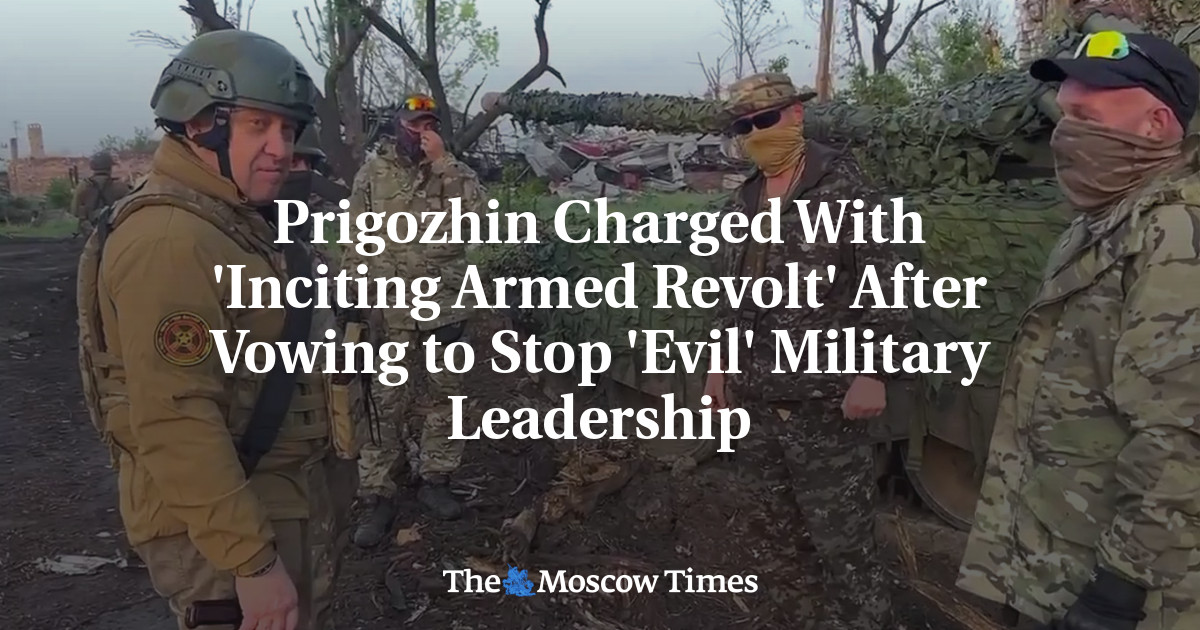
Mercenary group chief Yevgeny Prigozhin has accused the Russian top brass of lying to Vladimir Putin about the scale of Russian losses and setbacks in Ukraine.
Mr Prigozhin, whose Wagner private militia spearheaded the Russian capture of the Ukrainian city of Bakhmut last month, is resisting an order for mercenary groups like his to sign contracts with the defence ministry before July 1.
The president’s confidant portrays Wagner as Russia’s most effective fighting force, and has enjoyed unusual freedom to publicly criticise Moscow – albeit not Putin, on whose support he and Wagner ultimately depend.
In a series of audio messages over two days, Mr Prigozhin escalated his criticism of Sergei Shoigu, the Russian defence minister, a close Putin ally, and Valery Gerasimov, chief of the general staff, by accusing them of hiding Russia’s “very serious losses on the front” from Putin.
 www.thetimes.co.uk
President Zelensky has warned that Russia is plotting a “terrorist” attack on a nuclear power station in southern Ukraine that could send clouds of radiation over Europe.
The Zaporizhzhia plant, Europe’s largest, has been occupied by Russian troops for more than a year.
“They have prepared everything for this,” Zelensky said, citing unspecified military intelligence. “The world has been warned, so the world can and must act. Radiation knows no state borders. And who it will hit is determined only by the direction of the wind.”
On Tuesday, the head of Ukrainian military intelligence accused Russian troops of planting mines at the cooling pond used to ensure the safety of the six reactors. Kyrylo Budanov said Russia’s actions were “terrifying”, but did not provide evidence to support his claim.
The Chonhar bridge, which links Crimea to Russian-held areas of the Kherson region in southern Ukraine, is damaged but not destroyed. Vladimir Saldo, a Kremlin-backed official in the Kherson region, posted a photograph to Telegram that showed a gaping hole in the bridge with water visible beneath it. He said it was likely that British Storm Shadow missiles were used by Ukraine to target the bridge. A source in Ukrainian military intelligence confirmed to The Times that a Storm Shadow missile had hit the bridge.
Known as the “gateway to Crimea”, the Chonhar bridge is one of the few road links between the Black Sea peninsula, which Russia annexed in 2014, and the mainland. The Russian military use it to move forces from Crimea to other parts of Ukraine. The bridge is the shortest route between Crimea and Melitopol, a Russian-held city in southern Ukraine that Kyiv hopes to recapture during its counteroffensive. There were reports of blasts today in Melitopol, where the FSB, the Russian security service, said it had detained “saboteurs” who were allegedly planning to assassinate Kremlin-backed officials.
Yuriy Sobolevsky, a Ukrainian official, said the strike was “a blow to the military logistics of the occupiers”. However, Saldo tried to downplay the military significance of the attack. “Vehicle passage will be restored in the very near future,” he said. “We have an answer to every move by the enemy. A link between the Kherson region and Crimea continues to operate — a reserve route has been temporarily organised.”
 news.sky.com
Slow pace counteroffensive doesn't mean it is faltering - ISW
The slower than expected pace of Ukraine's counteroffensive operations is not emblematic of the country's broader offensive potential, according to the Institute for the Study of War (ISW).
In its latest update on the conflict, the think-tank said Ukrainian forces are likely successfully setting conditions for a future main effort, despite initial setbacks.
"Ukrainian officials have long signalled that the Ukrainian counteroffensive would be a series of gradual and sequential offensive actions, and have more recently offered the observation that currently ongoing operations do not represent the main thrust of Ukraine's counteroffensive planning," the update read.
Ukrainian deputy defence minister Hanna Malyar said on 20 June that it is not useful to gauge the success of military actions based "solely by kilometres or the number of liberated settlements."
Her statement echoes Volodymyr Zelenskyy's observation that war is not a "Hollywood movie" that will deliver immediate and tangible results.

They are fighting more effectively at night than their Russian counterparts, U.S. officials say.
They are using American-made Bradley fighting vehicles to destroy Russian armor with anti-tank missiles. And they are deploying combined arms tactics — synchronized attacks by infantry, armor and artillery forces — that they learned from American and other Western troops.
It is, finally, showtime for the 36,000 Ukrainian soldiers — nine brigades — that have been armed, equipped and trained outside of Ukraine over the past several months by the United States and its NATO allies.

Ukraine needs foreign help to balance its budget in 2024, Finance Minister Serhiy Marchenko said on Thursday, calling on partners including the U.S. to “step in.”
The war-torn country is confident it will balance the books this year, thanks in large part to support from the EU, the U.S., the International Monetary Fund and other donors.
But it needs more external funding. “For next year, we also expect other nations to step in and cover our expenses and help us to cover our budget deficit,” Marchenko told POLITICO in an interview Thursday, on the sidelines of a Ukraine Recovery Conference hosted in London.

The Ukrainian military claimed on Friday to have had “success in two areas of the southern front.”
The Ukrainians continue to conduct offensive operations in the direction of the southern occupied city of Melitopol and the port of Berdiansk, the statement added.“In the directions of Novodanylivka - Robotyne and Mala Tokmachka - Novofedorivka, they have achieved partial success and are entrenching themselves in the achieved frontiers,” Andriy Kovalov, a spokesman for the General Staff of Ukraine’s armed forces, said in a statement.
In the east, Ukrainian troops have halted Russia’s advance toward the cities of Kupyansk and Lyman, deputy defense minister Hanna Maliar said in a Telegram post on Friday.
“In the Kupyansk and Lyman directions, our defense forces stopped the enemy's advance,” Maliar said.
Another extraordinary rant from Prigozhin. He directly contradicts Putin’s claims for starting the war, saying the invasion was based on lies.“The defense ministry now is trying to deceive society, the president, and tell a story there was insane aggression from Ukraine”1/
2/ “…and they intended to attack us with all of NATO.”In reality it was Putin who has claimed Russia invaded because Ukraine was about to attack Donbas.Prigozhin says that wasn’t true and there was no sign of any major attack from Ukraine in 2022.


 threadreaderapp.com
 threadreaderapp.com

 www.19fortyfive.com
Purges inbound.Dmitri@wartranslated
Prigozhin appealed to the Russian Investigative Committee to investigate Shoygu and Gerasimov who, according to Prigozhin, are "responsible for genocide and murder of tens of thousands of Russian citizens and giving up the territory to the enemy".


I think that dam collapsing wrecked a lot of contingency plans the AFU had mapped out. The Russian use of helicopters should have been planned for. It feels like Ukraine is waiting for the Russians to make a deployment error before they pounce.Feels like they aren't making quite as much progress as you would expect but haven't committed much. So who knows. Almost like they felt like Russia would fold up, and they haven't really yet.
Some progress seems on taking down Russia helicopters which may help or keep them from being engaged. Apparently the Russia helicopters are the most western tech equip and they can't replace crap on them. Maybe.
#BREAKING Moscow strikes kill 'huge' number of Wagner forces: chief


![[icon]](/data/avatars/s/5/5167.jpg?1660313464)