

themeistersinger
Footballguy
I was trying to find something funny to say, but I don't think I can top the joke this guy is.
I was trying to find something funny to say, but I don't think I can top the joke this guy is.
Fighterbomber Telegram channel:Millerovo military airfield is still under complete control of Wagner PMC, as is Rostov airfield and the PKP VKS (Russian Aerospace Forces' forward command post).

As the picture became more clear to US intelligence analysts that Yevgeny Prigozhin was about to mobilize his Wagner troops inside Russia, the expectation was that his march toward Moscow would encounter much more resistance and be “a lot more bloody than it was.”
There was surprise, a US official said, that Russia’s professional military didn’t do a better job of confronting Wagner troops as they moved into Rostov and up towards Moscow.
Compounding that surprise, a US official said, was the swiftness of the deal that was struck on Saturday, which the Kremlin said was brokered by Belarus.

The Russian State Duma, or lower house of parliament, is working on a law to regulate the Wagner Group, according to Andrey Kartapolov, head of the Defense Committee.
There’s been considerable speculation about Wagner’s future since its chief, Yevgeny Prigozhin, launched a rebellion this weekend.
Kartapolov’s remarks echo those of Kremlin spokesperson Dmitry Peskov, who said Saturday that an agreement had been reached on “the return of PMC Wagner to their locations. Part of them, those who will wish to do so, will subsequently sign contracts with the Ministry of Defense — this concerns those who did not take part in the march” ordered by Prigozhin.“The fate of Wagner PMC is not determined, but it is not necessary to ban it, since this is a combat-ready unit, and there are questions for its leadership, and not for the fighters," Kartapolov told the Russian business newspaper Vedomosti on Sunday.
In an apparent reference to the manner in which some Russian politicians and businessmen have died in recent years, former CIA Director David Petraeus warned the owner of Russian paramilitary group Wagner to "stay away from open windows."
“He kept his life but lost his Wagner group,” Petraeus said Sunday on CNN of the mercenary group's chief Yevgeny Prigozhin, who on Saturday halted his march to Moscow and accepted exile in Belarus, a country whose leader is useful to Russian President Vladimir Putin. “He should be very careful around open windows in his new surroundings, in Belarus, where he's going,” Petraeus said.
Although it appears quiet in Russia today, things are not back to 'normal.' The coming days or weeks will tell more. Until then, its wise to consider that “nothing is true and everything is possible” – even the things we see. A few reflections for today:
It will be interesting to see how the Russian Air Force and Russian soldiers work with Wagner in the future. Wagner's pilots likely knew some of those killed today, and Wagner depends on the Russian Air Force in Ukraine and for operations elsewhere. This is just the beginning.
Although it appears quiet in Russia today, things are not back to 'normal.' The coming days or weeks will tell more. Until then, its wise to consider that “nothing is true and everything is possible” – even the things we see. A few reflections for today:
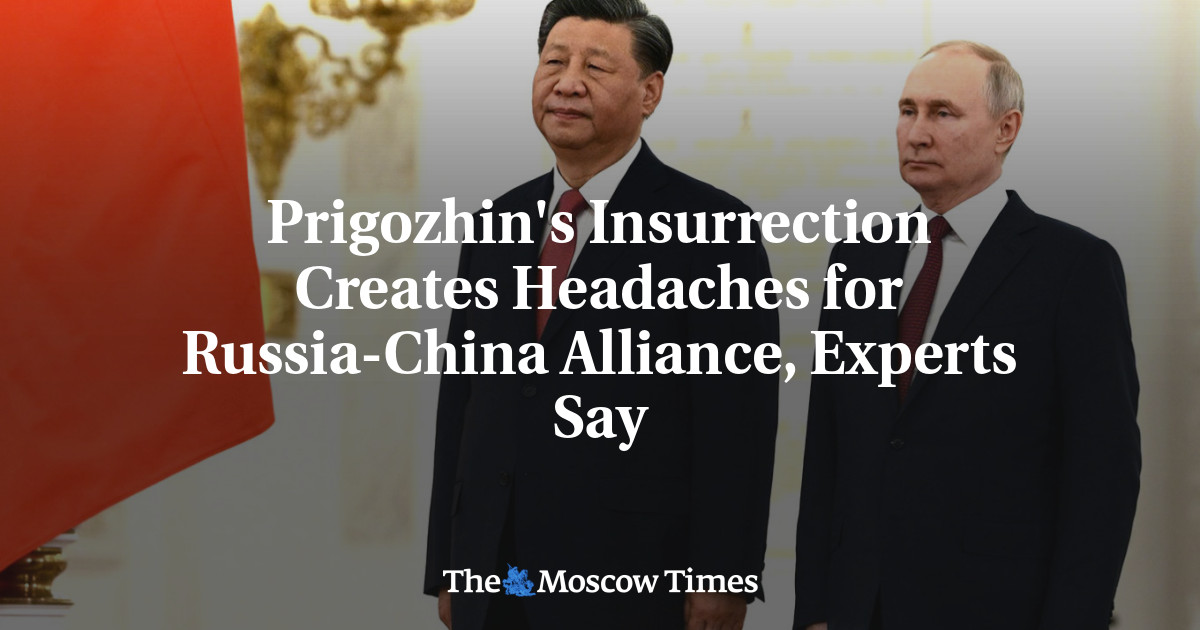
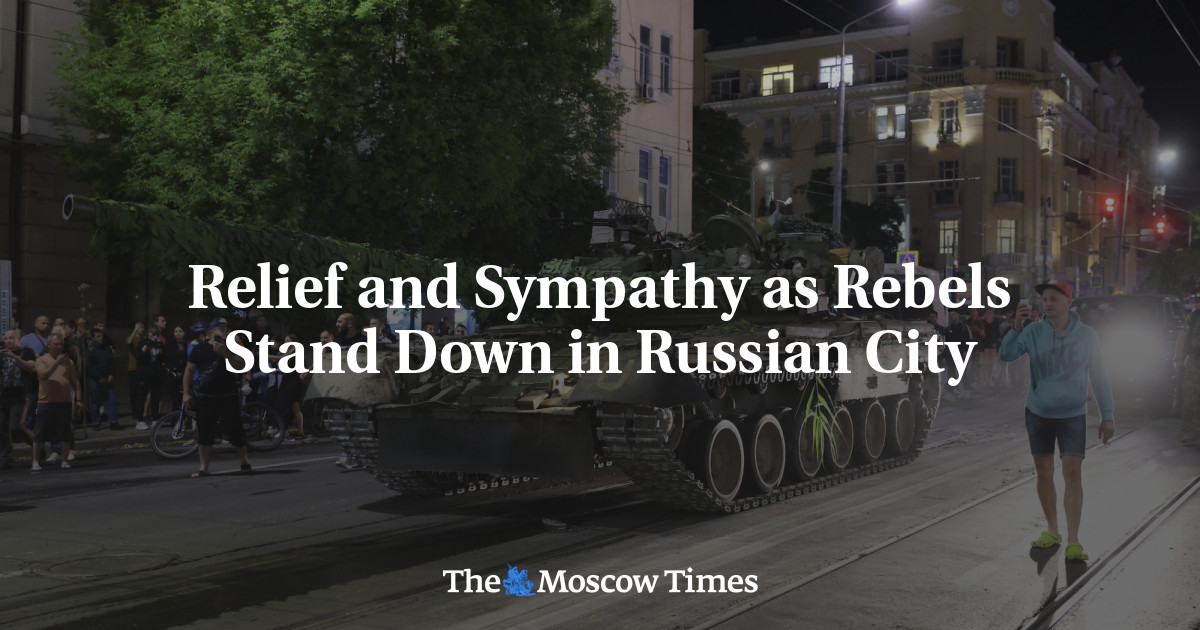
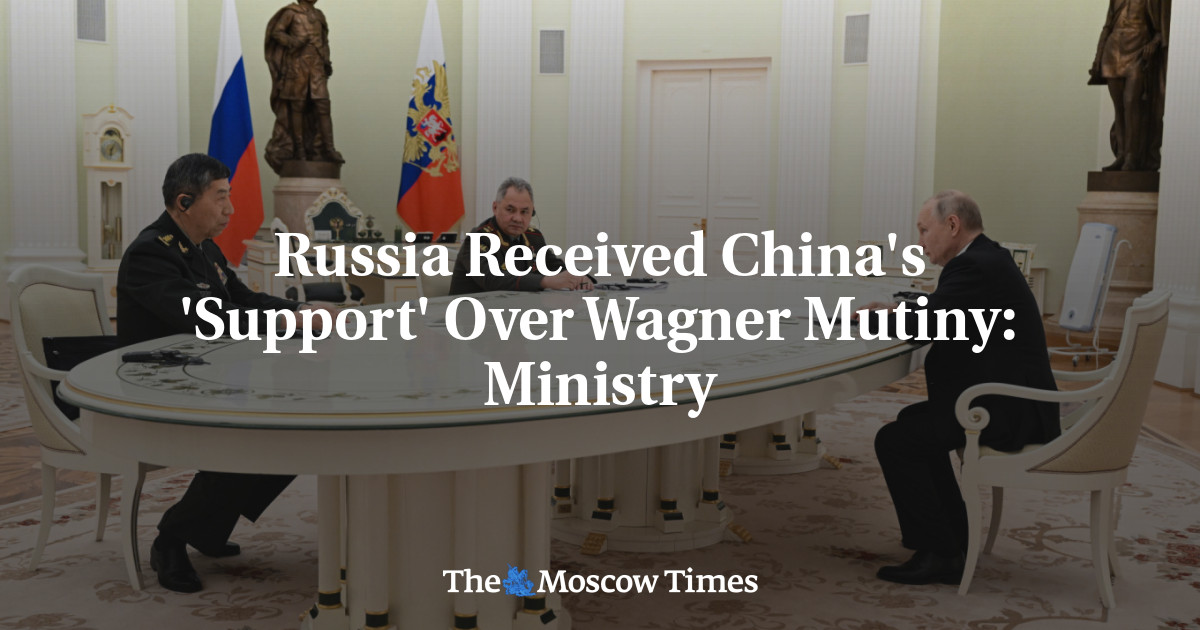
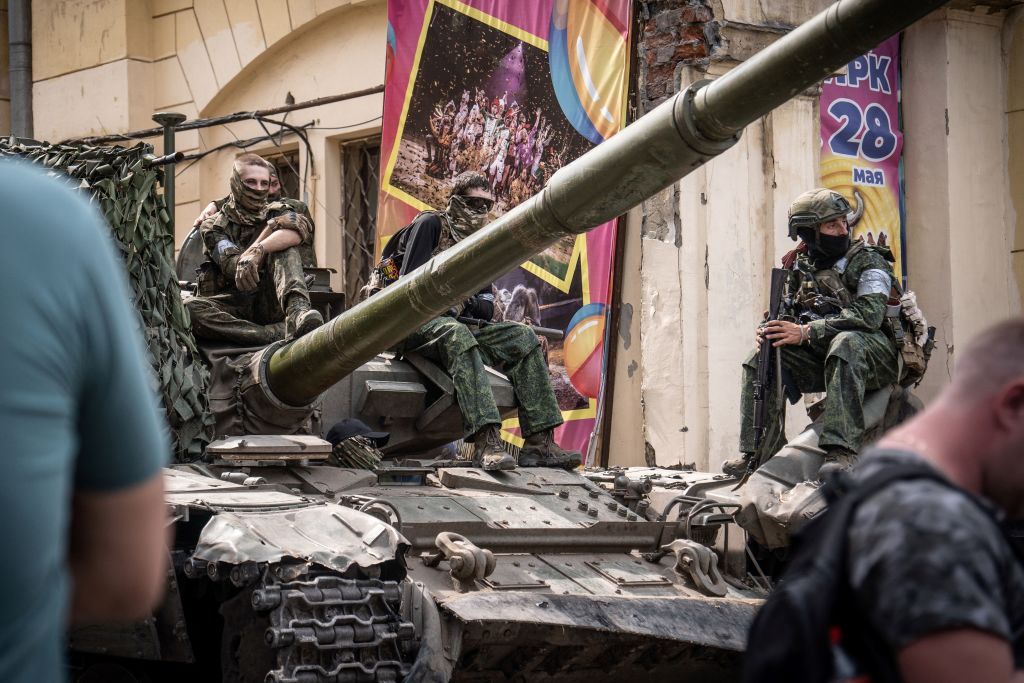

these were interesting
Russian convict fighters who had expressed support for Yevgeny Prigozhin and his armed coup on Saturday have accused him of “walking off” after he struck a deal with President Vladimir Putin.
Recruits of a Storm Z unit, a Russian military unit made up of convicts, stood in combat uniform holding assault rifles as one addressed Prigozhin and said he was “not a man” after he called off the mutiny.
“Rumours say you walked off, lied to all the lads. The whole of Storm Z was ready to stand behind you, and not only Storm Z, your guys also. But you walked off,” he added.
In the terms of the deal, Prigozhin has said he will relocate to Belarus.
Another soldier said: “You spoke beautifully, we supported you. And now what?”

Putin’s Weakness Unmasked
How Yevgeny Prigozhin’s rebellion exposed the Russian President.www.newyorker.com
When I asked Zygar what was the most striking aspect of the uprising, he said, “Putin is weaker. I have the feeling he is not really running the country. Certainly, not the way he once did. He is still President, but all the different clans”—the factions within the government, the military, and, most important, the security services—“now have the feeling that ‘Russia after Putin’ is getting closer. Putin is still alive. He is still there in his bunker. But there is the growing feeling that he is a lame duck, and they have to prepare for Russia after Putin.”
In ideological terms, Zygar said, “Prigozhin combines two ideas. The first is anti-corruption and anti-oligarch. Despite his own wealth, which is immense, he always portrayed himself as the oligarch-fighter. At the same time, he is super illiberal. He hates the West, and he claims to be the real protector of traditional values. He probably has more supporters beyond the Wagner Group; there are people in the Army, the F.S.B., the Interior Ministry, who could be his ideological allies.”
Ironically, Prigozhin learned to out-Putin Putin. In the early days of his reign, Putin was known in the West mainly for his background in the K.G.B. But his popular appeal also had to do with his ability to exploit the street swagger and the language of his days as a kid who played and fought in the poorer courtyards of his home town. Putin was not afraid to make cutting jokes or use profanity in public appearances. He promised to kill enemies in their “outhouses.” This distinguished him, back then, as a man close to ground, close to the narod, the people. But, as Putin has grown more distant and preposterously wealthy, Prigozhin, often dressed in full battle gear and strutting before the cameras next to his troops in front-line Ukrainian cities like Bakhmut, has taken on the populist mantle.
The confrontation between Putin and Prigozhin is also a clash of propagandists. Putin has the full-throated support of such well-known TV commentators as Dmitry Kiselyov and Margarita Simonyan, who have grown rich and famous as the President’s mouthpieces. Prigozhin has at least the tacit support of a new breed. “The most important propagandists now are not the propagandists on state TV,” Zygar told me, “they are the so-called war correspondents on Telegram, former military officers turned bloggers. They pose themselves as representatives of some ‘true Russia.’ They are careful, but they do not denounce Prigozhin.”
There is every possibility that Putin will, at least in the short term, muster the loyalties he needs to eliminate Prigozhin from the picture. However, that does not mean that Putin can be serene about his position in the long term: “Before this rebellion, there were a lot of rumors and theories about different clans supporting Prigozhin. There were rumors that he was supported by siloviki [security-service figures] in business like Igor Sechin [the C.E.O. of the energy conglomerate Rosneft and a former Deputy Prime Minister] and Sergey Chemezov [the C.E.O. of the state-owned defense conglomerate, Rostec].”
Zygar went on, “The F.S.B. [a successor to the K.G.B.] and G.R.U. [military intelligence] is not a single clan; it is a mixture of different clans, and we will see how they are going to react. For years, Putin has selected his inner circle with only one criterion: a lack of ambition. They are not the best of the best. They are the worst of the worst. So how will such mediocrities face up to one desperately brave person, or a desperately brave group of terrorists? We will see.”
Another analysis here from a different Russian observer: https://twitter.com/Stanovaya/status/1672991911538196482
Another thread: https://twitter.com/KofmanMichael/status/1672999622032195584

That's a good thread
Along the lines of my thinking here. All of this shows Putin's weakness- even the deal continues to amplify his weakness. Since when does Putin make a deal with a domestic enemy? The answer is that this is the first. It is out of character because he agreed out of a position of weakness.The Kremlin should be worried that Wagner columns were waved through – on the ground at least- by multiple authorities and openly received by the people in Rostov. That's passive popular support though, and we never saw what would happen if there was armed confrontation.
To show there are no hard feels, have asked Lukashenka to give Prigozhin an office with a view and a large window.

For a bit there, it looked likeRussia has gone from...
2nd best military in the world to
2nd best military in Ukraine to
2nd best military in Russia
Those videos from Rostov were ominous. One drunk Putin loyalist getting his *** kicked by everyone else.How many Russians are truly loyal to Putin?
Based on our studies in political science, I’d say: 1) this was a mutiny, not a coup; 2) mutinies are all about bargaining; 3) few mutinies lead to regime overthrow, even when concessions are made; 4) the effects of most mutinies are short-lived (cf. Dwyer 2017)
“According to Meduza’s sources close to the Kremlin, by mid-day on June 24, Prigozhin attempted to contact the Kremlin himself. He reportedly even ‘tried to call Putin, but the president didn’t want to speak with him.’”
“The final round of negotiations reportedly included the Kremlin’s chief of staff Anton Vaino, the secretary of Russia’s Security Council Nikolai Patrushev, and the Russian ambassador to Belarus Boris Gryzlov — while Lukashenko took the lead role.
“According to one source close to the Kremlin, Prigozhin insisted that negotiations include top officials. Given Putin’s reluctance to engage with Prigozhin, negotiators were left with few options.
“‘Prigozhin needed a trusted third party to exit and save face. That’s where Lukashenko came in. He enjoys publicity — that’s why he agreed,’ said Meduza’s source.
Russian state TV’s flagship Sunday news show opens with this line about Prigozhin’s armed mutiny: “Treason during war time is a grievous crime.” (And yet criminal charges against Prigozhin are being dropped & Wagner fighters who mutinied won’t be prosecuted.)

It has left everyone, in Russia and abroad, as they watched the spectacle unfold on smartphones and television screens, stunned and perplexed. A sign on the back of one car driving around Moscow said, in English, what was on everyone’s mind: “WTF is going on?” “Circus” was one of the most frequent descriptions on Russian social media. Kirill Rogov, a Russian analyst and founder of Re:Russia, a policy network, believes that the power-play by Wagner’s irregulars was the latest sign of the rot that has gradually eaten away at Russia’s institutions under Mr Putin. “It is the decay of the regular state,” he says.
Mr Prigozhin, who started to believe he was an important player, disobeyed and decided to assert himself. Some observers say he was unlikely to have acted alone, and that he must have been given a promise of safe passage to Moscow. But instead of striking at Mr Prigozhin, Mr Putin was forced to negotiate with him. As Mr Rogov argues, what protected Mr Prigozhin most but also made his threat real was not the size of his force, but his rhetoric: he attacked Mr Putin not from the anti-war position of Russian liberals, but from the pro-war position of Russian patriots. That makes him much more dangerous; Mr Putin could hardly attack his own heroic soldiers.
At the end of this strange day, neither side was a clear winner. To reassert his power Mr Putin might now have to resort to purges if he can be certain of the loyalty of all his repressive institutions when dealing not with unarmed liberals but with armed mercenaries. And although he may have stopped Mr Prigozhin from entering Moscow, he will not be able to stop the decay of the Russian state. “Russia is now in an uncharted territory,” says a senior American official.
All that time, Putin allowed the feud between the two fiefs to fester without much intervention, something analysts correctly predicted to be a ticking bomb.
Andrei Soldatov, Russian security services expert and senior fellow at the Center for European Policy Analysis, said that Putin had clearly sided with Gerasimov and Shoigu against Prigozhin.
“I think they are really happy that they forced Putin to personally intervene in this situation — he is no longer an arbiter, he is on their side, and they can stay silent and show that they are the professionals here, doing war and holding up against the counteroffensive,” Soldatov said.
But after the withdrawal from Bakhmut, Wagner’s role in Ukraine — and the degree of its usefulness to the Kremlin — became unclear. Russian outlets reported that there was talk of turning Wagner into a military police force in the occupied Ukrainian regions to terrorize deserters and residents, hardly an honorable job for what Prigozhin had touted as the most effective and determined assault force in the war.
“He raised the stakes very high, posing as the savior of Russia, but once the Ukrainian counteroffensive began, the army managed without him and Wagner was completely sidelined,” Soldatov said. “Simultaneously, the Defense Ministry said it’s time to sign the contract, and he felt that he is being cornered on this chess board.”
“Bakhmut is over, but what’s next,” Soldatov added. “Prigozhin needed to stay in the headlines, but it was not clear how.”

Russians with ties to the Kremlin expressed relief on Sunday that Mr. Prigozhin’s uprising did not spark a civil war. But at the same time, they agreed that Mr. Putin had come off looking weak in a way that could be lasting.
Konstantin Remchukov, a Moscow newspaper editor with Kremlin connections, said in a telephone interview that what once seemed unthinkable was now possible: that people close to Mr. Putin could seek to persuade him not to stand for re-election in Russia’s presidential vote next spring. With Saturday’s events, he said, Mr. Putin had conclusively lost his status as the guarantor of the elite’s wealth and security.
The idea that “Putin is in power and provides stability and guarantees security — it suffered a fiasco on the 24th,” Mr. Remchukov said. “If I was sure a month ago that Putin would run unconditionally because it was his right, now I see that the elites can no longer feel unconditionally secure.”
One of the more confounding aspects of the crisis was why Mr. Putin allowed Mr. Prigozhin’s very public conflict with Russia’s Defense Ministry to escalate for months without addressing it. Mr. Prigozhin had been brazenly outspoken for months in assailing and belittling the Russian military’s leadership.
Two people close to the Kremlin, speaking on condition of anonymity, described the crisis as first and foremost the product of a dysfunctional system of governance verging on chaos — vividly captured in the Russian word bardak.
Decisions on how to handle Mr. Prigozhin’s uprising were made on the fly Saturday, they said, after months in which the president and his inner circle kept on kicking the can down the road rather than finding a way to deal with the iconoclastic mercenary chief.
Prigozhin’s failed putsch ended abruptly, but it still exposed deep flaws at the heart of Putin’s regime, called his invasion of Ukraine into serious doubt, and raised the spectre of state collapse if unrest were to boil over again, people close to the Kremlin told the Financial Times.
“It’s a huge humiliation for Putin, of course. That’s obvious,” said a Russian oligarch who has known the Russian president since the 1990s. “Thousands of people without any resistance are going from Rostov almost to Moscow, and nobody can do anything. Then [Putin] announced they would be punished, and they were not. That’s definitely a sign of weakness.”
The ease with which Wagner launched its revolt, the lack of resistance it met from other security forces, and the rapturous reception its fighters met in the southern city of Rostov as they stood down “damages [Putin’s] reputation domestically”, said Alexei Venediktov, the well-connected former editor of the Ekho Moskvy radio station.
“It turns out you can start a revolt against the president, and be forgiven. That means the president isn’t that strong.”
On Sunday, Russian state media attempted to show life going on largely as normal. Municipal workers fanned out to repair the highways damaged by Wagner’s advance, while Russian forces reclaimed the command centre in Rostov that Wagner had briefly taken over the day before.
But Russia’s attempt to play down the incident as an inconvenient blip belies the deep problems the invasion of Ukraine has created for Putin’s rule.
“You can’t see this as anything other than a sign of weakness and dysfunction,” said Ekaterina Schulmann, a Russian political scientist. “This isn’t some kind of unexpected one-off event or external shock. This is part and parcel of the war,” she said.
“They started a war they shouldn’t have, they couldn’t run it properly, and they decided to resort to extremes by letting him round up an army of prisoners,” Schulmann said. “He became a political actor, and they had to deal with it. One thing leads to another.”
Putin’s reluctance to end Prigozhin’s months-long public feud with the defence ministry appears to have convinced the former caterer he was powerful enough to succeed in his mutiny attempt, according to people close to the Kremlin.
But the episode has also proved damaging for Prigozhin after he failed to secure the resignations of defence minister Sergei Shoigu or Valery Gerasimov, commander of Russia’s invasion forces. Some of Wagner’s troops will sign contracts with the defence ministry, the Kremlin said. That amounts to a humiliation after Prigozhin said his group would never submit themselves to Shoigu — a step that would rob him of the money and influence that came from only answering to Putin personally.
Once the revolt began, Prigozhin appears to have had little idea of how to see it through successfully, according to a person who has known the warlord since the early 1990s.
“I don’t think he had anything particular in mind. He just decided to go and convince Putin that he should get to keep all the money they took away from him,” the person said. “Then the situation got completely out of control.”
“At some point he realised he didn’t know what to do next. You get to Moscow, and then what? You open the doors of a dozen prisons, some unimaginable freaks come out, the country goes to ****, and then you get to the Kremlin . . . and you don’t know what to do.”
Much remains unclear about how exactly Russia convinced Prigozhin to stand down, with many in the Russian elite suspecting that Belarus president Alexander Lukashenko, who ostensibly brokered the deal, was a stand-in for powerful figures in Russia.
“Everyone wanted to call [Prigozhin] and make a deal. And in the end they found a more reasonable middleman in the form of Luka, who found a way for both sides to step back,” the person close to Prigozhin said.
But even wholesale changes may not be enough to restore order, the oligarch said. After Russia’s war effort began to falter last year, many in Russia’s elite began discussing the likelihood of a “time of troubles”, a repeat of the long, violent political crisis in the early 17th century when different factions vied for the throne.
But even then, the oligarch said, “if it started I expected the army to intervene immediately. And they did not. That’s a surprise.”

 www.atlanticcouncil.org

 www.thetimes.co.uk
Prigozhin may have talked about a march on Moscow — and some commentators were quick to draw parallels with fascist Benito Mussolini’s 1922 March on Rome — but without a wider fragmentation of the security forces, he was not in a position to get there, let alone launch a successful coup.
He claimed to have 25,000 Wagner fighters, but in the past has demonstrated a flair for spin and a tenuous grasp of mathematics. This is perhaps accurate if one includes the many Wagner deployments across Africa, but his force in Ukraine and Russia is closer to perhaps 10,000, and while it is possible there have been some defections to his side, it is also probable that there were mercenaries who decided not to join his quixotic cause.
The obstacles to success were formidable. This is a regime designed to be coup-proof, as multiple security agencies monitor and counter each other. There are several military units based around the capital, including the 4th Guards “Kantemir” Tank Division and the 2nd Guards “Taman” Motorised Rifle Division. Both are relatively elite forces and even if many of their troops have been deployed to Ukraine, at least a regiment of each remains on base.
Beyond that, the paramilitary National Guard has the oversized 1st Separate Operational Purpose Division, also known as the Dzerzhinsky Division, based in the outskirts of the city and there are also numerous armed police and security units. Finally, the Federal Protection Service controls the Presidential Regiment, also known as the Kremlin Guard. Put all these together, and Prigozhin was already outnumbered, even before reinforcements were mustered and airpower deployed.
I always said **** will hit the fan when they start calling for air strikes on telegram. They just did. Lets see what happens. But at this point I think nothing. Brothers confidence is low. https://t.me/RVvoenkor/48170
ootage from the "Russian-controlled" left bank of the Dnieper river at the Antonovsky Bridge, shows a Russian BTR-82A firing and moving to pick up evacuating Russian soldiers from fire by Ukrainian forces.Earlier, Russian sources stated that Ukrainians gained a foothold at the Antonovsky Bridge with a group that is now approaching 100 fighters, forcing defending Russians to fall back. Dva Mayora:"Antonovsky bridge, our (left) bank of the Dnieper. Kherson regionThe enemy holds a small foothold on our bank for at least three days. The units of the Russian Armed Forces withdrew from the area, as the constant action of enemy artillery and SOF created a threat of encirclement of our forces. They retreated with combat, neighbouring units came to the rescue. As a result of the fighting, the Russian Armed Forces suffered losses."Dva Mayora mentions that the group is continuously supplied with materiel and its size is increasing. High-speed boats are hard to intercept. EW equipment prevents Russian FPV drones from striking.Dva Mayora: https://t.me/dva_majors/19371
Margarita Simonyayn believes it's acceptable to disobey legal norms in "critical circumstances", such as when accusing Prigozhin' of treason for his march and later "forgiving" him.Truly, for a country that already broke so many legal norms this is a nothingburger.


Stay tuned...Russian State TV Anchors Aghast That Putin Didn’t Kill Prigozhin
The Kremlin’s propagandists praised Putin but were dumbfounded that he allowed the Wagner boss and his mercenaries to escape punishment.www.thedailybeast.com

Yevgeny Prigozhin remains under investigation in connection with Saturday's mutiny, a Russian media report has suggested.
The Wagner leader called off his mercenary fighters after reaching an agreement with the Kremlin that included all charges being dropped against him and his men.
However, the Russian news outlet Kommersant has reported the criminal case against him for the organisation of an armed rebellion has not been terminated and is still being investigated by the Russian FSB security service.
Prigozhin, who has been forced to move to Russia under the deal, is yet to comment on the terms of the agreement.

The investigation into the criminal case involving Yevgeny Prigozhin and his alleged involvement in organizing an armed mutiny is still active, Russian state news agency TASS said Monday, citing a source close to the Prosecutor General's Office.
"The criminal case against Prigozhin did not stop. The investigation continues," the source said about the Wagner founder, according to TASS.

 www.understandingwar.org
The implications of the Lukashenko-Prigozhin deal for the leadership of the Russian MoD also remain ambiguous. Some Russian sources, including internal Kremlin sources cited by Meduza, suggested that the Kremlin may be considering changes to MoD leadership as part of the deal.[4] Russian Defense Minister Sergei Shoigu and Chief of the General Staff Army General Valery Gerasimov have not been seen or heard from since before Prigozhin announced the beginning of the armed rebellion on June 23. Some Russian sources suggested that Alexei Dyumin, the current governor of Tula Oblast, former security officer to Putin, and former head of Russia’s Special Operations Forces, may replace Shoigu as the Defense Minister, although ISW cannot confirm these speculations.[5] Any changes to the MoD leadership would notably represent a significant victory for Prigozhin, who justified his armed rebellion by directly accusing Shoigu and Gerasimov of the deaths of tens of thousands of Russian soldiers in Ukraine.[6]
Wagner forces continued to withdraw from positions in Rostov and on the road to Moscow to their bases on June 25, and the Kremlin’s intended structure for leveraging Wagner fighters remains unclear. Geolocated footage published on June 25 shows armed Wagner forces driving south away from Moscow near Voronezh City.[7] Footage published on June 25 purportedly shows Wagner forces returning to training camps in southern Russia.[8] The fact that Wagner is returning to their training camps with military equipment indicates that the Kremlin intends to maintain at least certain elements of Wagner’s manpower rather than seek to immediately demobilize them, although the future of Wagner’s command and organizational structure are unclear. Russian State Duma Defense Committee Head Andrei Kartapolov announced on June 25 that the State Duma is working on a law that would regulate private military companies (PMCs) but emphasized that it is not necessary to ban the Wagner Group as it is “the most combat-ready unit in Russia.”[9] Kartapolov further noted that the future of the Wagner Group is undetermined and emphasized that the personnel of the Wagner Group in Rostov-on-Don were “following orders of their command” and “did nothing reprehensible.”[10] Kartapolov’s efforts to absolve Wagner personnel of responsibility for taking part in an armed rebellion and separate them from Prigozhin may indicate the Russian government’s desire to continue to use Wagner personnel in some capacity, and as ISW assessed on June 24, the Russian leadership could redeploy Wagner to Ukraine or instead commit them to international missions. Russian state-affiliated news outlets reported on June 24 that the Russian Federal Service for Supervision of Communications, Information Technology and Mass Media (Rozkomnadzor) blocked Prigozhin’s official press service on Russian social media site VKontakte, indicating the Kremlin’s efforts to restrict Prigozhin’s organizational actions.[11]
Further details emerged on the composition of the Wagner units approaching Moscow on June 24, indicating Prigozhin would likely have struggled in an active conflict in Moscow without additional support. Russian sources claimed on June 25 that the first Wagner column that began moving towards Moscow on June 24 consisted of 350 pieces of equipment, including nine tanks, four Tigr infantry fighting vehicles, a Grad MLRS system, and a howitzer.[12] Russian sources claimed that the three other Wagner columns that moved toward Moscow had 375, 100, and 212 pieces of equipment respectively, the majority of which were non-armored trucks, cars, and buses.[13] Russian milbloggers claimed on June 24 that the columns moving towards Moscow were comprised of 4,000 personnel with 40 to 50 pieces of equipment, including MRAPs, T-90M main battle tanks, BMP infantry fighting vehicles, Pantsir air defense systems, and Grad MLRS systems.[14] CNN reported on June 24 that US and Western intelligence officials observed Wagner amassing equipment and ammunition for the rebellion for several weeks, indicating that the columns likely comprised Wagner‘s greatest available strength.[15] ISW cannot confirm the exact composition of the Wagner columns at this time, although current reporting suggests that Prigozhin’s force would have struggled to fully occupy Moscow or conduct prolonged engagements with elements of the Russian Armed Forces, if they deployed. ISW previously assessed that Prigozhin likely sought and failed to win military support for his rebellion, and Wagner’s move on Moscow was likely predicated on the assumption that military support would strengthen the rebellion’s forces and capabilities.[16] Prigozhin may have become more amenable to the alleged negotiations with Lukashenko as these insufficient forces drew nearer to Moscow and that time was running out to garner the necessary military support for a potential armed conflict with the MoD.

Still, it is too soon to determine the long-term implications of the feud between Mr. Prigozhin and the Russian military establishment, American officials said. In Bakhmut, Wagner played an outsize role in the campaign to take the eastern city, Moscow’s one major battlefield victory this year, and solidified an uneasy alliance with the Russian military — only to see the partnership break once the city was captured.
“The previous relationship between Wagner and the Russian government is likely over,” said Rob Lee, a senior fellow with the Foreign Policy Research Institute. “Even had this not happened, it was unclear if Wagner would have played the same role in this war as it had in the battle for Bakhmut.”
After seizing Bakhmut, the Russian Defense Ministry took steps to integrate Wagner into the broader military, which would have reduced Mr. Prigozhin’s power. When Russia forced all volunteers fighting in Ukraine to sign contracts with the ministry, it meant that Mr. Prigozhin would have had to put his forces under the control of the military, said Tatiana Stanovaya, a senior fellow at the Carnegie Endowment for International Peace.
“This is one of the reasons Prigozhin went mad,” Ms. Stanovaya said, “because he realized now he is out of Ukraine.”
Mr. Prigozhin became increasingly strident in his criticism of Russian military units after that, and U.S., British and Ukrainian intelligence began developing information that he might make an offensive move with his troops to force a change in the Defense Ministry. That intelligence was proved right on Friday, as Wagner troops moved to take control of a southern Russian city.
Though part of Mr. Prigozhin’s mercenary cadre is likely to continue under Russian Army control, how many Wagner soldiers would be willing to fight under the ministry’s umbrella is an open question.
Ukraine will surely look to take advantage of the chaos caused by Mr. Prigozhin, but there did not seem to be any immediate defensive gaps to exploit, according to American officials and independent analysts.
And Mr. Prigozhin’s march, at least according to a preliminary analysis, did not cause any Russian units on Friday or Saturday to leave their positions in southern or eastern Ukraine to come to Moscow’s defense, American officials said. While the drama was unfolding, there was no letup in the war: Russian forces fired more than 50 missiles across Ukraine before dawn on Saturday.
The failed revolt has given Putin a stark choice — whether to fire the generals or let them remain in command of his faltering invasion, with both options carrying a significant risk of further blowback both for the war and his regime, analysts say.
“Shoigu and Gerasimov are so bad in their jobs that it’s dangerous to Putin to leave them in place,” said Dara Massicot, a senior political scientist at the US-based Rand Corporation. “But loyalty and stability are number one for Putin. I just don’t see how he’s going to have these terms dictated to him like this.”
By Sunday, some Russian military analysts were speculating that Shoigu and Gerasimov could be two additional casualties of the failed coup, after Prigozhin and his fighters travelled half the distance from the Ukrainian border to Moscow, captured a military base and took down several army helicopters — all within a matter of hours.
“Shoigu and Gerasimov are now obvious lame ducks and they will be removed, I think,” said Ruslan Pukhov, director of the Centre for Analysis of Strategies and Technologies, a Moscow-based defence think-tank. He did not exclude the possibility that the two men’s departure could have been part of the brokered deal that led to Prigozhin standing his men down. The Kremlin has denied this.
Though Putin publicly backed Shoigu’s efforts, Prigozhin vehemently refused — conscious of the damage such an arrangement would do to his standing as a powerful warlord who answered only to Putin, according to a person who has known him since the 1990s.
“He understands fully well that if he turns into a zero, then Shoigu would have dealt with him at some point. So he went all out and decided to show Putin that he’s the only real one out there and he needs to be left alone with his money,” the person said. “He got it a bit wrong, and everything went to ****, as it usually does [in Russia].”
Putin’s biggest mistake, Massicot said, was to give Shoigu his backing without finding an acceptable way for Prigozhin to save face.
“When he threw his support behind the defence ministry, it basically put a target on Prigozhin’s back,” she said. “A competent statesman would have reached out to offer Prigozhin an incentive, or something to buy him off. Clearly, that wasn’t done.”
With Prigozhin now in exile, Shoigu’s position could even be strengthened, according to the person who knows the warlord — as Putin will see no reason to fire a loyalist.
“Shoigu’s the only winner,” the person said. “He’ll be the defence minister forever.”
High on the list of questions policymakers are now putting to their intelligence analysts is whether Prigozhin has managed to shake the foundations of the Kremlin so strongly that Putin will feel compelled to sack top generals or ministers leading the war, as Prigozhin has repeatedly demanded.
More immediately, though, there’s another question: What just happened? One minute, Prigozhin had taken over a key military headquarters in the south running Russia’s war machine in Ukraine. The next, he had agreed to a truce brokered by Belarusian President Alexander Lukashenko, who’s more accustomed to playing second fiddle to Putin than intervening between warring factions.
“Why did it calm down so quickly, and how come Putin’s puppet Lukashenko got the credit?” asked one senior European diplomat, who like others spoke on the condition of anonymity to describe private discussions. “What impact will it have on Russia’s defenses, and are there going to be any personnel changes in the military leadership?”
One Western intelligence official was skeptical that Prigozhin would remain quietly in Belarus, echoing speculation that he will either be killed or will continue to challenge Russia’s military establishment from abroad.
Watching the Wagner column head toward Moscow on Saturday, the official had predicted that Russian troops were unlikely to put up much resistance if they had been persuaded by his arguments that military leaders were to blame for the disastrous war. Prigozhin had said on social media that the Russian public hadn’t been told the truth about the setbacks in Ukraine, including about the extraordinarily high number of dead Russian troops. U.S. military figures have estimated casualties in the hundreds of thousands.
A Ukrainian intelligence official, who was likewise unsure why Prigozhin had stood down, saw signs that the mercenary leader may not have been confident in his prospects.
“I think he miscalculated in his expectations of military support,” the Ukrainian official said, taking a different view than some of his European counterparts. The revolt Prigozhin may have hoped for in Moscow failed to materialize, the official noted.
He added that there were indications Prigozhin may even have tried to phone Putin directly but received no answer. This sent a “very strong signal” to Prigozhin, the Ukrainian official believes: Putin would not simply acquiesce to his demands.
Another senior European diplomat said that allies hope to understand what Putin will do domestically in response to the unrest, especially with respect to any next steps in the stalemate on the Ukraine war front. The diplomat joked that even as Ukraine’s Western backers raced to decipher what had occurred, Russian intelligence probably did not have much of a head start.
“I think even Russian services are scratching their heads,” the diplomat said. “We will need some time to digest and also to see where things are moving.”
But intelligence officials cautioned that it remains to be seen whether Prigozhin’s challenge truly weakened Putin — and if the Russian leader believes it did. U.S. and Western analysts have long described Putin as isolated, surrounded by yes-men and blind to the challenges his forces face.
Putin has been misguided by advisers who may now try to convince him that he won in a standoff with Prigozhin, some officials said. That may only embolden the Russian leader, even if he is not as strong as he thinks.
Officials said that, in the near term, they will watch closely for any signs that Putin may replace two of the top leaders who have been the targets of Prigozhin’s Telegram rants: Defense Minister Sergei Shoigu and Gen. Valery Gerasimov, the chief of the general staff. Prigozhin had demanded an audience with both men as his forces marched across Russia.
Sacking the military bosses might not mean that Putin is giving in to Prigozhin, but rather that he realizes the Russian elite have lost confidence in their leadership. Prigozhin, some Western officials said, was only saying out loud what many around the Kremlin privately think.
“If Putin replaces Shoigu, it will not be because Prigozhin demanded it, but because Shoigu is weak,” the Ukrainian official said.
As for Prigozhin’s next move, U.S. and Western officials were keenly interested in whether the rift with Putin will prompt him to distance the Russian government from Wagner and withdraw support for its extensive operations in Africa and the Middle East, where the group offers security and military assistance and tactics on campaigns to influence governments facing rebellions or instability, in return for resource contracts such as gold in regions that are too unstable to attract Western corporations.
Though Prigozhin’s company seeks to turn a profit wherever it operates, its action often advances a Kremlin agenda and undermines Western interests. For those reasons alone, some Western officials believe Putin will probably continue supporting Wagner’s operations, but recent events may set back its future potential.
“I think Wagner will have their wings curbed heavily,” said a senior European intelligence official. That may come at a cost for Putin. “Prigozhin has been the gateway for Moscow in many places in Africa, and Moscow counts on African support more than ever,” the intelligence official said. But, he acknowledged, the Russian president has more pressing concerns, such as political survival.
“Faced with last weekend’s events, issues like Russian influence in Africa have a secondary weight for Putin.”

 www.politico.com
 www.youtube.com
I am in complete agreement with all 14 of themThe 14 experts the following article talked to seem quite split on the ramifications of this most recent episode:
Just How Much Trouble Is Vladimir Putin In?
Fourteen Russia experts on what we learned about Putin over the past few days, and what the attempted mutiny could mean for Russia and the West.

 news.sky.com
Wagner group boss Yevgeny Prigozhin has shared a video statement directly addressing the mutiny in Russia over the weekend.
He claimed the decision to turn around the march on Moscow was because he and his fighters didn't want to shed Russian blood.
Mr Prigozhin also said it was not his aim to overthrow the Russian government.
news.sky.com
Following on from Rishi Sunak's comments that the UK is preparing for a "range of scenarios" after the mutiny (see 2.08pm post), the Times is reporting that government assessments have warned Britain must prepare for the sudden collapse of Russia.
The newspaper reports that the speed of the failed uprising over the weekend has left diplomats "hastily preparing for different outcomes".
A senior government source said: "From the very beginning of the invasion, one of the most obvious scenarios was that the war could lead to political unrest back home in Russia."
Asked if this could trigger a collapse in the Kremlin, the source said Britain "must prepare for a whole range of different scenarios".
"We have to wait, watch and see what comes next. This could be chapter one of something new," they added.

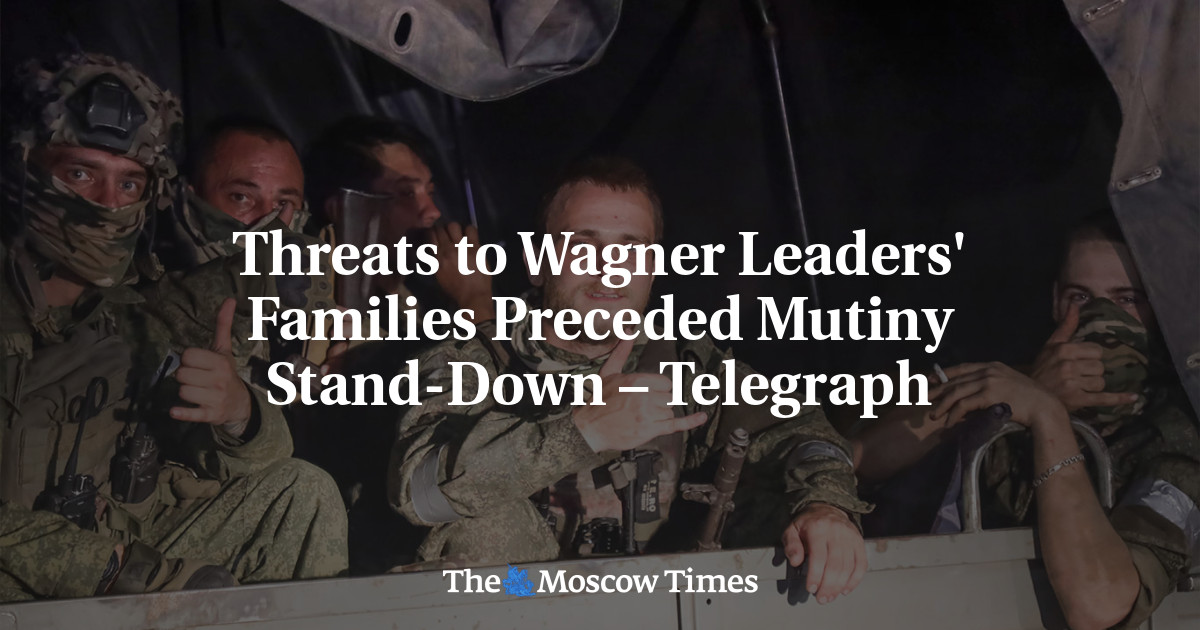
Summary of Prigozhin's 26 June address to clarify the situation: it was to demonstrate protest against the "destruction of PMC Wagner, not toppling the Russian authorities":
What were the prerequisites for the March for Justice?
- PMC Wagner carries out tasks around the world. It was meant to stop existing on 1 July 2023. “Employees” all refused to sign the contract with MoD, only 1-2% decided to join the Russian army.
- The original plan was to go to Rostov on 30 July and transfer all vehicles to MoD, which were ready for transport.
- Despite any aggression, Wagner suffered a missile attack, followed by helicopter attack. Around 30 PMC Wagner fighters died. This triggered an immediate decision to move out early and respond militarily.
- Throughout the 24-hour march, one column went to Moscow, another to Rostov. They made 780 km of progress in one day. They regret being forced to attack the army aircraft but the bombs were dropped which caused the response. During the march, all military objects on the way were blocked and disarmed. None of the military have died on the ground.
- The objective was to not allow destruction of Wagner and take to responsiblity those who with their unprofessional actions made a huge number of mistakes during the SMO. All the military met along the way supported this.
- Wagner stopped when the advanced storm unit deployed artillery, conducted reconnaissance and realised a lot of blood will be shed in an upcoming battle. They decided that demonstration of the protest was enough, and turned around.
- Factors that made Wagner turn around: first, they didn’t want to shed Russian blood. Secondly, they wanted to demonstrate their portest, not overtake the authority in Russia.
- Lukashenko offered to find solutions for further legal operation of Wagner legally. Columns turned aroound and went back to field camps.
- The march showed many things demonstrated before. Serious secruity concerns around the country. All military bases and airfields were blocked.
- If actions on 24 Feb 2022 were done by forces as trained as Wagner, the special operation could have ended in 1 day. This shows the level of organisation that the Russian army should be following.
Most important thing from Prigozhin's new speech is the claim that Wagner will continue to exist, key phrase: Belarus President Lukashenko offered Wagner an option "of working further in a legal jurisdiction."Integrating into Belarus doesn't really feel like running far from Putin...
Listening to Prigozhin's new message. Doesn't really tell us much except, perhaps, for that one little bit where he suggests that Wagner may be able to operate out of Belarus. Which raises interesting questions.

Ugh. Wagner gets Belorussian support from Luka instead of Putin.
Most important thing from Prigozhin's new speech is the claim that Wagner will continue to exist, key phrase: Belarus President Lukashenko offered Wagner an option "of working further in a legal jurisdiction."Integrating into Belarus doesn't really feel like running far from Putin...
Listening to Prigozhin's new message. Doesn't really tell us much except, perhaps, for that one little bit where he suggests that Wagner may be able to operate out of Belarus. Which raises interesting questions.

A senior Central European diplomat said they saw "no immediate effect on the war" from Prigozhin's aborted mutiny.
But the diplomat cautioned that many questions remained unanswered from the weekend's events so it was too early to say anything about longer-term impact.
The Ukrainian military's National Resistance Centre said Russia had flown up to two companies of its 76th Airborne Assault Division to Moscow from the front on Saturday and that it planned to keep them there for at least a week.
"It should be noted that there are no facts of a mass transfer of enemy forces, we're talking about individual units," it said.
Ukraine has reported no other changes to the Russian army's posture on the battlefield where Moscow's forces had months to prepare for a Ukrainian counterattack by digging thousands of trenches and laying minefields.
 www.thetimes.co.uk
The most disillusioned were those who sincerely believed in the strength and unity of the Russian authorities. “The worst thing for me is that no one stopped them, you know? That’s what’s scary!” an elderly customer at a grocery store told me. “It’s good that they reached a deal, but what if it wasn’t Wagner? What if it was Isis? How was this possible?”
The woman realised that she was speaking too loudly. In Russia, it is dangerous to criticise the authorities in a public place — you can be jailed for up to 15 years. But at my request to speak more quietly, she waved her hand dismissively. “They have other things to worry about now. Their attention now will be on the rebels — they will jail them.”
Wagner’s rebellion, it seems, has loosened many people’s tongues. Residents of Moscow usually refuse to talk about political topics in public, but the people I spoke to were very daring in the comments. Perhaps the fear of repressive laws about “fake news” and “discrediting the army” faded amid the real danger of full-fledged battles in Moscow.
It seems that now thoughts about the war have been replaced by general bewilderment as people try to work out what exactly happened. The question seems to hang in the air, although it is mostly asked by people who think about politics and war. Or those who live in the southern districts of the city, who would have been the first to meet the Wagner fighters.
An opinion column in Russian newspaper Moskovsky Komsomolets wrote that the “most terrifying scenario” — of fighting in the streets of Moscow and elsewhere and a split in Russia’s military and security forces — had been averted.
“Russia displayed its vulnerability to the whole world and to itself. Russia dashed to the abyss at full speed and with the same speed stepped back from it,” the columnist, Mikhail Rostovsky, wrote under the headline: “Prigozhin Leaves, Problems Remain: Deep Political Consequences of a Failed Coup.”
Vladimir Putin appears to have overcome his biggest domestic crisis since the Chechen war with which his reign began. But the Russian president’s allies at home and abroad are not rushing to congratulate him. The mood among the elite and the tone of official propaganda are far from triumphant. The very possibility of a coup after 23 years of rule, and in the second year of the Ukraine war — a campaign supposed to cover Putin and his regime in glory — puts his grip on Russia into question. It also challenges the idea of unanimous support from a patriotic majority.
Putin has avoided the worst-case scenario: civil war-style clashes between “patriots”, bloodshed and the shelling of cities by the army. The state apparatus, especially in Russia’s regions, demonstrated at least passive loyalty. But all this came at the cost of tremendous stress to the system. Prigozhin’s actions have put the pro-war camp, which greatly respected him, in a difficult position. Accusations of betrayal so often levelled at opponents of the war can now be thrown at some of its supporters. The official dividing line between “good” and “bad” Russians, or “patriots” and “traitors”, is no longer clear.
Russia’s “patriotic majority” has always suspected the country’s affluent rulers and private business elites of being indifferent to national interests and ordinary people. This was precisely Prigozhin’s claim, and it will continue to have resonance despite his apparent sidelining.
Russian state media reports that Wagner Group recruitment centers have reopened in several Russian cities. At least one independent outlet reports that Prigozhin’s Petersburg “troll farm” is up and running again, too.



![[icon]](/data/avatars/s/5/5167.jpg?1660313464)

