What's new
Fantasy Football - Footballguys Forums

This is a sample guest message. Register a free account today to become a member! Once signed in, you'll be able to participate on this site by adding your own topics and posts, as well as connect with other members through your own private inbox!

*** Official Russia vs. Ukraine Discussion - Invasion has begun *** (3 Viewers)

Thread: https://twitter.com/Tatarigami_UA/status/1742640415722086764

Analyzing the early 2024 Frontline Dynamics.
🧵Thread

Ukrainian troops started this year with some challenges. Russian offensives and missile attacks seal a strategic initiative shift, but the overall outlook is acceptable for the AFU, despite upcoming Russian tactical gains
2/ We expect Russian forces to continue assaults in areas like Kupyansk-Lyman, Bohdanivka-Kostyantynivka, Novobakhmutivka-Novomykhailivka, and potential counter-attacks in the southern regions, particularly the Robotyne area and Krynky.
3/ Winter 2023 also saw a strategic initiative shift to Russian forces after Kherson's liberation, leading to sustained offensives in Vuhledar, Kreminna, and Bakhmut. While Bakhmut was captured, humiliating defeats occurred in places like Vuhledar.
4/ Synkivka, Kharkiv Oblast.

Russia persists in assaulting Syn'kivka, Kharkiv oblast, a defense point northeast of Kupyan'sk. Satellite imagery shows intense artillery damage and scorch marks on both sides. Current data suggests a significant Russian troop presence.
5/ Avdiivka, Donetsk oblast.

The situation in Avdiivka stays stable, without breakthroughs or collapses. Despite losses, including 211 destroyed vehicles from October to November, Russians advanced near the AKHZ plant, towards Novobakhmutivka, Stepove, and the industrial zone.
6/ Avdiivka, Donetsk oblast.

Satellite imagery and ground reports confirm a sustained Russian assault towards Novobakhmutivka and Stepove, evident from visible scorch marks. Infantry assaults continue in the AKHZ area.
7/ The Bakhmut area

The Bakhmut area is likely to become a hot zone this winter, as Russians concentrate forces on the offensive. They aim to reclaim lost positions. With Khromove falling and progress in Bohdanivka, increased pressure is expected in the direction of Chasiv Yar.
8/ Russian forces possess an advantage in ammunition and artillery numbers potentially leading to tactical successes. The defense of Klischiivka and Andriivka is challenging as both are ruined, rendering structures barely usable for defense
9/ Mariinka, Novomykhailivka, Vulhedar

Amid Mariinka's critical situation and progress in Novomykhailivka, the Russian army aims to cut Vuhledar's rear and logistics, intending to initiate a siege and compel defenders to retreat.
10/ While our team refrains from definitively assessing the likelihood of success, it is apparent that the Russians have succeeded in pushing Ukrainian artillery far enough to hinder their effective engagement of the railroad between Donetsk and Mariupol.
11/ The current situation for Ukrainian troops is difficult due to personnel shortages from mobilization setbacks and ammo shortages stemming from the US Congress's failure to approve aid. While some may view this as catastrophic, our team has a relatively positive outlook
12/ Russian forces lack the advantage for a strategic shift, reducing the likelihood of their successes. Tactical losses are expected, resembling Ukrainian successes near Bakhmut earlier in the summer, where gains didn't alter the overall balance of forces.


Russian military analysts are debating the usefulness of large, heavy combat drones that did not perform in Ukraine as expected. Still, they say the production of heavy drones should not be abandoned, especially for potential military conflicts "in which Russia’s participation may be required."


Russia may be intensifying efforts to source ballistic missiles from abroad because these missiles appear to be more effective at striking targets in Ukraine in some circumstances. Russian forces routinely use short-range ballistic missiles to strike Ukrainian cities closer to the frontline, and these missiles appear to be more effective at penetrating or avoiding Ukrainian air defenses. Ukrainian air defenses have intercepted 149 of a reported 166 Russian cruise missiles in intensified attacks since December 29, 2023, but have only intercepted a handful of the ballistic missiles that Russia has launched at Ukraine in the same period, for example.[8] Russian forces have repurposed S-300 and S-400 air defense missiles for conducting strikes against surface targets in Ukraine, and Ukrainian officials have acknowledged that Ukrainian air defenses struggle to intercept these unorthodox missile attacks using their own S-300 and S-400 systems.[9] Ukrainian forces have also appeared to be less successful in intercepting Iskander ballistic missiles during recent strikes, although Ukrainian forces did intercept an Iskander-M missile during a less intense series of Russian missile and drone strikes on December 30.[10] Ukrainian forces reportedly intercepted all Iskander-M or S-300/S-400 missiles that Russian forces launched at Kyiv on December 12.[11] Ukrainian forces reportedly also intercepted all 10 Kinzhal missiles that Russian forces launched at Ukraine on January 2 with Western-provided Patriot systems.[12] The effectiveness of Russian ballistic missiles thus appears to depend in part on the configuration of Ukraine’s air defense umbrella in the target area and the strike package of which the missiles are part.

The relative success that Russian forces have had in striking targets in Ukraine with ballistic missiles in combination with cruise missiles and drones may be prompting an intensification of Russian efforts to source ballistic missiles from abroad. Russia can reportedly produce roughly 42 Iskander missiles and four Kinzhal missiles per month, although it is unclear how many S-300/S-400 missiles Russia can produce.[13] Russia‘s defense industrial base (DIB) likely cannot produce ballistic missiles at the scale required for a persistent strike campaign in Ukraine that relies on regularly expending a large volume of ballistic missiles, and Russia likely has to source ballistic missiles from abroad if it wishes to maintain large-scale missile strikes against Ukraine.
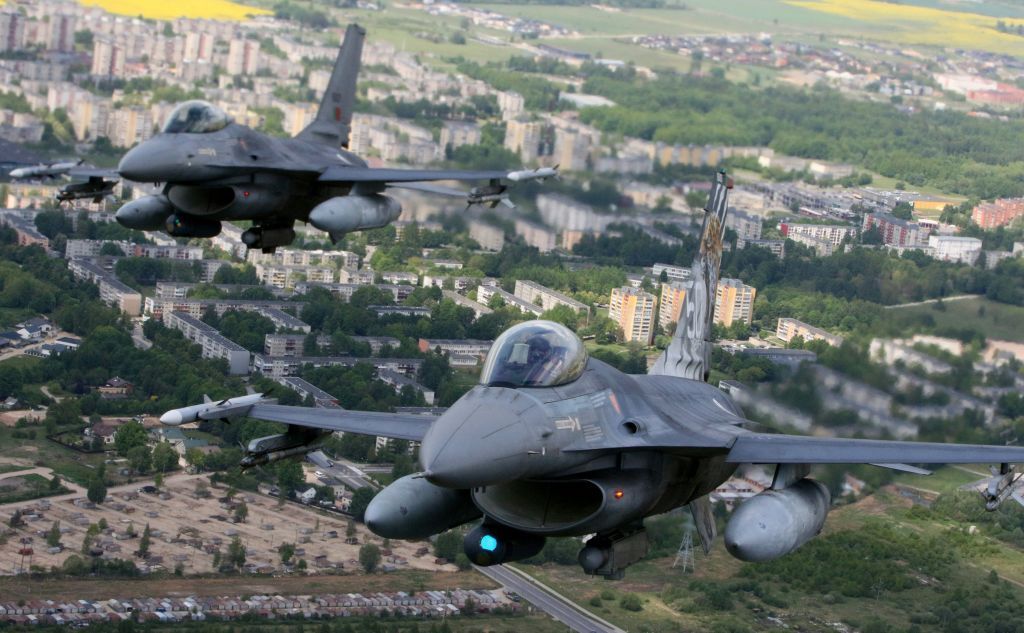
 

Ukrainian pilots currently undergoing F-16 fighter jet training in the United States are expected to complete their training by the end of 2024, a U.S. Defense Department spokesperson said in a press briefing on Jan. 4.

"I would expect sometime later this year we start to see those pilots graduate," said Brigadier General Pat Ryder, adding that it will take between five to eight months to complete the training, depending on an individual pilot's skill level.

Ukrainian pilots continue their training on the aircraft with U.S. instructors at an airbase in Arizona. The Ukrainians pilots began their training in late October by learning the basics of operating F-16s in classrooms and simulators before moving on to actually flying the jets. Ryder did not comment on how far along the pilots were in their training.

Earlier on Thursday, Belgium confirmed it will send two F-16 fighter jets and 50 training personnel to Denmark from March to September to support the training of Ukrainian pilots in the country. In addition to the United States, Ukrainian pilots are undergoing or will undergo F-16 training in Romania, Denmark, France, and the United Kingdom.

The Netherlands and Norway have also previously agreed to supply their own aircraft to bolster Ukraine's Air Force.

It is unclear when the first F-16s will actually arrive and be operational in Ukraine. Some Ukrainian lawmakers have suggested that they will not be in operation until late spring in the best-case scenario.


On Wednesday, the 31-nation alliance said that its procurement branch would help a consortium of European countries buy up to 1,000 Patriot interceptor missiles, the U.S.-made air defenses that now ring Ukraine’s capital city of Kyiv. The deal could be worth up to $5.5 billion, according to The Associated Press.
“This kind of arrangement between U.S. and European industries on their own, particularly on something as important to Ukraine as Patriot systems, that’s a big deal,” said Jim Townsend, a former senior Pentagon official.
The news follows a recent hailstorm of Russian bombs, rockets, and cruise missiles aimed at Kyiv and other Ukrainian cities in recent days. The Kremlin is drawing from its well-stocked precision-guided arsenal, which piled up over the summer as the Russians favored dumb bombs over smarter ones.
Now, they’re committing those saved-up smart bombs to attack Ukrainian cities. More than 150 Russian drone and missile strikes across Ukraine on Dec. 29 killed at least 30 people. Russia then pounded Kyiv and Kharkiv with 35 Shahed suicide drones and 99 missiles on Tuesday, even forcing next-door neighbor Poland to scramble its F-16 fighter jets. As of Tuesday night, Russia had launched 500 missiles and drones into Ukraine over just the past five days.
Patriot systems are seen as a crucial tool for Ukraine to keep defending its skies from Russian missiles for the long winter ahead, and agreements to produce these missiles in bulk will end up being much cheaper and more economical than having individual countries order their own shipments of Patriot missiles in a piecemeal way, Townsend said.
This also offers a glimmer of good news after a rough few months for Ukraine, with major new tranches of U.S. military aid being held up in Congress and open questions about whether the West is tiring of continuing to supply Ukraine as the war drags into another year.

This isn’t the first time in recent months that NATO has tried to flex its procurement muscles. The alliance is also pushing for members to ramp up production of 155 mm artillery shells and further consolidate around the shell as the standard round in Europe. Ukraine has fired so many of these Western-provided artillery rounds that, in many cases, they have warped the barrels of the weapons.
But increasing demand is also driving up the cost for many of the weapons that the Ukrainians and their European suppliers want. Adm. Rob Bauer, the head of NATO’s military committee, told Reuters in October that the price of a single 155 mm artillery shell had quadrupled since Russia’s all-out assault on Ukraine began in February 2022, to nearly $8,500 a pop.
And by November, the European Union had shipped only 300,000 artillery shells to Ukraine, far short of its goal of sending a million to Kyiv by March 2024.
 

Denmark is delaying its first delivery of six F-16 fighter jets to Ukraine by several months. Apparently, pilot training is taking longer than hoped, and Ukraine still lacks the logistics and infrastructure needed to support the F-16s. Meanwhile, Lockheed Martin is behind schedule supplying F-35s to Denmark. https://t.me/thebell_io/25708


Just to emphasize once again, Ukraine's summer offensive was made possible by a large shipment of artillery ammunition from South Korea. Ukraine's ammunition expenditure rate was always going to decrease this winter, though the lack of appropriated US funds has exacerbated this.

Obviously, it is critical that the US pass the supplemental aid package as soon as possible, but, looking at production/stockpile estimates, the relative ammunition situation for Ukraine in 2024 will not be as favorable as it was this summer. Which is why the next strategic-level Ukrainian offensive may not be possible until 2025.


South Korea's "indirect" provision of 155-mm artillery shells for Ukraine this year has made it a larger supplier of ammunition for the war-ravaged country than all European countries combined, The Washington Post (WP) reported Monday.

In an article on Russia's protracted war against Ukraine, the U.S. daily explained Washington's effort to secure munitions from South Korea when the U.S.' production of shells was barely more than a tenth of some 90,000 shells that Ukraine needed per month.

South Korean law prohibits providing weapons to war zones, but U.S. officials sought to persuade Seoul to provide munitions, estimating that about 330,000 155-mm shells could be transferred by air and sea within 41 days from Korea, according to the WP.

"Senior administration officials had been speaking with counterparts in Seoul, who were receptive as long as the provision was indirect," the WP reported. "The shells began to flow at the beginning of the year, eventually making South Korea a larger supplier of artillery ammunition for Ukraine than all European nations combined."

Chart: https://twitter.com/RobinBrooksIIF/status/1743245951861710951

Looking at trade diversion of western goods to Russia via Central Asia and the Caucasus, there's really only one country that matters in absolute magnitude: Kazakhstan. The rise in EU exports to Kazakhstan since the invasion is as big as the rise to all other countries combined.


Ukrainian Air Force Commander Mykola Oleshchuk says Ukraine’s Armed Forces struck a Russian command post at the Saky air base in annexed Crimea.

Thread: https://twitter.com/ArmsControlWonk/status/1743401762151657822

The case for the Russian missile that struck Kharkiv on January 2 being a North Koran Hwasong-11 variant is a very, very strong. A short thread building on the work of the #OSINTatMIIS team, especially the amazing @DuitsmanMS

Video: https://twitter.com/OSINTua/status/1743567710087192750

Krynky, Kherson oblast. Short thread🧵

My company takes part at this operation since the beginning. For this quite short period of time managed to destroy 20 enemy artillery pieces, two tanks and a couple of AFV.

Using HIMARS, FPV drones and something else👇
Using our big bomber drones (BTW, you sponsored and we bought 8 antennas for them that made them accurate) we mined roads (we learned their logistics using drones for recon).

Tank was driving and hit a mine. Became disabled and «Birds of Madyar» finished him🤌
In the same way we stopped Russian Ural and then finished it.

It’s only a small part of what have been done.
Russian Marines, airborne and mechanised infantry are constantly attacking our forces at the left bank. They achieved nothing.


Yaroslav Trofimov here thoroughly eviscerating the narrative that Ukraine and Russia were close to a deal that was prevented by the US & UK. The Russians demanded capitulation, then the Bucha massacre was uncovered.


On 22 December 2023, Ukrainian forces shot down three Russian Su-34 FULLBACK combat jets over southern Ukraine. Previously, Russian tactical air power had been playing a key role in the south, especially attacking Ukraine’s bridgehead on the eastern bank of the Dnipro River.

Following the losses, Russian Aerospace Forces (VKS) almost completely ceased crewed operations in the south through late December 2023. There is a realistic possibility that the lack of air support contributed to the failure of an attempt by Russian Ground Forces’ 18th Combined Arms Army to clear the bridgehead.

In recent days, Russia has again increased tactical air strikes around the bridgehead, but at a lower level than before the shootdowns. This once again demonstrates that Russia’s inability to establish air superiority in the early stages of the Russia-Ukraine war continues to undermine their daily operations.
 

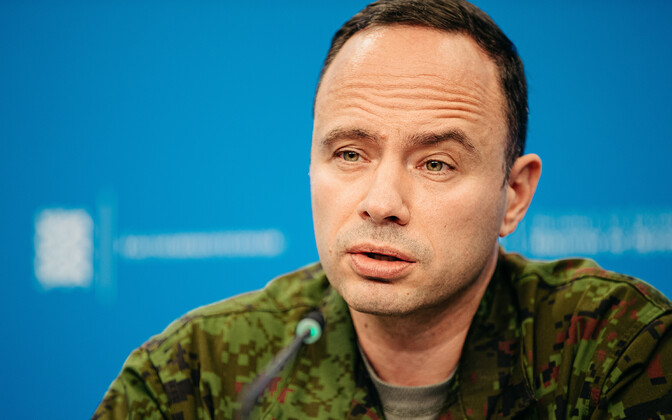
Over the past week, Russian troops have managed to take small areas of land and hold the initiative in Ukraine, according to Col. Tarmo Kundla, head of the Estonian Defense Forces (EDF) General Staff's ops department.

Over the past week, while there have been battles across the front line in Ukraine, the points of contact have been on the decline, Col. Kundla said. While a week before, the number of daily points of contact ranged from 70 to 120, last week it was between 50 and 60.

Despite this, Russian forces have still managed to gain some ground with small-scale attacks and maintain the initiative, Col. Kundla said at the Estonian Ministry of Defense's Friday press conference. "The main thrust is likely to be on the encirclement of Avdiivka and so it can be expected that additional resources will be deployed there in the near future," he added.

Russian forces have made small gains on the Kupyansk-Kreminna line, and have also captured some small villages near Bakhmut. They have also managed to take some small areas in the Donetsk region.

On the southern front, however, the Ukrainians have managed to liberate areas in settlements close to Velyka Novosilka, Col. Kundla noted. In the eastern part of Kherson Oblast, where fighting also continues, there has been little change over the last week.

Col. Kundla added that despite some successes, Russian forces have not been able to make any decisive breakthroughs. "Ukraine's defense is holding," he said.


And while Russia has been firing particularly intensively on Ukrainian settlements over the last two weeks, with an average of over 100 strikes a day, these attacks have not weakened the Ukrainians' defenses, with their air defenses in particular having done a good job.

However, the Ukrainians would be able to defend themselves even more affectively if they had the technology to destroy the platforms from which Russia's air strikes are being carried out, the EDF colonel said.


The first warning was a blip, a small anomaly picked up by radar scanning the skies over Ukraine. Within seconds, it became clear that the blip was a Russian ballistic missile streaking in Kyiv’s direction at several times the speed of sound.
It was just before 4 a.m. on Dec. 11, and there was no time to sound air-raid alarms in the city. While millions of civilians slept, Ukrainian forces fired off several American-supplied Patriot missiles as the deadly battle in the sky commenced.
Missile-on-missile battles like this play out in a matter of minutes, said a Ukrainian major, Volodymyr, the commander of a Patriot air-defense battery who insisted that only his first name be used because of the sensitivity of his unit’s operations.
From a mobile control room near Kyiv, his team tracked the salvo of incoming Russian missiles as the Patriot’s algorithms calculated their speed, altitude and intended course. With shuddering booms and bursts of light, its interceptor missiles knocked down one Russian missile after another.
“Given that the Patriot is one of the few systems that can effectively shoot down ballistic missiles, and ballistic missiles cause the most casualties, I think the number of lives saved during the war is in the thousands,” Major Volodymyr said.

But White House and Pentagon officials have warned that the United States will soon be unable to keep Ukraine’s Patriot batteries supplied with interceptor missiles, which can cost $2 million to $4 million apiece.

Since the start of the war in February 2022, Russia has directed more than 3,800 drones and 7,400 missiles at Ukrainian towns and cities. At the same time, Ukraine has become a testing ground for an array of air-defense systems, according to the Ukrainian military.
They range in sophistication from truck-mounted Stingers and short-range antiaircraft guns, like the German-made Gepards, to complex systems with longer ranges, like the French-designed SAMP/T, which can hit a target 60 miles away. There is also the National Advanced Surface-to-Air Missile System, or NASAMS, which is jointly produced by the United States and Norway.
Only the Patriots are designed to counter ballistic missiles, and from the moment the first Patriot battery entered the combat space, they reshaped the battle for the skies.
Major Volodymyr, 32, was manning a Soviet-era S-300 system when Russia launched its invasion in 2022. Yet while Ukrainian air-defense teams managed to keep Russian fighter jets from gaining dominance in the air and put up an agile defense against cruise missiles, they had nothing designed to shoot down ballistic missiles.

Still, the protection provided by the Patriots is limited, like a blanket that covers only a fraction of a bed. “We were able to defend Kyiv, but at the same time Odesa was being destroyed,” Major Volodymyr said.
Ukrainian commanders are now trying to plan for a future without knowing what weapons they may have at their disposal.
“We managed to create a shield over the state thanks to our foreign partners,” Major Volodymyr said. “But if our foreign partners turn their backs on us, we will return to the beginning of the war, when people simply did not come out of their shelters and the Russians tried to turn our cities into complete ruins.”


Kyiv's mobile air defences have enough ammunition to withstand a few more powerful attacks, but then will need more Western aid, a senior military commander said Wednesday.

Late last year, Russia launched its largest missile and drone attacks since the early days of the invasion and again on Tuesday bombarded the capital and the second-largest city of Kharkiv, killing five and injuring dozens.

"The current situation with man-portable air defence systems for mobile air defence groups is that there is enough ammunition to withstand the next few powerful attacks," Sergiy Nayev, commander of the joint forces of the armed forces of Ukraine, told AFP while meeting troops outside Kyiv.

"But in the medium and long term, we need help from Western countries to replenish the missile stock," added the lieutenant-general, who oversees mobile air defence units in Kyiv and Ukraine's northern region, which are armed with portable guns rather than larger systems such as Patriots.

"The priority is more ammunition," he said, since the Russians "really want to deplete our air defence system."

"Of course, we would like more missiles for Patriots and the systems themselves," he said, referring to larger US-supplied surface-to-air missile systems that Ukraine says downed 10 Kinzhal ballistic missiles on Tuesday.


Kyiv says the latest attacks underline the need for Western allies to speed up delivery of air defence equipment, combat drones and long-range missiles.

Soldiers in an air defence unit protecting Kyiv showed off the mobile weaponry they used to down Russian missiles and drones in the latest strikes.

Nayev gave medals to the soldiers and praised their accuracy, telling AFP that on Tuesday, "our effectiveness rate was around 90 percent."

"No other air defence system in the world is capable of showing such results, especially when fighting Russia," he added.

Tuesday's attacks saw parts of a downed missile set off fires that largely destroyed an apartment block near Kyiv's central rail station.

Asked whether people in Kyiv can feel safe, Nayev said: "improving the effectiveness of the air defence system is our task, and we are working on it 24/7".

"Every Ukrainian citizen should know that the military leadership is doing everything in its power to ensure their peace of mind," he stressed.

One soldier, Roman, who operates a "Stinger" anti-aircraft weapon, recounted how he and his team downed two cruise missiles on Tuesday using a US-supplied portable system and a ZU-23 anti-aircraft gun.

- Russia deploying decoys -

"We are working more often now" and Tuesday was "hard," he admitted, especially as his family is in Kyiv.

"My wife and child sleep at home in Kyiv. I understand that I need to work."

With a scarf and hat covering most of his face, Roman said that "we first worked with the Stinger and shot down the first missile."

"Then six minutes later the second missile flew over, and the guys from our unit worked with the ZU-23 on the second missile, also accurately."

Russia has recently used a new tactic, he said.

"The Russians are now firing missiles that release decoy flares during flight, like those on aircraft or helicopters. This has never happened before and this is a problem for Stingers," he said, since they use infrared to hit targets.

Decoy flares are much hotter than a missile's exhaust and can fool defence systems.

"About a month ago, we first heard about it, and now we've even seen it," Roman said, adding that in this case the decoys did not work.
 

Denmark’s donation of F-16 war jets to Ukraine will be delayed by up to six months, Danish newspaper Berlingske reported, citing the country’s Ministry of Defense.


Ukraine's air force said on Sunday morning that its air defense systems had shot down 21 out of 28 Russian drones launched against the south and south east of the country overnight.

"The enemy is shifting the focus of attack to the frontline territories - Kherson and Dnipropetrovsk regions were attacked by drones," Air Force spokesperson Yuriy Ihnat told national television.

According to local governor Serhiy Lyssak, an educational institution and its dormitory, two multi-apartment buildings and one administrative building were damaged in the city of Dnipro, injuring 12.

The air force also said that Russia had fired three cruise missiles but did not specify what had happened to them.

The attacks came a day after 11 people, including five children, were killed and 10 more injured in a Russian missile strike near the city of Pokrovsk in the eastern Donetsk region.


Germany's former President Joachim Gauck has issued stark criticism of Chancellor Olaf Scholz over the latter's hesitation in delivering long-range Taurus cruise missiles to Ukraine.

"The Chancellor must keep asking himself whether he is living up to his stated goal of doing all he can to prevent Russia obtaining a victorious peace," Gauck the Bild am Sonntag Sunday paper.

Asked specifically about Ukraine's repeated requests for Taurus missiles, whose 500-kilometer (roughly 300-mile) range would enable Kyiv to strike targets inside Russian territory, Gauck said: "I don't understand why we are hesitating to deliver these and other weapons."

"Given the grueling war of attrition and the abhorrent air attacks on the civilian population, I regard our actions with concern and ask myself whether our support is sufficient," he continued, saying that "a Russian victory would put the medium-term security of further European states at risk."

Ukraine's allies have generally been more reticent to provide Kyiv with ammunition and weaponry capable of striking into Russian territory, typically offering stocks better suited to attacking occupied areas recognized internationally as part of Ukraine, like Crimea or parts of the Donbas.

Gauck also said that Germany and Europe were "not sufficiently armed" to combat the "truly warlike threat" posed by Russia and said it was "important to increase Europe's military capabilities." He also said that in the event of the US no longer providing security guarantees, Europe would need an independent nuclear deterrent. Germany is not a nuclear power.

Gauck, 83, held the largely ceremonial role as Germany's head of state from 2012 to 2017. A former Lutheran pastor, he first came to prominence as an anti-communist activist in former East Germany.

The current incumbent is Frank-Walter Steinmeier.


A teenager from Dagestan was arrested for setting fire to a Su-34 bomber plane at the Shagol airfield in Russia, reportedly on orders from Ukraine.


That’s an important part of the history. In these talks 🇷🇺 demands were a puppet regime in Kyiv, trials against democratic leaders, no Western cooperation and a radical reduction of 🇺🇦 forces. It wasn’t an opportunity for peace that was missed - it was demands for capitulation that were rejected.


The primary task of Sweden's foreign policy in the coming years will be the support to Ukraine, Swedish Foreign Minister Tobias Billstrom told a defence conference on Sunday.
 

Director of Swedish Military Intelligence:

"We assess that Russia as soon as possible will increase it's military capabilities following their losses in Ukraine. It would be a mistake to believe that temporary reductions in Russian capabilities are buying us breathing room"


“The Pentagon’s dwindling funds have led the US to trim the size of packages for Ukraine, & 🇺🇦 soldiers said they started to notice a shortage of artillery a few months ago.”

‘Pentagon’s Ukraine Coffers Run Dry, Threatening Kyiv’s Grip on Its Territory’
“We’ve stopped all assault operations in the area,” said the 31-year-old commander of a drone squad working near Robotyne, a village on the southeastern front retaken by Ukrainian forces over the summer. “We’re focused on holding our ground and defending positions.”
“The Pentagon has authority to transfer about $4.2 billion in weapons from the U.S. arsenal to Ukraine, but no money to replenish those stocks. There are no imminent plans to announce additional aid packages, defense officials said.”
“Ukraine still has some U.S. arms on the way: Defense companies are continuing to sell Kyiv weapons paid for with U.S. tax dollars under the Ukraine Security Assistance Initiative.”

Video: https://twitter.com/Osinttechnical/status/1743934358673649996

Kherson Oblast, a Russian Bm-21 Grad suffers a catastrophic cookoff after taking Ukrainian counterbattery fire.

Video/thread: https://twitter.com/emilkastehelmi/status/1744042396545937782

This very interesting video has been circulating in the social media for a couple of days. A few observations:

1. Russians have tried to attack in the same area before, and have lost about half a company of tanks. For some reason, they believe this time will be different. 🧵


(1) Rosgvardia, the Russian National Guard, is bolstering its resources and personnel as a result of upheavals in Russia’s internal security scene from the war in Ukraine. Elements of private military company Wagner Group came under Rosgvardia from October 2023,
(2) followed on 3 January 2024 by the Donetsk People's Republic’s (DNR) "Vostok" Battalion. Moscow has also been advancing its efforts to dissolve the DNR’s "Kaskad" group, which specialises in drone operations, and subordinate parts of it to Rosgvardia.
(3) In July 2023, the Russian State Duma authorised Rosgvardiya to employ heavier weaponry. New capabilities, along with its augmentation with experienced veterans from other groups, will likely represent a significant increase in combat effectiveness.


Great piece from @yarotrof on the peace negotiations between Russia and Ukraine in March ‘22
Debunks a lot of myths about Russia’s goals (it wasn’t just about NATO), US involvement (there wasn’t any) and Johnson convincing Zelensky to reject (he didn’t)
“Russia’s major demand, in addition to keeping Ukraine out of NATO, was to limit its ability to defend itself in the future. Moscow wanted Ukraine’s armed forces capped at 85,000 troops, 342 tanks and 519 artillery pieces”

I wonder why Russia would want this 🤔
 

The head of the armored service of the Russian Airborne Forces (VDV), Colonel Arman Ospanov, was killed during visiting the positions of the 104th Guards Air Assault Division near Kozachi Laheri in Kherson Oblast of Ukraine on January 6.

According to one source, Colonel Ospanov decided to personally deliver spare cables to the BREM armoured recovery vehicle for the evacuation of the APC. Upon arrival, he and the evacuation group came under fire of Ukrainian artillery. Ospanov was killed instantly.


Interesting piece, but it's missing a crucial point: ammo shortages also constrain 🇺🇦 FPV drones production.

'Short on artillery shells, Ukraine is relying on explosive drones to help fend off Russia’s forces. It’s working—at least for now.'
Furthermore, we got much different data on this during our last research trip: "While artillery usually needs several shots to hit a target, FPV drones hit almost every time."
Manpower constraints are real: "Tulayne’s platoon should be twice as large as it is, but he hasn’t been able to recruit new men, leaving the team overworked."

And even though the drones are cheap, there’s a limit to how many can be used.
"Though the drones are effective against infantry & vehicles, they can’t carry enough explosive to destroy fortifications, which artillery can blast through. In addition, they fly far slower than artillery...Sometimes, by the time they reach their destination, the target is gone.

This is piece referenced above.


One of the worst shoot down ratios I can remember for Ukraine last night.
Ukraine’s air defenses only brought down 18 of the 51 missiles Russia fired.
Partly because strikes targeted areas where most advanced defenses aren’t located. But still deeply worrying sign.


Morning news in Ukraine informs you how quickly Kinzhal missile can reach your city. It's 1.7 minutes for Kharkiv and 3.2 minutes for Kyiv

Thread: https://twitter.com/amenka/status/1744381391851188230

Behind Russia GDP’s 3.5% expansion in 2023 are uncontrolled growth of expenditures, high inflation, distortions in the labor market. Problems will only multiply in the future, as I argue in a
@ForeignAffairs piece. THREAD 1/
2/ Putin faces an impossible trilemma. He must fund the war against Ukraine, maintain the Russian populace’s living standards, and safeguard macroeconomic stability. Achieving all three goals is impossible
3/ For now, high oil&gas revenues, competent financial management by the Russian authorities, and laxed enforcement of Western sanctions play to the Kremlin’s advantage, but they mask growing imbalances in the economy 👇
4/Military spending eclipsed social spending—less than 5% of GDP—for the first time in history. $18b state investment to 4 annexed regions of 🇺🇦 ↗️ interregional inequality. 🇷🇺 manufacturing has been transformed, with civilian industries dwarfed by the military-industrial complex
5/ Defense enterprises operate at fever pitch now. Any surge in demand will likely force prices to rise due to the sector’s inability to increase supply. This pushes up wages. For the time being this allows the Kremlin to maintain a pretense of normalcy, but with high inflation
6/The interplay between mil spending, labor shortages& rising wages has created an illusion of prosperity that is unlikely to last. ↗️ wages and state payments => consumption. Putin’s directive to secure availability of consumer goods => imports, discouraging domestic production
7/ The Kremlin’s way to fuel growth by subsidized loans to people and businesses undermine macroeconomic stability. The amount of such loans has exceeded $130 bln (7% of GDP). The mortgage sector is the main liability, as 70% of new credit accounts for soft-loans programs
8/ 🇷🇺 have also become unsustainably reliant on war-related payments. If the war is to end, it will become difficult for many people to service their loans, especially in the face of rising prices. See
@WSJ dispatch by @chelseydulaney, @georgikantchev
9/ The interest rate in Russia is 16% now. Businesses and households still continue to borrow, indicating high inflation expectations. @bank_of_russia is unlikely to return the rate to single digits any time soon
10/ Beyond the near-prohibitive cost of borrowing, for the Kremlin, high interest rates constitute an image problem, undermining Putin’s narrative about the stability of the Russian economy. A healthy economy, after all, does not need a double-digit key rate
11/ Volatility of the ruble is also a problem. Left at the mercy of trade flows, the ruble has oscillated between 50 and 100 RUR/$ over just 2 years. A three-digit $ exchange rate not only stokes inflation; it triggers public concern
12/ The authorities cannot remove the main reason for the ruble’s weakening, as they heavily rely on imports. What the Kremlin can do is control over capital flows and manual regulation of prices, triggering cascade of negative effect if the Kremlin uses these tools
13/ Control of prices works here and now, but they do not help against inflation and have negative effects in the long term. Any restriction of supply distorts market mechanisms and signals. More on that in this @FT piece by @NastyaStognei @courtney_ft
14/ So far, the situation looks stable in the short term:
gold and yuan reserves allow to finance ext.debt;
🇷🇺low prewar debt-to-GDP means the debt is unlikely to become a risk in upcoming years; turning to domestic market to finance the war is still an option
15/ Still, the war has already taken a toll on pillars of policy crucial for macro stability, including the budget rule, freedom of capital flows, and—to some extent—the independence of the central bank. Most of wounds cannot be healed without ending the war and the sanctions
 
AI for terminal guidance: https://twitter.com/Sam_Cranny/status/1744244599860654154

Hello! Good morning. If your timeline is like mine, you might be seeing the Telegram post from the image below today.

Why? Well, in short, the poster claims to have seen intercepted Russian FPV footage that shows the drone using AI for terminal guidance.
He states that the operator flies the drone to the area and selects the target with AI assistance. It then flies into the target. This isn't the first use of AI in this application, there is good evidence that Lancet can do it too. The new Iz-53 variant is more autonomous.
The original poster (OP), later said he had watched two more videos.

The Russians have been talking about this for a while. The Gadfly reportedly carried this capability in August 23: https://vk.com/wall-35660695_1488737?z=video-35660695_456368741/6842cd31bc5f40b74a #AI
If it was an FPV with edge-based image processing and computer vision as opposed to a Lancet, that is very interesting. One reason for this is that I think most FPVs are already stretching their payload, adding the compute and power for those kinds of algorithms might be tricky.
It also supports a hypothesis I had last year, which is written up in a forthcoming @RUSI_org paper on lethal autonomous weapons. In short, there are lots of different types of LAWs, and the type made in somebody's garage is most likely to proliferate.
What does this mean?

Immediately, if all of this is true, Russian FPVs will probably be a bit more accurate for a bit. Especially against moving targets. The Ukrainians will follow suit and deploy the systems they have developed with AI.
Both sides will also have a bit of a lead in developing and using edge-AI for targeting. That's useful, the more you use an algorithm, the better it gets. In theory.

Is it terminator time? No. But it is worth considering what comes next. My thoughts are in the next tweet...
1. Probably a limited swarming capability to achieve '1 flight kills' against things like tanks or well-manned positions.
2. Use of AI for navigation to reduce impact of GNSS denial.
3. Some form of counter-measure to disrupt or deflect AI-based targeting. It can be fragile.


Russian forces occupying and attacking Ukraine are retaining the tactics seen last year, with strikes on Ukrainian towns and cities, including those on civilians.

At the same time, Ukrainian forces' ability to repel these attacks, thanks to better prior intelligence and a more integrated air defense system nationwide, represent a qualitative leap in their defense capabilities over the past year, Lt Col. Toomas Väli of the Estonian Defense Forces (EDF) says.

Russian forces have been constantly launching missile and drone strikes on Ukrainian cities in recent weeks.

These are, Lt Col. Väli said, primarily aimed at breaking the will of civilians and civil society's ability to defend itself.

Appearing on ETV show "Ukraina stuudio," Lt Col. Väi said: "Our understanding is that the strikes are often not aimed at military targets, as was the case with Germans and their raids on London during World War Two."

A quieter period earlier on corresponded to Russia's activity in amassing missiles and drones in order to re-use the same tactics it had last year.

One difference however is that Ukraine has been able to integrate its Eastern and Western air defenses into one functioning unit, Väli said, and has made better use of its early warning systems and intel gathering.

"A major positive change has been seen in Ukraine's air defense over the past year," he said.


Russian forces can also be outfoxed, he noted, citing the example of the reported destruction of three Russian Sukhoi Su-34 all-weather fighter-bombers.

The Ukrainians probably used an element of surprise here, in the area around Kherson, Väli went on.

"The ability to see through an opponent's maneuver is something the Ukrainians are very professional in," Väli said.

At the same time, the Ukrainians have managed to carry out airstrikes on Russian territory, plus on the occupied Crimea, demonstration of the possibility of breaking through the much-vaunted Russian air defense system, the officer continued.

Nonetheless, caution should be exercised with regard to those who claim that Russia has run out of missiles and shells.

"We must understand that Western sanctions have affected the Russian economy. At the same time, this is already a wartime economy we are speaking out - people work in three shifts and produce according to needs," Väli said.

Similarly, it is also worth treating with caution the claims that the missiles provided by North Korea have been pressed into use by the Russian military immediately, and without issue.

Väli cast doubt on them even being North Korean-produced in the first place, with only some components or even just unguided missiles, or "dumb bombs," originating in North Korea, for use by Russia's arms industry.
 

Serbian mercenary in the Russian army, Dejan Berić, complains that Russians from the 119th brigade treated other Serbs like cattle, called them gypsies, and beat a number of them. The command of the brigade sent the mercenaries into assaults without ammo and offered to collect some during the battle.


Polish officials have resisted cooperating with an international probe into the sabotage of the Nord Stream natural-gas pipelines and failed to disclose potentially crucial evidence, according to European investigators working on the case.
Those Polish officials have been slow to provide information and withheld key evidence about the alleged saboteurs’ movements on Polish soil, investigators said. They are now hoping the new government in Warsaw, which took office in December, will help shed light on the attack.
European investigators have long believed the attack was launched from Ukraine via Poland. But they say Warsaw’s failure to fully cooperate has made it hard to establish whether the attack happened with or without the former Polish government’s knowledge, according to senior officials.
Some senior European officials say they are considering approaching the office of Donald Tusk, Poland’s new prime minister, for help in investigating the biggest act of sabotage on the European continent since World War II.


Evidence that Russia is using Iranian jet-powered Shahed-238 kamikaze drones to strike targets in Ukraine has emerged. The Shahed-238 is derived from the Shahed-136, which Russian forces have already been using for more than a year. If this proves to be the case, as The War Zone previously explored in detail, the Shahed-238's increased speed over its propeller-engined predecessors and other additional capabilities present serious new challenges for Ukrainian air defenses.

Pictures that are said to show the remains of a Shahed-238, or a variant or derivative thereof, that was launched at a target in Ukraine appeared on social media earlier today. Where and when the debris was recovered, and whether or not the drone hit its intended target are unknown.


New satellite images show Russia painted fake fighter jets at an airfield, likely to confuse Ukrainian weapons systems and possibly create false perceptions about what’s happening at its bases.

It’s the war’s latest example of decoy tactics and deception.

Video from Belgorod: https://twitter.com/wartranslated/status/1744462991746044045

Video from Krynky: https://twitter.com/Osinttechnical/status/1744478209054310874

Video from Russian trench in eastern Ukraine: https://twitter.com/Osinttechnical/status/1744548228664541547


German Chancellor Olaf Scholz on Monday urged other EU nations to deliver more military aid to Ukraine, saying Berlin has asked Brussels to check with countries on their planned support for Kyiv.

Speaking to reporters, Scholz warned that while his government is planning to double its military aid to Ukraine to €8 billion this year within a draft budget, "this alone will not be enough to guarantee Ukraine's security in the long term.

"I therefore call on our allies in the European Union to also step up their efforts in support of Ukraine. The arms deliveries for Ukraine planned so far by the majority of EU member states are by all means too small," he said. "We need higher contributions."

The chancellor's unusually frank remarks, delivered at a press conference with Luxembourg Prime Minister Luc Frieden, reflect the growing frustration and concern among German officials that other EU countries appear to be delivering insufficient military resources to Ukraine, about to enter its third year of full-scale invasion by Russia.


A section of railroad near the city of Nizhny Tagil in Russia's Urals region was hit by a "bang", TASS and RBC news agencies reported on Monday, citing the transport prosecutor's office.
Russian mainstream media frequently uses the term "bang" as a euphemism for a blast.
Baza, a Russian media outlet with security sources, said the blast on railway took place near the station of San-Donato, near an oil depot.
 

On December 29th, Russia fired more than a hundred and fifty missiles and drones on cities and towns across Ukraine, killing more than thirty people in Kyiv alone, the largest number dead in the capital in a single day since Russia’s invasion nearly two years ago. The first days of 2024 brought more of the same: day after day of aerial bombardment, with the seeming aim of weakening Ukraine’s air defenses and targeting facilities that produce long-range weapons. This year is likely to be marked by exchanges of missile and rocket fire rather than dramatic, large-scale maneuver warfare. But the most decisive fight may also be the least immediately visible: Russia and Ukraine will spend the next twelve months in a race to determine which side can better reconstitute and resupply its forces, in terms of not only personnel but also shells, rockets, and drones.
In other words, the war may not be won outright this year, but the conditions for victory may well be set in motion. If Western backers provide necessary arms, training, and financing to Ukraine, its military may emerge, by next year, with the upper hand. But such an outcome is far from assured. “The West is on a trajectory to end up losing this war through sheer complacency,” Jack Watling, a researcher of land warfare at the Royal United Services Institute, told me. Watling has made more than a dozen research trips to Ukraine since the start of the invasion. “I’m not making a prediction,” he told me. “Rather, it’s a choice—Western countries have agency.”

The Kremlin, meanwhile, used 2023 to reorient the Russian economy around the war effort, pumping billions into arms production and related industries. Defense spending makes up nearly a third of the state budget for this year, during which Russian factories will produce as many as three million shells, a larger number than what would come from the U.S. and Europe combined. Watling pointed out the irony of Russia, an economy the size of Italy’s, outproducing the entirety of NATO in terms of artillery ammunition. Last year, Ukraine largely fought the war with munitions produced before the start of Russia’s invasion. “This year,” Bielieskov said, “is when we will begin to really feel the effect of decisions not taken earlier.”
Watling recalled meeting with defense ministries of NATO states as far back as the summer of 2022. “They asked me, ‘What does Ukraine need?’ ” Watling relayed the rough numbers in terms of troops and ammunition. As he tells it, he had another round of meetings this winter: “I told them, ‘We had this same conversation more than a year ago. The numbers haven’t changed. We’ve only lost time.’ ” By his estimate, last summer, Ukraine was firing seven thousand shells a day, and Russia was firing five thousand. Today, that ratio has swung dramatically in the opposite direction, Russia firing ten thousand shells for every two thousand launched by Ukraine. “The failure to translate rhetoric into action has a body count attached to it,” he told me.

“Putin can draw a certain line,” Tatiana Stanovaya, a senior fellow at the Carnegie Russia Eurasia Center, told me. “In Putin’s understanding, the counter-offensive has failed, and the West won’t be able to provide the level of military aid that would fundamentally change the situation on the front going forward.” A period of uncertainty, going back to the unravelling of Russia’s initial invasion plans in 2022, appears to have ended, and one of stability has begun. All Russia has to do now is wait. “Putin thought all along that support for Ukraine was temporal and that he would outlast it,” a U.S. defense official told me.
Putin, then, isn’t entirely wrong to feel a renewed sense of confidence at the start of the year. And, if Russia can resist the temptation to waste lives and equipment in a winter offensive, its defensive positions look stable. But that may prove unlikely. “Our generals may well mistake the ability to defend with an opportunity to go on the attack yet again,” a defense source in Moscow told me. “The results of such an action are predictable.” (The source returned to an oft-repeated axiom: “Russia is never as weak as may appear, but it’s not as strong, either.”)
Fundamentally, Putin’s political goals for Ukraine remain as grandiose as ever. “In his mind, he really doesn’t want to take Kyiv by force,” Stanovaya told me. “He wants them to give up, to fall to their knees.” In other words, regime change, with a pro-Russian government in Kyiv not because Russian tanks installed it there but, rather, because modern Ukraine failed from within and could no longer resist Russia’s imperial dominion. “This was never about territory for him,” Stanovaya said. “He doesn’t care where the borders are drawn. If Ukraine is friendly, it doesn’t matter what territory formally belongs to whom—it’s all our land, in our zone.”

But, if Ukraine remains, in Putin’s terminology, “anti-Russia,” then it must be injured and weakened, one strike at a time. This explains the existence of two seemingly contradictory phenomena: Putin’s interest, as reported by the Times, in negotiating a ceasefire that would effectively freeze Russia’s current positions, and the unprecedented aerial bombardment of recent days. He’d prefer the former, but the latter is a way to demonstrate the cost of not making a deal on Russia’s terms. “Putin believes that not only is his preferred outcome achievable but that it is inevitable, and must be realized as swiftly as possible,” Stanovaya said. Entreaties about a ceasefire may be an attempt by Putin to lead Western politicians to question the necessity of further arms transfers to Ukraine.
After all, as Putin has always seen it, his real interlocutor is not the government in Kyiv but its Western backers, the U.S. most of all. Stanovaya encapsulated the Russian leader’s appeal for the coming year: “Either you abandon your support of Ukraine and reach a deal with us, or we take Ukraine anyway, and destroy a lot of lives and billions in your military equipment in the process.” As for the West, Watling said, “We’re really running down the clock.”


A secret meeting in Saudi Arabia on Dec. 16 between Ukraine, its G-7 allies, and a small group of Global South countries led to “no major progress,” reports Bloomberg. China didn’t even attend, and the non-West wants Kyiv to engage Moscow diplomatically.

Video from Avdiivka: https://twitter.com/Osinttechnical/status/1744743230279651824


Ukraine has a deficit of anti-aircraft guided missiles nearly two years after Russia's full-scale invasion, Air Force spokesperson Yuriy Ihnat said on Tuesday.
Ukraine has relied heavily on military and financial aid from its Western allies since the invasion in February 2022, but political wrangling has delayed the disbursement of major aid packages for this year.
Ihnat told Ukrainian television that Ukraine had used a "considerable reserve" of missiles defending itself against recent attacks, and added: "It is clear that there is a deficit of anti-aircraft guided missiles."


Several Russian cyberattacks targeting Ukraine's budget payment systems have been repelled, according to senior Ukrainian lawmaker Danylo Hetmantsev.

Hetmantsev, who heads the Ukrainian parliamentary committee for finaces, taxes and customs, said on Telegram that the attack was attempt by Russian hackers to destroy Ukrainian payment systems, but was thwarted.

The lawmaker also said that some minor access restrictions for users from abroad were possible.

Last week Ukraine's Security Service, known as the SBU, warned that Russia was planning more cyberattacks on the country's largest telecoms provider Kyivstar, following an attack in December that knocked out phone and internet services.

Illia Vitiuk, head of cybersecurity department in SBU, alleged the attack was the work of Sandworm, a regular unit of Russian military intelligence that has targeted Ukrainian telecommunication operators and internet service providers, the statement said.

Other services impacted by the December attack were bank ATMs, air raid sirens, and point-of-sale terminals in stores.


Ukraine's Defence Intelligence (HUR) stated the Ukrainian Armed Forces attacked Russian targets at Saky aerodrome and Sevastopol on 4 January 2024. These attacks highly likely degraded the awareness and coverage of Russian air defences over the Crimean region.

In response, Russia launched a number of missile attacks across Ukraine on 8 January 2024, targeting several cities including Kryvyi Rih and Zaporizhzhia city.

This once again demonstrates the ineffectiveness of Russian air defences in protecting key locations, despite their enhanced preparedness. The scale of the Russian response is likely indicative of the level of success achieved by the Ukrainian armed forces’ actions of 4 January 2024.
 

Military intelligence claims capture of Russian drone producer's classified data​

Story by Martin Fornusek • 23h

Ukraine's military intelligence agency (HUR) seized 100 gigabytes (GB) of classified data worth around $1.5 billion from the Russian company Special Technology Center, the HUR said on Jan. 8.

The St. Petersburg-based firm, placed under Ukrainian and international sanctions, produces Orlan reconnaissance drones, electronic warfare systems, and other tools employed by the Russian military.

Orlan drones are widely used by Russian invading forces in Ukraine to adjust artillery fire and scout on Ukrainian positions.

The HUR allegedly obtained blueprints, patents, and software on both existing and developing projects.

The agency said it gained access to the data of the "critically important" defense industry company "thanks to effective cooperation with patriotic representatives of civil society and the media community."

"This is a significant blow to Moscow: the data is already being used to strengthen Ukraine's defense capabilities and weaken the aggressor state," Ukraine's military intelligence agency said in its statement.

In December, the media reported that a Ukrainian hacker group, backed by the Security Service of Ukraine (SBU), targeted the critical infrastructure of Rosvodokanal, a Russian utility company. Hackers allegedly deleted over 50 terabytes (TB) of data and gained access to 1.5 TB.

The attack came only a week after a massive Russian-linked cyberattack against the Ukrainian phone operator Kyivstar, which caused internet and network outages across the country.
 

A drone strike today set ablaze a fuel facility in the Russian city of Oryol, in western Russia, according to local officials. The drone in question is said to have hit the Orelnefteprodukt oil depot, while another struck the building of a local energy provider, Oryolenergo.

Oryol is located roughly 230 miles south of Moscow and 140 miles from the Ukrainian border.

The local governor, Andrei Klychkov, took to the Telegram messaging app to announce the strike, saying that the fire at the Orelnefteprodukt facility had been contained.


Ukrainian manufacturers have ramped up output of Unmanned Aerial Vehicles (UAVs) to the extent that Kyiv's current drone procurement budgets are not sufficient to buy everything being produced, Ukraine's technology minister said on Tuesday.
Mykhailo Fedorov, a deputy prime minister who also handles the digital brief, has championed the use of drones to fight off the Russian invasion since its early days.
"As of today, the market has accelerated much faster than the amount of money to buy all the UAVs," Fedorov told Ukrainian national television.
"Therefore we need to increase financing and open up markets further, so that prices fall thanks to competition and localisation of part (production) begins," he said.

Thread: https://twitter.com/Tatarigami_UA/status/1744808354533331447

Geospatial Analysis: Railroad Construction on Occupied Territories. 🧵Updated Thread:

1/ Frontelligence Insight examined satellite imagery of railroad constructions in occupied territories, specifically south of Donetsk and in Mariupol. Here is what we know:
2/Burne - Malovodne branch

To enhance logistics between Russia, Donetsk, and Mariupol, Russians are actively constructing a new railroad branch to the south of Donetsk. This branch aims to bypass a risky section of the frontline near Mariinka and Vuhledar.
3/ The new branch starts in the village of Burne and links up with the existing railroad at Malovodne. Based on satellite imagery, significant progress is evident in the construction of this railroad branch, making our team believe that it might be completed in 2024.
4/ Comparative analysis highlights a slowdown due to the construction of a bridge over the Kal'mius River. While composing this analysis, reports from the adviser to the Mariupol mayor suggested that Ukrainian forces had targeted the bridge while still under construction
5/ The vulnerability of this single point of failure to Ukrainian weaponry increases the likelihood of future strikes even after completion, impacting the functionality of the entire railroad branch.
6/ Taganrog - Crimea

Russians are also working on the railroad connecting Taganrog with Mariupol and Crimea to the rest of Russia. This serves as an alternative to the Crimean Bridge, aiming to shorten travel time. Frontelligence Insight has identified early construction stages
7/ In contrast to the previously mentioned railroad between Burne and Malovodne, this railroad branch is much longer and is still in the early stage of construction. Consequently, we assume that Russia won’t be able to complete this project by the end of 2024.
8/ Sattelite imagery shows that Russians also successfully restored the gas pump station and worked on the restoration of a gas pipeline between Mariupol and the broader continental region of Russia.
9/ This pipeline is likely a component of the Mariupol-Taganrog natural gas system. The significant investment in infrastructure suggests that the Russians are intending to transform the region into a fortified frontline stronghold with a robust military presence.
10/ To effectively target railroad bridges, Ukraine would require more powerful missiles designed for bridge destruction, like the German Taurus missiles. Overall, Russia is anticipated to improve and expand its military infrastructure on occupied territories in 2024
11/ With Ukraine facing challenges such as ammo shortages, undermanned units, and limited assistance from the US in 2024, a defensive approach will likely be adopted. Concurrently, Russian forces are expected to intensify their efforts in expanding their military infrastructure.


German Chancellor Olaf Scholz wants to put added pressure on EU partners to deliver more weapons to Ukraine by raising the issue at a special summit of EU leaders next month.
 

Iran has developed a new attack drone for Russia's war in Ukraine and appears close to providing Moscow with surface-to-surface missiles, an informed security source has claimed.

The Shahed-107 was described as an "explosive and reconnaissance" unmanned aerial vehicle (UAV), possibly fitted with technology to seek out high-value battlefield targets such as British and American multiple-launch rocket systems used by Ukrainian forces.

The source told Sky News "a few units" of the specially-designed drone may have been offered to Russia in a deal estimated to be worth more than $2m (£1.6m).

This reflects "the significant force design work Iran is engaged in to support Russia's interests regarding Ukraine", the source said.

The security source said the new Shahed-107 drone was from the Shahed-101 family of unmanned aerial vehicles, with a V-shaped tail.

About 2.5 metres long and with a wingspan of three metres, the UAV can be launched from a vehicle and is estimated to have a range of up to 1,500km (932 miles), the source said.


It is thought to be fitted with a livestreaming transmitter for transmitting video. Such reconnaissance capabilities mean the drone could be used to identify targets on Ukraine's frontline for other UAVs or weapons systems to hit.

The security source claimed that Iranian security forces conducted a trial with the Russians at an airbase in central Iran that included the Shahed-107 and the Shahed-136 drones.

The partnership would become even more significant with the delivery of Iranian surface-to-surface ballistic missiles to Russia - far more lethal and harder to shoot down than drones.

"From reliable information it seems that Iran and Russia have renewed the weapons deal and Russia is expecting to receive, sometime soon, precision surface-to-surface missile systems," the informed security source said.

The Ukrainian source said the transfer of Iranian missiles would help Russia to repeat a campaign of terror launched last winter against Ukraine's energy infrastructure, which caused extended blackouts across the country at a time of freezing temperatures.

The kind of systems could include Tehran's shorter-range tactical Ababil missiles or its Fateh collection, which have a slightly longer range of between 300 km to 700 km (186 miles to 435 miles), according to Fabian Hinz, a research fellow at the International Institute for Strategic Studies (IISS) think-tank.

"They could hit targets in the entirety of Ukraine with accuracy in that case," he told Sky News.
Ballistic missiles are harder to intercept so would force the Ukrainian military to use more of its finite supply of US-provided Patriot air defence missiles, which have a limited range.

The Patriot batteries "cannot protect every spot in Ukraine against ballistic missile attacks", Mr Hind said.

"So the Russians could leverage that situation to cause quite a lot of destruction when it comes to civilian infrastructure, for example."

In return, Iran would likely be seeking cash and military technology from Russia.

Mr Clarke, the visiting professor, said the anticipated delivery of missiles signalled that Iran has "decided strategically, I think, to throw in their lot with Russia and by implication, also China, because they see a realignment of world politics taking place before our eyes, and they think that this will help put them on the side that will eventually prevail".


KYIV, Jan 10 (Reuters) - Ukraine exported 4.8 million metric tons of food via its Black Sea corridor in December, surpassing the maximum monthly volume exported under the old U.N.-brokered grain deal, brokers said on Wednesday


New polling reveals most Russians (63%) support the war in Ukraine, nearly two years after the invasion.

Some 64% of those surveyed saw the war as symptomatic of a larger "civilisational struggle between Russia and the West", a study by the University of Chicago's nonpartisan National Opinion Research Centre found.

The results show support for the war among Russians remains consistent.

There was a slight decrease in support for the war, however, from a poll in November by The Levada Centre, in which 75% of respondents said they were in favour.

The new polling suggests Russians care a lot about their country's place in the world.

An overwhelming majority (94%) expressed at least a moderate level of pride in their Russian identity.

Meanwhile, 62% said they believed Russia is treated unfairly in the world.
 

Russia’s record number of aerial attacks on Ukraine over the New Year period has highlighted Kyiv’s struggle to bolster its electronic warfare technology aimed at jamming and diverting enemy drones and guided missiles.
Both sides have invested heavily in systems that can neutralise each other’s drone armies, but Moscow maintains the upper hand as it had already focused on these capabilities before launching its full-scale invasion of Ukraine nearly two years ago.
Ukrainian forces are however trying to catch up.
Mykola Kolesnyk, commander of a Ukrainian drone unit, said electronic warfare (EW) duels with the Russian forces were fierce and relentless. He described them as “invisible scissors that cut off the connection . . . of a device that is remotely controlled”.
Ukraine and Russia are both using tens of thousands of drones a month. Both have this year increasingly turned to cheap, commercially available first-person view drones controlled by operators using a head-mounted camera.
“The Russians have been producing so many lately that it’s becoming a huge threat,” said Col Ivan Pavlenko, chief of EW and cyber warfare at Ukraine’s general staff. “What’s happening here, the massive use of drones, is new . . . So EW becomes increasingly important.”
Pavlenko called on allies to deliver more capabilities that can “suppress or spoof” the satellite guidance system (GNSS) of Russia’s guided missiles and drones.
“Delivery to Ukraine of a sufficient number of powerful GNSS jammers or at least signal amplifiers could also help counteract enemy air attacks.”

Also, with Russia’s EW systems requiring high-tech components such as amplifiers, synthesisers and software, it was important for western allies to impose sanctions on those components, he said.

Russia has increasingly deployed EW to push off-course Ukraine’s western-supplied, precision-guided munitions, such as Himars rockets and Excalibur artillery shells. Moscow has also used its EW capabilities to mimic missile and drone launches in order to confuse Ukraine’s air defences and identify their locations, Pavlenko said.
Without EW protection, Ukrainian troops are easy prey for drone-guided artillery strikes, drones dropping bombs and kamikaze strikes by exploding unmanned aerial vehicles.
One Ukrainian soldier bemoaned the lack of EW protection for his unit, which was largely wiped out during weeks of intense bombardment on the eastern front, with Russian drones “hitting us like mosquitoes”.
“What radio-electronic warfare? . . . We had none. I don’t even want to recall those days in the trenches. Our boys were falling like flies,” he added.

EW systems come in many shapes and sizes, from radar arrays and truck-mounted transmitter-receivers to pocket-sized devices. Both sides have rushed to protect troops by erecting makeshift EW systems, which one Ukrainian engineer said volunteers assemble in garages.
Both Russia and Ukraine have maintained strong R&D schools for EW that had been established in Soviet times, but the Russian government has invested heavily in new kit for more than a decade.
“Electronic warfare is an exceedingly important part of modern operations, and the Russians have had a significant advantage in it throughout the war, which has proved a sustained problem for Ukraine,” said Jack Watling, a senior fellow at the Royal United Services Institute, a UK think-tank.
Russia’s Pole-21 guidance suppression system can be stationed on the ground, on towers or mounted on vehicles and can jam an area of 150km, according to a military consultancy report shared with the Financial Times. Another is the Murmansk, which uses vast extendable 32m antenna towers mounted on mobile armoured vehicles.
“The problem is that the Russians are able to field electronic warfare systems across most of the front, down to platoon level in some cases when you’re talking about things like Pole-21,” Watling said.
Still, Ukraine has periodically found weak spots in Russia’s EW and air defences, allowing its drones to strike deep into Russian territory to hit air bases, depots and other targets including the Kremlin itself.

Pavlenko, from Ukraine’s general staff, said it was crucial for the soon-to-be-delivered F-16 fighter jets provided by western allies to be equipped with modern EW systems, adding that Kyiv was working with allies on this request.
He boasted that Ukraine’s EW systems had been used to capture prized Russian UAVs like the Orlan and had tricked other drones into flying back to Russia.
Pavlenko said Ukraine could be used as an EW laboratory, though he admitted that some western militaries were reluctant to share technology.
“Any sophisticated high-tech equipment has software that can be affected. And this is the future,” Pavlenko said. “This approach is more promising, and where best to test it if not in Ukraine?”

Thread: https://twitter.com/sambendett/status/1745076169899221423

1/ Apparently, all is not well in Russian military's blogger/correspondent land - Rybar, one of the key pro-Kremlin Telegram channels, is reporting on an info campaign to pressure other reporters who try to shed light on current military problems and issues. More below:


Russia has accidentally discharged two aerial munitions on two separate occasions in the past week. Russia's Ministry of Defence stated that on 2 January 2024 one of their aircraft discharged a munition damaging nine residential properties in Petropavlovka, in Russia’s Voronezh Oblast.

The second incident, on 8 January 2024, occurred with a discharge of a FAB-250 unguided munition over the village of Rubizhne, Lunhansk Oblast, in occupied Ukraine, and was confirmed by the pro-Russian head of the Luhansk People's Republic. Both instances were during Russian combat sorties.

Previously, on 20 April 2023 a Russian Su-34 aircraft also had an "abnormal discharge of aviation ammunition" over Belgorod city in Russia. Russia’s continued propensity for munition accidents is likely exacerbated by inadequate training and crew fatigue, leading to poor execution of tactics during missions.


Russian sources continue to complain about persistent command and communication problems that degrade Russian combat capability in east (left) bank Kherson Oblast. A prominent Kremlin-affiliated Russian milblogger claimed that Russian commanders have less frequently ordered units to conduct attritional assaults in the past two months since Airborne Forces (VDV) Commander Colonel General Mikhail Teplinsky replaced Colonel General Oleg Makarevich as the commander of the Russian “Dnepr” Grouping of Forces.[26] The milblogger claimed that many problems have persisted and worsened in this area, however. Russian forces operating near Krynky are reportedly unable to target Ukrainian aircraft and helicopters because the Russian command does not give them timely permission to shoot targets down.[27] Russian commanders also reportedly take several hours to approve artillery strikes and require units to send target coordinates and video or photo confirmation of targets before approving strikes.[28] The milblogger also claimed that Russian forces do not have enough electronic warfare (EW) systems to combat the number of Ukrainian drones operating in the area.[29] Another milblogger called on Russian forces to stop moving equipment to Krynky and nearby areas because Ukrainian forces destroy up to 90 percent of Russian equipment there.[30] Ukrainian military observer Kostyantyn Mashovets stated that elements of the 17th Tank Regiment (70th Motorized Rifle Division, 18th Combined Arms Army, Southern Military District), reportedly deployed southeast of Krynky, are literally “burning with desire“ to conduct heavily attritional attacks, suggesting that the command of this regiment is still relying on attritional frontal assaults as a favored attack tactic.[31] Russian forces, especially elements of the 104th Airborne (VDV) Division, have reportedly suffered significant losses in operations near Krynky.[32] ISW has consistently observed Russian complaints of inadequate command, inter- and intra-unit coordination, air defense, fire support, and EW since November 2023 but continues to assess that these reported tactical problems do not always translate into significant operational effects.[33]
 

Russia obtained at least one-third of its foreign-sourced critical battlefield components from companies based in the US and its allies last year — in large part because of outsourced production facilities in states that apply weaker export controls.
These goods — worth a total of $7.3bn — were mainly manufactured in countries that are not part of the US-led export-control coalition, according to an analysis by the Kyiv School of Economics. The largest share of these goods — worth around $1.9bn — were produced in China.
The 485 types of components in the analysis include semiconductors, computer parts, electronics, automotive components and bearings. The list relies on analysis of components found by Ukrainian officials in Russian equipment on the battlefield.
The analysis accounts for $22bn of Russian imports over the first nine months of 2023 and highlights how outsourced production can make it easier for Russia to buy controlled goods from countries whose customs officers will not apply checks at the border.
The data also shows the critical role of China in Russia’s supply networks, including goods made by non-coalition companies. A majority of the goods on the list were made in the country, which has been joining an ever-deepening partnership with Moscow.

Video: https://twitter.com/BBCSteveR/status/1745456697563619756

In Moscow today Belgorod governor Vyacheslav Gladkov gave a presentation about his region. What struck me most was how Soviet imagery, talk of World War II & “defending the Motherland” are used here to make people forget it was Russia that invaded Ukraine.


Ukraine is currently experiencing a cold snap, with temperatures struggling to rise above freezing over the next week leading to lower ground temperatures.

As the ground freezes, the conditions for cross-country movement will almost certainly improve throughout January and into February before thawing in March. The thaw will then lead to a corresponding deterioration in conditions for cross-country movement.

Coupled with the freezing temperatures is an increase in snow cover throughout Ukraine. Snow depth is likely to be a limiting factor for manoeuvrability.

The worsening conditions will be compounded by shortened daylight hours making operating conditions difficult for both sides, which will have to rely on cold weather and night-vision equipment to operate.


Ukraine's parliament on Thursday withdrew a mobilization bill that would supply more troops to the front, but which has come under ferocious attack for flaws in how it was drafted.

"Nothing will happen under the law on mobilization. Neither today nor tomorrow. Nor in the near future," Ukrainian lawmaker Yaroslav Zhelezniak of the pro-European opposition Voice party said on Telegram.

Defense Minister Rustem Umerov said the bill will be revamped and submitted for government approval in the near future.

"This law is necessary for the defense of our state and every soldier who is currently at the front. It needs to be approved as soon as possible," he said in a Facebook post.

The bill — presented to parliament over Christmas — generated enormous controversy with its aims of cutting the draft age from 27 to 25, of limiting deferrals for men with slight disabilities, and of increasing penalties for draft-dodgers. But some parliamentarians claimed it wasn't clearly formulated and included human rights violations.

The purpose of the bill is to send more soldiers to battle; the military has said it needs an additional half-million men this year. The extra troops would allow exhausted frontline soldiers who have been fighting for almost two years to rotate home, while also holding the line against the 617,000 Russians fighting in Ukraine. The latter figure was given by Russian President Vladimir Putin, who is increasing the ranks of the Russian military by nearly 170,000 to a whopping 1.3 million.

Ukraine's army now has some 850,000 troops, according to the country's State Military Media Center and the Global Firepower Index.
 
A very interesting interview with tons of details regarding the first few hours/days following 2/24/22 (and more): https://twitter.com/The_Lookout_N/status/1745507583446667730

An interesting interview with the Commander of the Ukrainian Navy, Vice Admiral Oleksiy Neizhpapa

It covers most aspects of the naval war, including some interesting bits about the initial period.

Ukraine builds barricades, digs trenches as focus shifts to defence

Rows of white concrete barricades and coils of razor wire stretch across an open field for more than a kilometre. Trenches with rudimentary living quarters are being dug under cover of darkness. Artillery rumbles not far away.
New defensive lines visited by Reuters near the northeastern city of Kupiansk on Dec. 28 show how Ukraine has stepped up construction of fortifications in recent months as it shifts its military operations against Russia to a more defensive footing.
The defences, which bear some similarities to those rolled out in the Russian-occupied south and east, aim to help Ukraine weather assaults while regenerating its forces as Moscow takes the battlefield initiative, military analysts said.
"As soon as the troops are moving, traversing fields, you can do without fortifications. But when the troops stop, you need to immediately dig into the ground," a Ukrainian army engineer with the call sign Lynx told Reuters near Kupiansk.

On Wednesday, Reuters reporters visited trenches being dug with an excavator and shovels at an undisclosed location in the Chernihiv region near the Russian border.
"When the civilians have done their job (building the positions), we will densely mine it," Serhiy Nayev, Ukraine's joint forces commander who oversees the northern military sector, told reporters at the site.
Last month, Reuters reporters visited newly built Ukrainian trenches in Chornobyl near the border with Belarus, a Russian ally used by Moscow as a staging ground for the February 2022 invasion.
A large military engineering vehicle churned through the snowy ground as it carved out a wide anti-tank ditch.
"(The works are ongoing) along the whole Northern Operational Zone. These works are currently underway in Sumy region, Chernihiv region, here in the Kyiv direction," Nayev said at the site.
"Concrete structures, barbed wire, ... 'dragon's teeth' (concrete barricades)...; they will be mined and barbed wire will be put on them. This will be a continuous concrete obstacle for armoured vehicles," he said.
Near Kupiansk, Ukraine's military showed Reuters reporters newly built defensive lines, but said the exact location could not be disclosed publicly for security reasons.
A military engineer using the call sign "Lizard" said they typically put down the "dragon's teeth" first, followed by coils of razor wire and then mines, if they use them.
"I believe most of these barriers should have been built much earlier, probably in the spring. It takes too much time," he said.
Several hundred metres behind the "dragon's teeth", work was underway to expand a network of personnel trenches reinforced with wooden beams where there were also living quarters and wooden bunk beds.
Lynx, the other serviceman, said Ukraine was trying to minimise the use of mines for its fortifications to avoid leaving dangerous munitions on its territory.
"This is our land. We wouldn't want to litter it so much," he said.

Video: https://twitter.com/sambendett/status/1745487450737172637

More evidence that Russian AI-enabled FPV drones are starting to appear at the front.


1/4 Russian specialists from the Center for Integrated Unmanned Solutions claim to develop an optical guidance systems to turn FPV kamikaze drones into homing air torpedoes: ""An FPV pilot manually pilots a drone to the expected target location over enemy territory...."
2/4 "...As soon as a target is detected, the pilot points the targeting frame at it and gives a lock command. After that, they switch their FPV drone into homing airborne torpedo mode. The drone then attacks the target on its own and destroys it."
3/4 "The new systems make it so that losing communication when a drone approaches the ground at a large distance is a thing of the past. Pilots will no longer have to go to the ground and pilot their drones until the very last moment when they make contact with the enemy. Now, drones will be able to perform a final approach and eliminate the target on their own."
4/4 "Currently, FPV drone crews have to move as close to the enemy as possible to effectively fight ground targets. The use of these new guidance systems will make it possible to make the work of FPV crews safer and more efficient."


I've found a few articles, including one from Bild, suggesting that the Russian Winter Offensive has already failed. However, based on my observations, Russian forces continue to increase troop concentrations in both the Kupyansk and Bakhmut areas. They will fail, but not yet


The quality of Russian recruits continues to drop, and they even fill their "elite" units with 45+ y.o unfit guys, so that on paper they meet quota. However, there are a lot of them, and they have an artillery advantage, as well as a drone advantage in some areas of the frontline


According to Ukrainian intelligence, the #Russian forces in #Ukraine currently consist of 462,000 military and 35,000 National Guard troops, responsible for the functioning of the occupation regime.

This number of troops allows the Russians to carry out rotation - to withdraw units and subdivisions and bring them to the front line.
 

Iran has developed a new attack drone for Russia's war in Ukraine and appears close to providing Moscow with surface-to-surface missiles, an informed security source has claimed.

The Shahed-107 was described as an "explosive and reconnaissance" unmanned aerial vehicle (UAV), possibly fitted with technology to seek out high-value battlefield targets such as British and American multiple-launch rocket systems used by Ukrainian forces.

The source told Sky News "a few units" of the specially-designed drone may have been offered to Russia in a deal estimated to be worth more than $2m (£1.6m).

This reflects "the significant force design work Iran is engaged in to support Russia's interests regarding Ukraine", the source said.

The security source said the new Shahed-107 drone was from the Shahed-101 family of unmanned aerial vehicles, with a V-shaped tail.

About 2.5 metres long and with a wingspan of three metres, the UAV can be launched from a vehicle and is estimated to have a range of up to 1,500km (932 miles), the source said.


It is thought to be fitted with a livestreaming transmitter for transmitting video. Such reconnaissance capabilities mean the drone could be used to identify targets on Ukraine's frontline for other UAVs or weapons systems to hit.

The security source claimed that Iranian security forces conducted a trial with the Russians at an airbase in central Iran that included the Shahed-107 and the Shahed-136 drones.

The partnership would become even more significant with the delivery of Iranian surface-to-surface ballistic missiles to Russia - far more lethal and harder to shoot down than drones.

"From reliable information it seems that Iran and Russia have renewed the weapons deal and Russia is expecting to receive, sometime soon, precision surface-to-surface missile systems," the informed security source said.

The Ukrainian source said the transfer of Iranian missiles would help Russia to repeat a campaign of terror launched last winter against Ukraine's energy infrastructure, which caused extended blackouts across the country at a time of freezing temperatures.

The kind of systems could include Tehran's shorter-range tactical Ababil missiles or its Fateh collection, which have a slightly longer range of between 300 km to 700 km (186 miles to 435 miles), according to Fabian Hinz, a research fellow at the International Institute for Strategic Studies (IISS) think-tank.

"They could hit targets in the entirety of Ukraine with accuracy in that case," he told Sky News.
Ballistic missiles are harder to intercept so would force the Ukrainian military to use more of its finite supply of US-provided Patriot air defence missiles, which have a limited range.

The Patriot batteries "cannot protect every spot in Ukraine against ballistic missile attacks", Mr Hind said.

"So the Russians could leverage that situation to cause quite a lot of destruction when it comes to civilian infrastructure, for example."

In return, Iran would likely be seeking cash and military technology from Russia.

Mr Clarke, the visiting professor, said the anticipated delivery of missiles signalled that Iran has "decided strategically, I think, to throw in their lot with Russia and by implication, also China, because they see a realignment of world politics taking place before our eyes, and they think that this will help put them on the side that will eventually prevail".


Iran is at the center of so much world conflict - without actually being in the conflicts at a state level. They're supplying Russia with drones and electronics. Their involvement with Hamas is widely known. The list goes on...I really wonder what it would take for the US to launch air strikes against Iran simply to send a message. I get that one could say they haven't actually done anything to us directly. It would be like Russia declaring war on the US for supporting the Ukraine I guess - but I still wonder if push comes to shove would it ever happen...
 

Rishi Sunak will confirm that UK military funding to Ukraine will increase to £2.5bn in the next financial year during a visit to Kyiv on Friday, Downing Street has said.
The UK prime minister and Ukraine’s President Volodymyr Zelenskyy will sign a new bilateral agreement on security co-operation, the first step in developing “an unshakeable hundred-year partnership” between the two nations.
Britain’s commitment is an increase of £200mn on the previouse two years. At least £200mn of the package will be spent on thousands of surveillance, long-range strike and sea drones.
Sunak said: “I am here today with one message: the UK will also not falter. We will stand with Ukraine, in their darkest hours and in the better times to come.”


In recent months, war has been getting dangerously close to Crimea. "It's the next battlefield," said 22-year-old Bohdan. The young man grew up on the Ukrainian peninsula annexed by Russia in 2014 and whose military infrastructure is now being attacked by Kyiv. When Moscow invaded Ukraine on February 24, 2022, he ran to wake up his parents, who were stalwart pro-Russians: "Do you see what's happening? Where Putinism is taking [us]?" "They didn't want to believe it," said this Ukrainian, now exiled in Georgia. "Until now, they thought Russia was benevolent. Now they've woken up to a new reality."
The voices of the people of Crimea are few and far between. Most refuse to speak out for fear of retaliation. However, Le Monde was able to gather testimonies from several people, via secure messaging or video calls. Some are still there, while others, like Bohdan, have fled in recent months. All participants requested anonymity to ensure their safety or that of their loved ones still on the peninsula. "Otherwise, tomorrow the FSB [Russian security services] will come knocking at my father's door," one of them said.
They spoke about how the war has changed their environment, their daily lives and their aspirations, even if the situation is much calmer than in the rest of Ukraine, which has been under Russian bombardment for the past two years. "Between February and September 2022, when I fled Crimea, it was horrifying, society was transformed," said Bohdan. In the streets and cinemas, posters bearing the symbol "Z" and others calling for people to join the Russian army appeared. The presence of the population, particularly men, in public spaces had notably diminished. "Everyone acted as if nothing was happening, whereas in town, every sign was a call to enlist and a reminder of the war."

Budanov interview thread: https://twitter.com/revishvilig/status/1745747339430518896

Kyrylo Budanov's very interesting interview with Le Monde.

A long but gripping thread:

- Russian missile attacks stem from the desire to declare 2023 "victorious". The Russians did not have real military successes. 1/14
- Russian missiles have a number of shortcomings. They often miss targets. We immediately responded to their missile attacks, targeting military objects. 2/14
- If compared with previous years, from the end of the summer of 2023, we are observing an increase in the number of ammunition produced by Russia. At the same time, we noticed a decrease in the quality of these shells. 3/14
- The intensive use of drones on both sides made it impossible for both Russia and Ukraine to conduct offensive operations. Another factor is the density of minefields, which have not been seen since World War II. 4/14
- We know the solution for drones - electronic countermeasures. Mines require specialized equipment. 5/14
- The northern part of the Black Sea is under the control of Ukraine, as are the gas production platforms. Maritime export corridors, which are very important to our economy, are functioning again, despite the risks. 6/14
- We regularly attack the enemy's military fleet and port facilities, so the Russians had to rush everything to the southeast. They are trying to create a naval base in Ochamchire on the occupied territory of Georgia. 7/14
- In 2023, the first Ukrainian landings on the temporarily occupied Crimea happened, although some considered them impossible. 8/14
- This gives hope - especially to Ukrainians on the peninsula, who have been living under Russian occupation for 10 years, and many of them have already begun to give up. 9/14
- Everyone thought that Moscow had a strong army, but a weak economy. It turned out to be the opposite. The army is weak. Russian economy may be weak, but the country is by no means starving. At this rate, it can last quite a long time. 10/14
- Current Western sanctions are not enough. They should affect the main sectors of the Russian economy: energy, metallurgy and the financial system. 11/14
- More shells and artillery systems are needed. It is not only about modern technologies. We are interested in everything, including old systems that are no longer in use. The issue of quantity is significant. 12/14
- Those who think abroad that they are "tired" of Ukraine will have to take care of the Muscovites when they come to occupy their own territories. 13/14
- The aggressor state of Russia is waging war not only against Ukraine. It is waging a war against NATO, as their propaganda claims from the very beginning. 14/14


Ukrainian forces operating on the east bank of the Dnipro River have been using First Person View Uncrewed Aerial Vehicles (FPV-UAVs) fitted with munitions to target Russian Forces.

The FPV-UAVs are being used in conjunction with artillery to target Russian Forces’ vehicles, with a Russian military blogger estimating 90 per cent of Russian military equipment in the Krynky sector has been destroyed.

Russia’s inability to counter the FPV-UAVs is likely due to a shortage of Russian Electronic Warfare capability in the area.

Video: https://twitter.com/RALee85/status/1745719160842158168

Video of soldiers from Ukraine's 14th Mechanized Brigade assaulting a tree line with the support of a tank and CV90.


A senior Ukrainian presidential aide said on Friday he was confident that an amended bill seeking to tighten Ukraine's mobilisation laws would be passed in the coming days or weeks, despite hitting setbacks this week.
Thousands of Ukrainians rush to enlist immediately after Russia invaded in February 2022, but nearly two years into the war, some men are trying to avoid the fight.
The bill, amended after lawmakers and analysts said some of its provisions violated the constitution and carried corruption risks, proposes making some categories of previously exempt men eligible for mobilisation. It also aims to introduce new ways to crack down on draft-dodgers.
 
Last edited:
Thread: https://twitter.com/MassDara/status/1745872924576194852

One year ago today Gerasimov took back command. As an experiment, what specifically has he done well? Shoygu+ Kremlin secured foreign weapons. Surovikin's C2 structure + defense lines held, Teplinsky tightened them up. Chemezov turned crank on industry.... And Gerasimov? /1
What are Gerasimov’s specific contributions as commander in chief of this war since Feb 2023? C2 structure and defensive lines and many tactical modifications were inherited from Surovikin. VKS experimentation accelerated under Afzalov’s command but was in place before. /2
1. Gerasimov was the senior commander during the 2023 Ukrainian counteroffensive. Russian lines bent but did not break. One skilled deputy was detained + exiled, the second was sent out to fight. One CAA general absorbed the blows, lost his temper for his men, and was sacked.
During all this, was Gerasimov calmly taking it all in, confident in the plan and his people managing these issues? Perhaps. Or was he using the old form, filtering bad news, cursing at people on phones or showing up and shaking fists? /4
Only they know for sure, and I can only speculate on a few observables, I think it was the latter scenario. Nevertheless, he was in the commander's chair while Russian forces held most of the ground in the fall of 2023. /5
2. One could also say that the C2 chain is consolidated now under Gerasimov. Meaning, different camps or disagreements are now neutralized. He has sidelined subordinates + rivals pretty well. /6
3) Gerasimov survived the Prigozhin rebellion/mutiny attempt and his position is secure. Not a small feat given his poor operational track record for this war. At this level, an accurate understanding of 'systema' matters /7
What does Gerasimov believe about himself and his abilities? On this point, I have no idea, as I do not read minds, alas. His public persona is often an inscrutable mystery. /8
From his POV Gerasimov likely believes he’s fighting the UAF *AND* NATO capabilities (I speculate from public statements). If so, he’s unlikely to ever view himself as the gravedigger of the Russian army, but as someone doing a hard job + extreme casualties are part of it. /9
The world sees severe Russian casualties, some Russians do too, and think, ’how can this go on’? But to someone like Gerasimov, he has different things on his mind. Legacy. Correlation of forces and means. Cold war baggage as an officer commissioned in the USSR.
I look back at his last 11 years in hindsight, I try to view his leadership in different roles: theorist, administrator, and commander. Not all generals do well as wartime commanders. Others shine. Gerasimov may have had 'the touch' once, but it seems he lost it a long time ago.
Gerasimov has (or maybe had) a smart military mind. He was once able to look into the future and set strategy/force development around it. I don’t see that capability to the same level anymore. I see instead his pull towards the Soviet past mixed with 21st century tech. /12
So what does it mean for the war? What is the strategy and vision for 2024/2025? Using artillery fires advantages against Ukrainian forces? Wearing down SAMs with strikes? Then what? to what end?
I do not see signs Gerasimov has the foresight anymore. So the next question, what does his staff have up their sleeves for the next few years? /14
Junior and field grade line unit commanders, and staff at the Group of Forces operational HQ level, are gaining a great deal of experience. They will be the ones to watch in years ahead for future leadership roles and direction of the Russian military/15
Gerasimov bears responsibility for what has been done to Ukraine. Also, he bears responsibility for what he did to his own military—failing to advocate for them in 2022 and mistreating them now. But— this must be said also—
Gerasimov will try very hard to be in place as Russia uses its advantages and western hesitation to try to turn the tide of the war, to claim credit and remove the sting of his role in 2022-2023 debacles. /16
If the tide of the war turns against Ukraine, then within Russia (and maybe countries sympathetic to them), Gerasimov will go down in Russian history as someone who almost lost the Russian army but then "fought back NATO to win." That's what they will say and believe./17
If this outcome comes to pass, lessons that are currently written in pencil in General Staff HQ will become written in pen. No one should be complacent about this, when there is still time and capacity to prevent that outcome. /end
PS— In sum, when I tried to go looking for accomplishments attributed to his specific leadership and judgment as commander of the war, it’s…rather thin so far.


The Russian military has offered the first clear look at a new glide bomb conversion kit with pop-out wings for the massive 1,500-kilogram (3,300-pound) class FAB-1500 M54. This weapon is three times larger than the Russian bombs with pop-out wing kits that have already become a major issue for Ukrainian forces and that have prompted notable shifts in that country's air defense tactics. Wing kit-equipped FAB-1500 M54s offer a new and far more destructive stand-off strike option for many of Russia's tactical jets that also help pilots stay further away from enemy defenses.


Battle of #Krynky equipment loss numbers as of 12 January 2024.

In summary: 33 UA losses vs. 163 RU losses

Spreadsheet showing the losses in detail: https://docs.google.com/spreadsheets/d/15B71fIQbY5jiLAFDl1bFROhJsjYjzBNdJJxmkciBmkg/edit?usp=sharing

Video: https://twitter.com/Osinttechnical/status/1745942957486751770

Avdiivka.

Unprecedented drone footage showing a pair of US-supplied M2A2 Bradley IFVs in Ukrainian service engaging in a nearly 10 minute duel with a Russian T-90M MBT, successfully disabling it.

Video: https://twitter.com/bayraktar_1love/status/1745937862594371744

Strike on, as said, Russian RB-109A Bylina EW system. Video by the Shadow unit. Bylina entered service with the Russian Armed Forces in 2018.

Video: https://twitter.com/sambendett/status/1745895910591070212

Ukraine released a video of a (most likely remote-controlled) combat UGV firing on Russian positions - via @FedorovMykhailo

Video: https://twitter.com/UAControlMap/status/1745895139183112576


Russian artillerymen complain about the poor quality of shells that North Korea began supplying in 2023 - The Moscow Times

It is claimed that because of the poor quality of the gunpowder, they are used in situations where "accuracy and heap accuracy, firing the shell out of the barrel is of the least importance."


There is a wild story kicking around in Russian naval circles about an incident that occurred this week on board the PM-82, a repair vessel, somewhere in the Mediterranean. The captain of the ship drank himself into delirium, had a stroke and died onboard... 1/2
The ship is somehow continuing its voyage to the port of Tartus, Syria. According to Western government sources I spoke to, high-ranking officers in Russian Navy HQ are extremely worried this fiasco will reach a wider audience. Well, now I suppose it has. 2/2
 
Exclusive: Ukraine needs more attack aircraft for war effort - ground forces commander

Ukraine's ground forces commander said on Friday that Kyiv needed more military aircraft for its war effort, such as U.S. A-10 attack jets to support infantry and planes that could fire long-range cruise missiles.
Colonel-General Oleksandr Syrskyi spoke to Reuters in an exclusive interview at an undisclosed location in the northeastern region of Kharkiv that borders western Russia.
"I would talk about A-10s as an option if they'll be given to us ... this is not a new machine, but a reliable one that has proven itself in many wars, and which has a wide array of weapons for destroying land targets to help the infantry," said the 58-year-old, wearing combat fatigues.
The A-10 Thunderbolt is a subsonic attack aircraft produced in the United States that has been in service since the 1970s.
Syrskyi's call for more aircraft comes as a major new U.S. package of military aid for Kyiv has been held up by infighting among lawmakers.
Syrskyi said the A-10 would provide crucial support for ground forces as they attempt to seize the initiative against a well-resourced enemy.
"It is for destroying land-based targets: tanks, artillery ... everything that counters the infantry," he said.
Sirskyi added that attack helicopters such as the AH-64 Apache and AH-1 Super Cobra, as well as the UH-60 Black Hawk, could also play an important role.
Since Russia's full-scale invasion of Ukraine began in February, 2022, Kyiv has pressed Western allies to supply increasingly sophisticated arms and ammunition, including armoured vehicles, tanks, long-range missiles and F-16 fighters.

Ukraine conducted a major counteroffensive last summer that failed to achieve a major breakthrough, partly because Russian forces in the east and south of the country had dug in with trenches and other defensive lines.
Moscow's forces are now back on the offensive in some parts of the east, where Syrskyi said fighting remained fierce.
He added that Russian forces were continually attacking in several parts of the front, with Ukrainian forces conducting small counterattacks.
"This is active defence when we are not just sitting on the defensive but constantly counterattacking, and in some directions switching to the offensive," he said. "And the enemy knows this."
As well as calls for more aircraft, Ukraine has asked allies to speed up the supply of artillery ammunition, which some units have complained is running short.
While drones are increasingly influential on the battlefield, artillery is a mainstay for both armies, and Ukraine is having to balance its use of various calibre shells based on the available supply.
"We have developed an expertise with this and adjust to our daily realities," said Syrskyi.
Despite near-stalemate along a frontline some 1,000 km (620 miles) long, Syrskyi, who oversaw the defence of Kyiv in early 2022 and Ukraine's lightning counteroffensive in the Kharkiv region later that year, said future breakthroughs were still possible.
Asked if there could be a turning point in the war in Ukraine's favour, he said: "I think there are always chances. You just need to find them and use them."
He added that it was "impossible" for Russia to have built robust defences everywhere, and that there were always weak spots because of the landscape and other factors.


In recent weeks, Russian forces have been bombing a number of Ukrainian military installations, including air bases. According to Col. Ants Kiviselg, commander of the Estonian Defense Forces' (EDF) intelligence center, this indicates that Russia considers the arrival of F-16 fighters in Ukraine's arsenal to be dangerous. He added that more major Russian missile attacks are expected.

Speaking at the Ministry of Defense's weekly Friday press conference, Col. Kiviselg said that Russia has been actively using long-range bombers and Kalibr missiles in recent weeks in order to strike at Ukrainian military, defense industry and infrastructure sites.

"All over the country, hits have been made on ports, electricity and railway infrastructure, military airfields, weapons and ammunition depots and military training facilities as well as defense industry enterprises engaged in the production and repair of weapons," Kiviselg said.

"The violation of the airfields indicates that the Russians consider the arrival of F-16s in Ukraine's arsenal as dangerous," Kiviselg said.

Kiviselg pointed out that one of Russia's ongoing tactics has been to try to overstretch Ukraine's air defenses.

The EDF colonel said that with a spell of cold weather ahead, more large-scale attacks can be expected from Russia in the near future, as it is currently producing more ammunition than it is using.

Kiviselg also said that if Russia is firing 10,000 rockets a day at Ukraine, Ukraine is currently responding with around 2,000 rockets a day.

Kiviselg said that the main target for Russian forces is the town of Avdiivka. Major battles continue to rage both in and around the town, though the Russians have so far failed to completely encircle it.

He went on to say that there is likely to be an attempt to seize or destroy Ukrainian supplies, which are heading in the direction of Avdiivka in order to force those defending the town to either surrender or retreat westwards, allowing the Russian forces to capture it.

"However, neither sides' movements are very fast, because in addition to the actions of the opposing side, their maneuvering has been limited by the minefields that have been established as well as the cold weather that is on the way. Snow drifts are limiting the effectiveness of drone usage, and tank units are reportedly being deployed as buried artillery. Only tracked vehicles are being used to move into positions due to the slippery conditions," Kiviselg said.

The EDF colonel added that the bridgehead of the Ukrainian Armed Forces across the Dnipro River is holding, although it remains under constant indirect fire and the target of infantry attacks from Russian forces.
 
China's military may have a lot more in common than we thought (not just a bunch of old and copied Soviet/Russian crap in their inventory too)

 
Exclusive: Ukraine needs more attack aircraft for war effort - ground forces commander

Ukraine's ground forces commander said on Friday that Kyiv needed more military aircraft for its war effort, such as U.S. A-10 attack jets to support infantry and planes that could fire long-range cruise missiles.
Colonel-General Oleksandr Syrskyi spoke to Reuters in an exclusive interview at an undisclosed location in the northeastern region of Kharkiv that borders western Russia.
"I would talk about A-10s as an option if they'll be given to us ... this is not a new machine, but a reliable one that has proven itself in many wars, and which has a wide array of weapons for destroying land targets to help the infantry," said the 58-year-old, wearing combat fatigues.
The A-10 Thunderbolt is a subsonic attack aircraft produced in the United States that has been in service since the 1970s.
Syrskyi's call for more aircraft comes as a major new U.S. package of military aid for Kyiv has been held up by infighting among lawmakers.
Syrskyi said the A-10 would provide crucial support for ground forces as they attempt to seize the initiative against a well-resourced enemy.
"It is for destroying land-based targets: tanks, artillery ... everything that counters the infantry," he said.
Sirskyi added that attack helicopters such as the AH-64 Apache and AH-1 Super Cobra, as well as the UH-60 Black Hawk, could also play an important role.
Since Russia's full-scale invasion of Ukraine began in February, 2022, Kyiv has pressed Western allies to supply increasingly sophisticated arms and ammunition, including armoured vehicles, tanks, long-range missiles and F-16 fighters.

Ukraine conducted a major counteroffensive last summer that failed to achieve a major breakthrough, partly because Russian forces in the east and south of the country had dug in with trenches and other defensive lines.
Moscow's forces are now back on the offensive in some parts of the east, where Syrskyi said fighting remained fierce.
He added that Russian forces were continually attacking in several parts of the front, with Ukrainian forces conducting small counterattacks.
"This is active defence when we are not just sitting on the defensive but constantly counterattacking, and in some directions switching to the offensive," he said. "And the enemy knows this."
As well as calls for more aircraft, Ukraine has asked allies to speed up the supply of artillery ammunition, which some units have complained is running short.
While drones are increasingly influential on the battlefield, artillery is a mainstay for both armies, and Ukraine is having to balance its use of various calibre shells based on the available supply.
"We have developed an expertise with this and adjust to our daily realities," said Syrskyi.
Despite near-stalemate along a frontline some 1,000 km (620 miles) long, Syrskyi, who oversaw the defence of Kyiv in early 2022 and Ukraine's lightning counteroffensive in the Kharkiv region later that year, said future breakthroughs were still possible.
Asked if there could be a turning point in the war in Ukraine's favour, he said: "I think there are always chances. You just need to find them and use them."
He added that it was "impossible" for Russia to have built robust defences everywhere, and that there were always weak spots because of the landscape and other factors.


In recent weeks, Russian forces have been bombing a number of Ukrainian military installations, including air bases. According to Col. Ants Kiviselg, commander of the Estonian Defense Forces' (EDF) intelligence center, this indicates that Russia considers the arrival of F-16 fighters in Ukraine's arsenal to be dangerous. He added that more major Russian missile attacks are expected.

Speaking at the Ministry of Defense's weekly Friday press conference, Col. Kiviselg said that Russia has been actively using long-range bombers and Kalibr missiles in recent weeks in order to strike at Ukrainian military, defense industry and infrastructure sites.

"All over the country, hits have been made on ports, electricity and railway infrastructure, military airfields, weapons and ammunition depots and military training facilities as well as defense industry enterprises engaged in the production and repair of weapons," Kiviselg said.

"The violation of the airfields indicates that the Russians consider the arrival of F-16s in Ukraine's arsenal as dangerous," Kiviselg said.

Kiviselg pointed out that one of Russia's ongoing tactics has been to try to overstretch Ukraine's air defenses.

The EDF colonel said that with a spell of cold weather ahead, more large-scale attacks can be expected from Russia in the near future, as it is currently producing more ammunition than it is using.

Kiviselg also said that if Russia is firing 10,000 rockets a day at Ukraine, Ukraine is currently responding with around 2,000 rockets a day.

Kiviselg said that the main target for Russian forces is the town of Avdiivka. Major battles continue to rage both in and around the town, though the Russians have so far failed to completely encircle it.

He went on to say that there is likely to be an attempt to seize or destroy Ukrainian supplies, which are heading in the direction of Avdiivka in order to force those defending the town to either surrender or retreat westwards, allowing the Russian forces to capture it.

"However, neither sides' movements are very fast, because in addition to the actions of the opposing side, their maneuvering has been limited by the minefields that have been established as well as the cold weather that is on the way. Snow drifts are limiting the effectiveness of drone usage, and tank units are reportedly being deployed as buried artillery. Only tracked vehicles are being used to move into positions due to the slippery conditions," Kiviselg said.

The EDF colonel added that the bridgehead of the Ukrainian Armed Forces across the Dnipro River is holding, although it remains under constant indirect fire and the target of infantry attacks from Russian forces.
10k rockets a day? I'm not sure I agree with that number.
 
Exclusive: Ukraine needs more attack aircraft for war effort - ground forces commander

Ukraine's ground forces commander said on Friday that Kyiv needed more military aircraft for its war effort, such as U.S. A-10 attack jets to support infantry and planes that could fire long-range cruise missiles.
Colonel-General Oleksandr Syrskyi spoke to Reuters in an exclusive interview at an undisclosed location in the northeastern region of Kharkiv that borders western Russia.
"I would talk about A-10s as an option if they'll be given to us ... this is not a new machine, but a reliable one that has proven itself in many wars, and which has a wide array of weapons for destroying land targets to help the infantry," said the 58-year-old, wearing combat fatigues.
The A-10 Thunderbolt is a subsonic attack aircraft produced in the United States that has been in service since the 1970s.
Syrskyi's call for more aircraft comes as a major new U.S. package of military aid for Kyiv has been held up by infighting among lawmakers.
Syrskyi said the A-10 would provide crucial support for ground forces as they attempt to seize the initiative against a well-resourced enemy.
"It is for destroying land-based targets: tanks, artillery ... everything that counters the infantry," he said.
Sirskyi added that attack helicopters such as the AH-64 Apache and AH-1 Super Cobra, as well as the UH-60 Black Hawk, could also play an important role.
Since Russia's full-scale invasion of Ukraine began in February, 2022, Kyiv has pressed Western allies to supply increasingly sophisticated arms and ammunition, including armoured vehicles, tanks, long-range missiles and F-16 fighters.

Ukraine conducted a major counteroffensive last summer that failed to achieve a major breakthrough, partly because Russian forces in the east and south of the country had dug in with trenches and other defensive lines.
Moscow's forces are now back on the offensive in some parts of the east, where Syrskyi said fighting remained fierce.
He added that Russian forces were continually attacking in several parts of the front, with Ukrainian forces conducting small counterattacks.
"This is active defence when we are not just sitting on the defensive but constantly counterattacking, and in some directions switching to the offensive," he said. "And the enemy knows this."
As well as calls for more aircraft, Ukraine has asked allies to speed up the supply of artillery ammunition, which some units have complained is running short.
While drones are increasingly influential on the battlefield, artillery is a mainstay for both armies, and Ukraine is having to balance its use of various calibre shells based on the available supply.
"We have developed an expertise with this and adjust to our daily realities," said Syrskyi.
Despite near-stalemate along a frontline some 1,000 km (620 miles) long, Syrskyi, who oversaw the defence of Kyiv in early 2022 and Ukraine's lightning counteroffensive in the Kharkiv region later that year, said future breakthroughs were still possible.
Asked if there could be a turning point in the war in Ukraine's favour, he said: "I think there are always chances. You just need to find them and use them."
He added that it was "impossible" for Russia to have built robust defences everywhere, and that there were always weak spots because of the landscape and other factors.


In recent weeks, Russian forces have been bombing a number of Ukrainian military installations, including air bases. According to Col. Ants Kiviselg, commander of the Estonian Defense Forces' (EDF) intelligence center, this indicates that Russia considers the arrival of F-16 fighters in Ukraine's arsenal to be dangerous. He added that more major Russian missile attacks are expected.

Speaking at the Ministry of Defense's weekly Friday press conference, Col. Kiviselg said that Russia has been actively using long-range bombers and Kalibr missiles in recent weeks in order to strike at Ukrainian military, defense industry and infrastructure sites.

"All over the country, hits have been made on ports, electricity and railway infrastructure, military airfields, weapons and ammunition depots and military training facilities as well as defense industry enterprises engaged in the production and repair of weapons," Kiviselg said.

"The violation of the airfields indicates that the Russians consider the arrival of F-16s in Ukraine's arsenal as dangerous," Kiviselg said.

Kiviselg pointed out that one of Russia's ongoing tactics has been to try to overstretch Ukraine's air defenses.

The EDF colonel said that with a spell of cold weather ahead, more large-scale attacks can be expected from Russia in the near future, as it is currently producing more ammunition than it is using.

Kiviselg also said that if Russia is firing 10,000 rockets a day at Ukraine, Ukraine is currently responding with around 2,000 rockets a day.

Kiviselg said that the main target for Russian forces is the town of Avdiivka. Major battles continue to rage both in and around the town, though the Russians have so far failed to completely encircle it.

He went on to say that there is likely to be an attempt to seize or destroy Ukrainian supplies, which are heading in the direction of Avdiivka in order to force those defending the town to either surrender or retreat westwards, allowing the Russian forces to capture it.

"However, neither sides' movements are very fast, because in addition to the actions of the opposing side, their maneuvering has been limited by the minefields that have been established as well as the cold weather that is on the way. Snow drifts are limiting the effectiveness of drone usage, and tank units are reportedly being deployed as buried artillery. Only tracked vehicles are being used to move into positions due to the slippery conditions," Kiviselg said.

The EDF colonel added that the bridgehead of the Ukrainian Armed Forces across the Dnipro River is holding, although it remains under constant indirect fire and the target of infantry attacks from Russian forces.
10k rockets a day? I'm not sure I agree with that number.

Guessing it's lost in translation. Likely meant artillery. At least those are the numbers I've seen referenced for artillery for both sides as of late.
 
This is the English version of that interview with the Commander of the Ukrainian Navy: https://www.pravda.com.ua/eng/articles/2024/01/11/7436682/

My thoughts exactly from reading that piece the other day: https://twitter.com/shashj/status/1746108283633467392

More than a bit embarrassing when there’s been a big political effort to get F-16s to Ukraine for the country’s ground forces commander to publicly declare he’d like the A-10—a plane which wouldn’t survive five minutes in that air defence environment.


The Ukrainian soldier stared at the Russian tank. It was destroyed over a year ago in the country’s east and now sat far from the front line. He shrugged and cut into its rusted hull with a gas torch.
The soldier was not there for the tank’s engine or turret or treads. Those had already been salvaged. He was there for its thick armor. The metal would be cut and strapped as protection to Ukrainian armored personnel carriers defending the embattled town of Avdiivka, around 65 miles away.
The need to cannibalize a destroyed Russian vehicle to help protect Ukraine’s dwindling supply of equipment underscores Kyiv’s current challenges on the battlefield as it prepares for another year of pitched combat.
“If our international partners moved faster, we would have kicked their *** in the first three or four months so hard that we would have gotten over it already. We’d be sowing fields and raising children,” said the soldier, who went by the call sign Jaeger, in keeping with military protocol. “We’d be sending bread to Europe. But it’s been two years already.”
Ukraine’s military prospects are looking bleak. Western military aid is no longer assured at the same levels as years past. Ukraine’s summer counteroffensive in the south, where Jaeger was wounded days after it began, is over, having failed to meet any of its objectives.
And now, Russian troops are on the attack, especially in the country’s east. The town of Marinka has all but fallen. Avdiivka is being slowly encircled. A push on Chasiv Yar, near Bakhmut, is expected. Farther north, outside Kupiansk, the fighting has barely slowed since the fall.
The joke among Ukrainian troops goes like this: The Russian army is not good or bad. It is just long. The Kremlin has more of everything: more men, ammunition and vehicles. And they are not stopping despite their mounting numbers of wounded and dead.
But the soldiers’ joke had another certain truth to it. Neither side has distinguished themselves with tactics that have led to a breakthrough on the battlefield. Instead, it has been a deadly dance of small technological advances on both sides that have yet to turn the tide, leaving a conflict that looks like a modernized version of World War I’s Western Front: sheer mass versus mass.

For now, Ukraine is in a perilous position. The problems afflicting its military have been exacerbated since the summer. Ukrainian soldiers are exhausted by long stretches of combat and shorter rest periods. The ranks, thinned by mounting casualties, are only being partly replenished, often with older and poorly trained recruits.
One Ukrainian soldier, part of a brigade tasked with holding the line southwest of Avdiivka, pointed to a video he took during training recently. The instructors, trying to stifle their laughs, were forced to hold up the man, who was in his mid-50s, just so he could fire his rifle. The man was crippled from alcoholism, said the soldier, insisting on anonymity to candidly describe a private training episode.
“Three out of ten soldiers who show up are no better than drunks who fell asleep and woke up in uniform,” he said, referring to the new recruits who arrive at his brigade.

The shortage of troops is only one part of the problem. The other and currently more pressing issue is Ukraine’s dwindling ammunition reserves as continued Western supplies remain anything but certain. Ukrainian commanders now have to ration their ammunition, not knowing whether every new shipment might be their last.
At the end of 2023, members of a Ukrainian artillery crew from the 10th Brigade sat inside a bunker nestled into a bare tree line in the country’s east, their Soviet-era 122-millimeter howitzer draped in camouflage netting and leafless branches.
Only when a truck carrying two artillery shells arrived could the crew get to work for the first time in days. They quickly loaded the shells and fired toward Russian soldiers attacking Ukrainian positions three miles away.
“Today we had two shells, but some days we don’t have any in these positions,” said the crew’s commander, who goes by the call sign Monk. “The last time we fired was four days ago, and that was only five shells.”
The shortage of ammunition — and the shifting battlefield momentum — means the gunners are no longer supporting Ukrainian attacks. Instead, they only fire when Russian troops are storming Ukrainian trenches.

“We can stop them for now, but who knows,” Monk said. “Tomorrow or the next day, maybe we can’t stop them. It’s a really big problem for us.”
Near Kupiansk, a deputy battalion commander from the 68th Brigade, who goes by the call sign Italian, echoed Monk’s concerns.
“I have two tanks, but only five shells,” said Italian, as he walked through a denuded tree line splintered by shelling about 500 yards from Russian positions in the Luhansk region. “It’s a bad situation now, especially in Avdiivka and Kupiansk.”
This ammunition imbalance has been felt across much of the more than 600-mile front line, Ukrainian soldiers said. The Russian units are in a position similar to the summer of 2022, where they can simply wear down a Ukrainian position until Kyiv’s forces run out of ordnance. But unlike that summer, there is no longer a frantic scramble in Western capitals to arm and re-equip Ukraine’s troops.

And unlike that summer, drones have assumed a much larger presence in the arsenal of both sides — especially the FPV racing drones affixed with explosives and used like remote-controlled missiles.

These drones have supplemented traditional artillery as both Russia and Ukraine wrestle with stockpiling enough shells to wage a protracted and bloody war. In the past nine months, the FPV drone numbers have surged by at least 10 times, and more casualties are caused by drones than artillery on some parts of the front, Ukrainian soldiers said.
Even the tranche of United States-supplied cluster munitions, controversial because they harm civilians long after a war’s end, has lost some of its potency on the battlefield.

“Initially in September, we could hit large groups, but now they assault in much smaller units,” said the platoon commander, who was fighting outside Bakhmut. He added that the Russians have made their trenches even deeper and harder to hit.
Outside Avdiivka, where Russian forces are concentrating much of their forces in the east, the rumble of artillery on one recent afternoon was almost nonstop. It was a soundtrack not heard since the war’s earlier months, when Russian paramilitary forces assaulted Bakhmut, eventually capturing it.
The soldiers defending Avdiivka’s flank said that some days, Russian formations had assaulted in nine separate waves, hoping for Ukrainian trenches to fold. It is a tactic replicated across the front by Moscow’s infantry, with little sign of stopping despite a high attrition rate common for a force attacking dug-in positions.

Washington’s suggestion for Ukraine to go on the defensive in 2024 will mean little if Kyiv does not have the ammunition or people to defend what territory it currently holds, analysts have said.
“Our guys are getting pounded heavily,” said Bardak, a Ukrainian soldier working alongside Jaeger next to the derelict tank. “It’s hot all over now.”
 

NEW: Ukraine is dramatically expanding its defense industrial capacity to develop the ability over time to satisfy its military requirements with significantly reduced foreign military assistance.

Ukraine is pursuing three primary lines of effort to achieve this goal.🧵(1/5)
2/ 1) Increasing its domestic defense industrial base (DIB), 2) building bilateral & multilateral partnerships with European states, & 3) pursuing industrial joint ventures with the US and other international enterprises to co-produce defense materials in Ukraine and elsewhere.
3/ Ukraine will require considerable Western military assistance for several years, and its ability to reduce its dependence on such assistance depends in part on whether it can liberate strategically vital areas currently occupied by Russian forces, among other factors.
4/ But Ukraine and its Western partners are executing a realistic plan to create a sustainable basis for Ukraine to be able to defend itself over the long term with dramatically reduced foreign military assistance.
5/ Special Report: Ukraine’s Long-Term Path to Success: Jumpstarting a Self-Sufficient Defense Industrial Base with US and EU Support

Image: https://twitter.com/Archer83Able/status/1746584129062293913

Russian T-80BVM main battle tank with the "Sania" FPV drone suppression complex installed on the top somewhere near the frontline in Ukraine.

Video: https://twitter.com/nexta_tv/status/1746551636376342744

First destruction of the newest Russian electronic warfare system "Bylina"

The Russian army planned to take the Bylina into service in 2025, but it was delivered earlier than scheduled due to military needs and losses.


For Ukrainian air power, the focus should now be on F-16s.

Getting the first IOC, training enough pilots and ground crews, setting up the maintenance organization. Then it's a question payloads and getting enough planes.

Su-25 formations should be converted too.
I think anything beyond F-16s, with other multirole fighters being an exception if they are offered in significant numbers, is a distraction.

Western aid and funding isn't unlimited. There are overall priorities to consider.

The debate needs to be realistic, not daydreams.


As a result of a missile strike on the Saki airfield on the night of January 5-6, Lieutenant Colonel of the Russian Armed Forces Alexander Chernobrivyy was eliminated.

He was deputy commander of the 43rd separate naval assault aviation regiment.


The impact of the war against Ukraine on healthcare in Russia is highly likely being felt by the civilian population.

Russian media has reported that the general public is struggling to access hospital services throughout the country. A shortage of medical products is also being reported, including broad-spectrum antibiotics.

The war is likely to be significantly contributing to this situation as hospitals are treating wounded personnel. The government is also being forced to reduce the civilian health estate nationwide, due to a lack of clinical staff and financial pressures.
 

The Ukrainian Air Force shot down a Russian A-50 long-range radar detection and control airplane and an IL-22 command plane over the Sea of Azov on Sunday evening, Ukrainian Army Commander in Chief Valery Zaluzhny said in a statement.

"I am grateful to the air force for the perfectly planned and executed operation in the Azov Sea region!" he said.

According to the earlier reports the A-50 was downed, while the IL-22 could have managed to land somewhere in Russia. Russian pro-war channels claimed that the IL-22 managed to land, but there were wounded on board.


Ukraine’s military intel chief Budanov tells me Ukraine destroyed the Russian A-50, damaged Il-22.
"The A-50 was shot down and it exploded," he said. "The Il-22 was badly damaged but, unfortunately for us, it managed to make an emergency landing in Anapa."


The FighterBomber channel appears to confirm the A-50 AEW&C loss yesterday. Russian sources say that the Il-22 was damaged but managed to land.


If this is indeed damage from the same engagement as the reported A-50U shoot down, it supports the theory that Patriot PAC-2 GEM was the weapon used, since the latter has a large blast fragmentation warhead that could produce a pattern consistent with this damage.


Whatever brought the Mainstay down, it is by far the most significant Russian air loss of the war so far.


From HUR's Vadym Skibitsky:
-Russia produced ~2 million 122mm/152mm artillery rounds in 2023 and received 1 million 122mm/152mm rounds from North Korea
-Russia produces ~115-130 "strategic" (>350km range) missiles per month
-~330-350 Shahed drones can be produced per month


Ukraine map update:

Near Robotyne, Russia has advanced west from Verbove.

The contested area further north has also expanded after Russian assaults in the area.
Russia has made an advance along the rail line to the north of Avdiivka.
 

The Ukrainian Air Force shot down a Russian A-50 long-range radar detection and control airplane and an IL-22 command plane over the Sea of Azov on Sunday evening, Ukrainian Army Commander in Chief Valery Zaluzhny said in a statement.

"I am grateful to the air force for the perfectly planned and executed operation in the Azov Sea region!" he said.

According to the earlier reports the A-50 was downed, while the IL-22 could have managed to land somewhere in Russia. Russian pro-war channels claimed that the IL-22 managed to land, but there were wounded on board.


Ukraine’s military intel chief Budanov tells me Ukraine destroyed the Russian A-50, damaged Il-22.
"The A-50 was shot down and it exploded," he said. "The Il-22 was badly damaged but, unfortunately for us, it managed to make an emergency landing in Anapa."


The FighterBomber channel appears to confirm the A-50 AEW&C loss yesterday. Russian sources say that the Il-22 was damaged but managed to land.


If this is indeed damage from the same engagement as the reported A-50U shoot down, it supports the theory that Patriot PAC-2 GEM was the weapon used, since the latter has a large blast fragmentation warhead that could produce a pattern consistent with this damage.


Whatever brought the Mainstay down, it is by far the most significant Russian air loss of the war so far.


From HUR's Vadym Skibitsky:
-Russia produced ~2 million 122mm/152mm artillery rounds in 2023 and received 1 million 122mm/152mm rounds from North Korea
-Russia produces ~115-130 "strategic" (>350km range) missiles per month
-~330-350 Shahed drones can be produced per month


Ukraine map update:

Near Robotyne, Russia has advanced west from Verbove.

The contested area further north has also expanded after Russian assaults in the area.
Russia has made an advance along the rail line to the north of Avdiivka.
Splash one very valuable aircraft. Too bad they didn't get the II-22 too but hopefully it is damaged beyond repair.
 
My thoughts exactly from reading that piece the other day: https://twitter.com/shashj/status/1746108283633467392

More than a bit embarrassing when there’s been a big political effort to get F-16s to Ukraine for the country’s ground forces commander to publicly declare he’d like the A-10—a plane which wouldn’t survive five minutes in that air defence environment.


I don't think that that is necessarily true.

As with most things in war, it would really depend on the tactics you employed in their use. The A-10 is basically a flying gun that is also a payload truck. Both sides have continued to use the SU-25 (which is the Soviet counterpart to the A-10) which has lower survivability than the A-10 but with, from my understanding, limited affect. The A-10 carries twice the payload of the SU-25 so I think the usefulness would largely be the tactics employed and the skill of the pilots. Flying low could keep them from most of the anti-air umbrella and if they make a quick pass on a run keep them with limited risk to MANPADs. The biggest value would likely employing missiles and rockets that they can launch in a relatively safe distance, so the big question would be, how much of that armaments could we provide along with it?

The Air Force would likely be happy to donate them as they have been trying to get divest from the A-10 for... gee, I don't even know how many years. Seems like since nearly three decades now.
 

Macron: France to deliver 40 SCALP missiles, 'hundreds of bombs' to Ukraine.

French President Emmanuel Macron promised to deliver the weapons and also to personally visit Kyiv in February.


Kharkiv mayor Ihor Terekhov writes on Telegram that Russian missiles have hit the centre of the city tonight “exactly here there is no military infrastructure, and exactly where there is residential construction.“ There are people wounded, he says.


Pro-invasion Telegram channel Fighterbomber says 11–12 pilots were killed in the downing of Russia’s A-50 hyper-advanced surveillance plane this week, but the channel and other Z-outlets blame Russian air defenses, not Ukraine.


Over the last week, neither Russian nor Ukrainian forces have taken any significant ground. Despite progress in late December 2023 in capturing Marinka, Russia has been unable to capitalise and advance either westwards towards Kurakhove or south towards Novomykhalivka.

The encirclement of Avdiivka likely remains Russia's key line of effort; however, to date Russia has made very limited territorial gains at a significant cost in both materiel and personnel. The northern town Stepove remains under Ukrainian control which secures access to the Avdiivka supply route. Russian attempts to isolate the town are unlikely for at least the next week.

Ukrainian marines continue to maintain their bridgehead at Krynky on the eastern bank of the Dnipro, despite Russian attempts to dislodge them. They will highly likely continue to contest this territory for the next week.

Thread with videos/images: https://twitter.com/emilkastehelmi/status/1746914623352078511

Ukrainian operations on the eastern bank of the Dnipro river, in the village of Krynky, have been ongoing since October 2023.

In this thread, I'll analyze the current situation and the future of the bridgehead in Krynky.

The thread includes high-resolution satellite images. 1/
A brief timeline of the events in the Dnipro River Delta since the liberation of Kherson. The “river war” has been a long process, often conducted in challenging conditions.

However, it has not generally been discussed as much in the media as some other sectors. 2/
In the village of Krynky, Ukrainian forces have been fighting a difficult battle for a prolonged time. The area controlled by Ukraine is small and natural cover is very limited. There is a forest next to the village, but it seems the Ukrainians have not advanced far into it. 3/
Russians have been using artillery, rocket launcher systems and aerial bombs against the Ukrainian positions in the village. The infrastructure has suffered significant damage and the ground is full of craters. We can see an example of that in this picture. 4/
The large aerial bomb craters may act as an indicator of the width of the permanent Ukrainian presence in the village. They are found along a distance of about 2400 metres, mostly near the first row of houses. This also correlates with recent geolocated material from the area. 5/
The river banks have also been actively bombed, and the craters quickly fill with water. The main supply route is most likely the Konka river, where Russia, of course, tries to monitor all larger Ukrainian movements and prevent logistics from working. 6/
The entire village is not under Ukrainian control. At the moment it seems that Ukraine is largely focused on holding on to what it has achieved, instead of attempting to gain full control. Ukrainian officials have also recognized the difficulties of the operation. 7/
Over the course of months, Russia had built fortifications in Krynky in two ranks – right next to the river and closer to the forest. Some of these have been captured by Ukraine. Russia also seems to have dug new positions on the east side of the village during the battle. 8/
Russians have launched multiple counterattacks against the bridgehead. Videos suggest that they do not attempt larger, coordinated assaults, but instead repeatedly send small detachments against Ukrainian positions, often from the same directions, with no significant results. 9/
Here we can see a part of the Russian losses. Various vehicles and a tank were destroyed or abandoned over the course of weeks. Advancing along this road has not brought success, but the Russians still seem to think it's a militarily reasonable avenue of approach. 10/
Some have mentioned that cutting the road M14 could be one of Ukraine’s goals, as it would complicate Russian logistics. I would see it more as a small setback for the Russians, but they could still supply their troops using other, slightly longer routes. 11/
From the satellite images, we can see that Russia is also prepared to defend the area beyond Krynky, including the M14. Even half a kilometre long trench can be seen, among other defensive positions. 12/
Ukrainian efforts have been mostly focused on lighter infantry operations. No heavier Ukrainian equipment has been seen in Krynky, as a mechanized offensive would require bridges over the Dnipro river or at least a larger Ukrainian controlled bridgehead. 13/
Bringing mechanized units over the river and supplying them would eventually become a difficult task, as Ukraine would lack air and fire superiority, especially when Russia would decide to shift its focus more decisively to the area due to increased Ukrainian activity. 14/
The end goal of Ukraine is unclear. At the moment they're able to tie certain Russian forces to the area, and they have conducted successful artillery & drone strikes against targets deep in the rear. 🇷🇺 losses here are significantly higher than 🇺🇦. 15/
Still, the fight consumes and ties Ukrainian resources as well. Fighting an attritional battle in a location like Krynky is difficult, and some reports and interviews indicate that even though Ukraine isn't losing a large amount of equipment, it’s continuously losing men. 16/
When looking at the exchange ratio, it’s also a good question whether keeping Ukrainians in the ruins of Krynky is absolutely beneficial for Ukraine. Could it still be possible to cause a decent level of damage to the Russians, without the arduous bridgehead? 17/
The objective may also be political – to show that Ukraine is still able to continue offensive operations in significant directions, even if greater goals do not seem to materialize. Without breakthrough attempts in Zaporizhzhia, the future in Krynky does not look bright. 18/
One reason we don't see more significant efforts against the bridgehead may be that the Russians don’t prioritize it very highly. As the current units are able to control the situation with seemingly acceptable losses, they might feel that no larger operations are needed. 19/
I also don't think the Russians have specific master plan to attrit the Ukrainians in the village. The reportedly weak level of Russian coordination and competence against Ukraine’s rather effective defence allow the situation to continue without a quick end in sight. 20/
Our team at @Black_BirdGroup continues to map and analyze the war. Our interactive map can be found here.

Images in this thread are roughly two weeks old, as I don't want to endanger Ukrainian OPSEC in any way. 21/21
 
Thread with some good info: https://twitter.com/revishvilig/status/1746849156029726752

An insightful interview on pressing issues with Vadym Skibitsky, Deputy Chief of Defense Intelligence 🇺🇦

A long but very engaging thread.

Russian Objectives in 2024:
- One of the strategic goals of Russia is to capture the whole of Donetsk and Luhansk Oblasts. 1/17
- The second goal (and we can already see this from the documents that we have at our disposal) is to retain the newly occupied territories: Kherson, Zaporizhzhia and part of the Kharkiv region. 2/17
- Another priority is to destroy Ukraine's air defense systems, aviation, and military-industrial complex facilities to prevent the increase in production and strengthening of the capabilities of AFU. These are the objectives that Russia sets itself for this year. 3/17
Russia-China-North Korea-Iran:
- Iran is developing military-technical cooperation with Russia because Tehran is interested in Russian weapons. Iran hopes to receive modern aviation from Russia, for example, Su-34, training aircraft, and radar stations. Negotiations continue. 4/
- The most active supplies of ammunition from North Korea were carried out during September, October and November. The main ammunition supplied from the DPRK is 122 mm and 152 mm shells. According to our estimates, one million such artillery shells were delivered to Russia. 5/17
- HUR is collecting information on DPRK providing ballistic missiles to Russia.
- The problem is that – almost 80% of components, especially electronics – come through the territory of China. In most cases they are not even made in China, but in other countries. 6/17
On Russian Missile Attacks:
- Russia is focused on destroying Ukraine's military-industrial complex, headquarters, control systems and individual units that are located on the front line. 7/17
- The weapons particularly the Kinzhals are very inaccurate and do not achieve the goals that Russia pursues. 8/17
- Russian Military intelligence likely conducted an analysis of Ukraine's energy facilities in 2022-2023. The Russians have identified the most critical objects that can be hit by missiles and unmanned aerial vehicles. 9/17
- Russia continues to regularly take satellite imagery of Ukraine's energy system to carry out missile attacks, if possible and if they need it. Therefore, the threat to Ukraine's energy system remains. 10/17
On Russian Military-Industrial Complex:
- In the summer of 2022 Moscow adopted several laws and government decrees. The laws set defense-industrial enterprises into wartime production. 11/17
- The number of working days per week has increased. Some businesses even operate three shifts. This does not mean that everything is fine in Russia's defense industry.
- The main efforts are now focused on restoring equipment that was damaged or destroyed on the battlefield. 12/
- Another issue is the restoration and preparation for combat use of weapons and military equipment that are removed from long-term storage warehouses, bringing them to normal condition and sending them for combat operations in Ukraine. 13/17
- The third task is the production of new weapons, primarily artillery systems, armored vehicles, armored personnel carriers, and infantry fighting vehicles. The fourth mission is the production of ammunition and missiles. 14/17
- Everything that is currently produced by Russia is immediately sent to the front and used against Ukraine. Therefore, we do not see Moscow significantly increasing the number of weapons and the volume of production of weapons and military equipment. 15/17
On Shahed Drones:
Russia produces around 330-350 Shahed drones per month. After the first contract with Iran, Russia started producing Shahed drones in Yelabuga. Most of the components come from other countries. Moscow’s goal is to reach a closed cycle of production by 2026. 16/
On mobilization:
- Putin will not announce mobilization before the elections. Around 1,000–1,100 people join the ranks of the Russian armed forces every day. Russians are motivated to join the army due to wages, especially in crisis regions. 17/17

Thread: https://twitter.com/Stanovaya/status/1747339473413689844

A Quick Q&A on Whether Putin Truly Intends to End the War in Ukraine. A thread 🧵

Q1. Does Putin Suggest Negotiations with the West?
No. Neither Putin nor other senior Russian officials perceive the West as a capable and responsible counterpart for discussing strategic issues, as Russia understands them.
Q2. So Why, in this case, are Putin's purported representatives signalling to Washington insiders a willingness to halt the conflict and start negotiations, as reported by The New York Times?
First, it's important to clarify that these individuals are not Putin's designated representatives, nor are they explicitly tasked by Putin with this specific objective. They are individuals who interpret Putin's stance in a manner they believe to be most accurate. They genuinely think Putin desires to end the conflict and perhaps hope to play a role as mediators. It suits Putin.
Q3. Why Does Putin Continue to Speak About Peace Negotiations?
Putin's stance is predicated on the belief that Russia did not initiate the conflict, but rather, it was the West, using Ukraine to strategically and militarily confront Russia, including through the provision of arms. He needs the West to desist: to stop sending arms, supporting Ukraine, assisting its resistance, not to mention to turn off the counter-offensive. To Putin, "peace" implies Ukraine ceasing its resistance and the West withdrawing from all matters Ukraine. And he has a limited timeframe, with a critical window up to 2024 – the period before the West increases ammunition production and formulates a new strategy to support Ukraine effectively.

Q4. Is Putin Prepared to Cease Military Engagement Himself?
In short, yes, but in fact, not really. If Putin perceives that Ukraine is yielding and considering Russian peace terms (effectively tantamount to capitulation), he may significantly reduce military aggression and strikes. His objective is not necessarily to conquer all of Ukraine but to coerce it into accepting political and geopolitical conditions conducive to a Russia-friendly regime. In this case, to whom Odesa belongs is a secondary question to him. However, if Ukraine continues to resist or counterattack, Putin is prepared to not only maintain aggression but also escalate and seize more territory. There's a strategic calculation at play: the longer Ukraine resists, the more territory it risks losing.
Q5. Then, is Ukraine Inevitably Doomed?
This is Putin's perspective and what he aims to propagate. My view differs; I don’t believe Ukraine will capitulate after enduring so much. IOver time, it might contemplate certain concessions, such as on Donbas or Crimea, but capitulation on Putin’s terms seems absolutely inconceivable. And this would likely fall short of Putin's aspirations. He envisions the cessation of Ukraine as it currently stands, viewing the conflict not just as a territorial dispute but as a battle against what he perceives as a Western 'anti-Russia' project in Ukraine, but he will not get it.
Q6. So, What Course of Action Remains?
Realistically, there’s no immediate military solution to halt Russia. The key factor is the duration of Putin's tenure. His potential successors, even the most hardline, are unlikely to adopt the same approach. Among the Russian elite, territorial gains are often deemed sufficient for ending the conflict. Disappointing for Putin, Ukraine will not accept his peace terms, thus, he will not win in a way he thinks he must. Plus, contrary to some views, Putin’s time to manoeuvre is not infinite. Ukraine's strategy must focus on enduring this period with minimal damage until the 'post-Putin' era emerges.


Looks like the 🇷🇺 are working on new monolithic steel AP 12.7x10⁸ rounds. Black tip is described as 'enhanced AP' capable of piercing through "the side of a NATO APC at 100m" (not exactly very specific). Have to wonder how fast an unjacketed steel penetrator will wear out rifling

Some data here with charts/graphs: https://twitter.com/delfoo/status/1747279038433931458

More from my research. Back in late September Russia still had some notable reserves of mobilized troops. Here's how the MIAs from mobilized men were distributed over Russia's regions However some of the regions remaining shouldn't be expected to have raised full regiments:

Here's also a look on Russia's MoD's dependence on convicts and mobilised men for assaults. They line up with the data for soldiers overall:
Based on the data we can also trace the engagements of individual units like the 155th naval infantry brigade and it's possible further replenishment:
Even before October Avdiivka was a a comparatively heavy meat grinder for Russian troops, we can compare it to the heaviest fighting in Zaporozhie:
And back to the breakdown by types of soldiers. We see mobilized men and convict everywhere, this is a resource that will be soon exhausted and can't be replenished easily in Q1 -Q2 2024 :


He said France plans to deliver about 40 long-range missiles and “several hundred bombs that our Ukrainian friends are waiting for.” They will come on top of previous French deliveries of artillery, light tanks and other military hardware, training for Ukrainian troops, and French efforts to boost Ukrainian production and purchases of weaponry.
 

DeepState in more details about yesterday’s Russian attack on Avdiivka:

“Yesterday, the Russians launched an attack from three directions on the northeastern outskirts of Avdiivka

🗡 The fighters of the 110th brigade had to stop the enemy's attack yesterday. In the area of Kamyanka, two simultaneous waves of infantry platoon were moving. The goal was either to try to break through in small groups, or to distract from another strike. After all, at the same time, a convoy of at least 10 AFVs was moving through Vesele to Avdiivka.

🔥 The suicide tank at the head of the convoy acted as a deminer and our guys thought until the end that it was on remote control. BMP immediately disembarked the infantry and retreated. The infantry was hit immediately, it was not possible to calculate the losses. Some of the AFVs were destroyed, the footage can be seen in the previous video on the channel. As for the two waves near Kamyanka, about 20 people from two platoons were killed and wounded. The rest ran away.

🛡Despite all the difficulty of conducting hostilities in conditions of a long line of contact, the fighters of the Defense Forces manage to successfully inflict effective damage on the enemy. An important role is played by the leadership and personnel of the 110th Brigade, who make every effort to hold positions with minimal losses.”

Video here: https://twitter.com/bayraktar_1love/status/1747228597901828319


Russian tactical aviation operations are reportedly decreasing near the Sea of Azov, and Russian aviation capabilities may be degraded after Ukrainian forces destroyed a Russian A-50 long-range radar detection aircraft and caused severe damage to a Russian Il-22 airborne command post aircraft on the night of January 14. Ukrainian Air Force spokesperson Colonel Yuriy Ihnat stated on January 16 that Russian tactical aviation presence over the Sea of Azov is currently at a lower level “than ever before.”[25] Ihnat stated that the A-50 and Il-20 aircraft helped Russian forces detect air targets at a range of up to 600 kilometers and transmitted information to Russian control points in Ukraine in real time.[26] Ihnat stated that this monitoring allowed Russian tactical aviation to see Ukrainian aircraft from afar and increased the effectiveness of tactical aviation operations.[27] Ukraine’s Southern Operational Command reported that Russian forces only had three A-50 and six modernized A-50U aircraft in service before January 14, 2024, and Ihnat stated that the destruction of one of these few aircraft would reduce Russian operational capabilities to some extent.[28] Ihnat stated that severe damage to the Il-22 aircraft rendered the aircraft inoperable but that Russian forces would likely replace both the destroyed A-50 and damaged Il-22 aircraft.[29] Ihnat clarified that the destruction of these aircraft will not impact the intensity of Russian missile and drone strikes since Russian forces program these missiles and drones with specified routes and targets from ground positions.[30] Ukrainian President Volodymyr Zelensky stated on January 16 that Ukraine must gain air superiority just as it gained superiority in the Black Sea following strikes on Russian naval assets in occupied Crimea.[31]

At least two state-owned Chinese banks reportedly ordered reviews of their business with Russian clients and will sever ties with sanctioned Russian entities and entities with ties to the Russian defense industry. Bloomberg reported on January 16 that people familiar with the matter stated that at least two People’s Republic of China (PRC)-owned banks ordered reviews of international transactions with Russian clients after the United States authorized secondary sanctions on financial institutions that facilitate Russian sanctions evasion and support the Russian war effort in Ukraine on December 22, 2023.[32] Bloomberg’s sources stated that these Chinese banks are auditing clients’ business registrations, authorized beneficiaries, and ultimate controllers to determine whether the clients are Russian, conduct business in Russia, or transfer critical items to Russia through a third country.[33] Bloomberg’s sources stated that these banks will sever ties with these clients, regardless of the currency or location of the transactions.[34] Bloomberg reported that the PRC’s four largest state-owned banks have a history of complying with previous US sanctions against Iran and North Korea.[35] Kremlin Spokesperson Dmitri Peskov refused to comment on Bloomberg’s reporting on January 16.[36] Russia has relied on Chinese entities for dual-use goods for use in Ukraine and for component parts in Russian military equipment.[37] ISW previously assessed that China has likely been heavily involved in various Russian sanctions evasion schemes, but it appears that US secondary sanctions may be threatening enough to force China to abandon many of these schemes.[38] The reported Chinese reaction to the US secondary sanctions further indicates that China has reservations concerning the Kremlin’s desired “no limits partnership” between the two states.[39]
 
My thoughts exactly from reading that piece the other day: https://twitter.com/shashj/status/1746108283633467392

More than a bit embarrassing when there’s been a big political effort to get F-16s to Ukraine for the country’s ground forces commander to publicly declare he’d like the A-10—a plane which wouldn’t survive five minutes in that air defence environment.


I don't think that that is necessarily true.

As with most things in war, it would really depend on the tactics you employed in their use. The A-10 is basically a flying gun that is also a payload truck. Both sides have continued to use the SU-25 (which is the Soviet counterpart to the A-10) which has lower survivability than the A-10 but with, from my understanding, limited affect. The A-10 carries twice the payload of the SU-25 so I think the usefulness would largely be the tactics employed and the skill of the pilots. Flying low could keep them from most of the anti-air umbrella and if they make a quick pass on a run keep them with limited risk to MANPADs. The biggest value would likely employing missiles and rockets that they can launch in a relatively safe distance, so the big question would be, how much of that armaments could we provide along with it?

The Air Force would likely be happy to donate them as they have been trying to get divest from the A-10 for... gee, I don't even know how many years. Seems like since nearly three decades now.

I had a longer reply typed out until my laptop unexpectedly powered off. Perhaps I can re-type it at some point.
 
Forces: Annual Wars Update
A review of all the wars going on in the world, not just Ukraine.

This is a fascinating read. It progresses from an analysis of wars to a more philosophical/historical consideration of the root causes of conflicts …issues of tribalism, nation building, civil societies.
 
My thoughts exactly from reading that piece the other day: https://twitter.com/shashj/status/1746108283633467392

More than a bit embarrassing when there’s been a big political effort to get F-16s to Ukraine for the country’s ground forces commander to publicly declare he’d like the A-10—a plane which wouldn’t survive five minutes in that air defence environment.


I don't think that that is necessarily true.

As with most things in war, it would really depend on the tactics you employed in their use. The A-10 is basically a flying gun that is also a payload truck. Both sides have continued to use the SU-25 (which is the Soviet counterpart to the A-10) which has lower survivability than the A-10 but with, from my understanding, limited affect. The A-10 carries twice the payload of the SU-25 so I think the usefulness would largely be the tactics employed and the skill of the pilots. Flying low could keep them from most of the anti-air umbrella and if they make a quick pass on a run keep them with limited risk to MANPADs. The biggest value would likely employing missiles and rockets that they can launch in a relatively safe distance, so the big question would be, how much of that armaments could we provide along with it?

The Air Force would likely be happy to donate them as they have been trying to get divest from the A-10 for... gee, I don't even know how many years. Seems like since nearly three decades now.

I had a longer reply typed out until my laptop unexpectedly powered off. Perhaps I can re-type it at some point.
That is the worst
 
My thoughts exactly from reading that piece the other day: https://twitter.com/shashj/status/1746108283633467392

More than a bit embarrassing when there’s been a big political effort to get F-16s to Ukraine for the country’s ground forces commander to publicly declare he’d like the A-10—a plane which wouldn’t survive five minutes in that air defence environment.


I don't think that that is necessarily true.

As with most things in war, it would really depend on the tactics you employed in their use. The A-10 is basically a flying gun that is also a payload truck. Both sides have continued to use the SU-25 (which is the Soviet counterpart to the A-10) which has lower survivability than the A-10 but with, from my understanding, limited affect. The A-10 carries twice the payload of the SU-25 so I think the usefulness would largely be the tactics employed and the skill of the pilots. Flying low could keep them from most of the anti-air umbrella and if they make a quick pass on a run keep them with limited risk to MANPADs. The biggest value would likely employing missiles and rockets that they can launch in a relatively safe distance, so the big question would be, how much of that armaments could we provide along with it?

The Air Force would likely be happy to donate them as they have been trying to get divest from the A-10 for... gee, I don't even know how many years. Seems like since nearly three decades now.

I had a longer reply typed out until my laptop unexpectedly powered off. Perhaps I can re-type it at some point.
That is the worst

Then you lose the links you had too and have to comb through browser history for the links. Brutal.
 
Cool video here: https://twitter.com/GloOouD/status/1747741801451045078

😍Amazing additional footage from the 🇷🇺Russian T-90M «Breakthrough» tank that got wrecked by the 25mm cannon of a 🇺🇦Ukrainian M2A2 Bradley IFV at Stepove, Donetsk Region.


Two take aways from this video:
-Infantry fighting vehicles can successfully engage and seriously damage modern main battle tanks
-That T-90M took 20+ 25mm rounds to its frontal armor and an FPV strike, and the entire crew survived. An IFV or APC would have not been as lucky.


Bradley's 25mm and properly paired ammo remains deadly against Soviet/Russian MBTs. Lots of caveats, but its a lesson that goes back to Desert Storm. M2 is proving to be an absolute top capability for Ukrainian Army.

A Bradley crewman once told me it was funny when people compare their chain gun versus other anti-tank rounds, including missiles and saboted penetrators etc. He said something like "Yeah one round versus us just pounding the **** out a tank by the time they get another round off. Death by dozens of cuts instead of one."

And yes, many caveats apply.

Superior sensors, and above all else tactics that make the best out of what the platform has to offer and limits its weaknesses and vulnerabilities, as well as training, are all key here. Platform is just one part of the equation most concentrate on myopically.

And total hull loss versus mission kill are two different things, but they achieve largely the same results in many contexts.


Remarkable Ukrainian success over the last few months: grain sea exports are closing in on pre-war levels.

Four companies are providing insurance including at least one British one. Rates have dropped from 7% to 1.25% of cargo value


⚡️ Zelensky: "Patriot" is the most effective Air Defence system in the world today ... I must bow deeply to its creators ... Both Russians and our partners are in shock."


German lawmakers on Wednesday voted against a proposal from the center-right opposition Christian Democrats that included language on delivering Taurus long-range cruise missiles to Ukraine.


As the war bogs down, and with U.S. and European Union funding for Ukraine’s conflict-ravaged economy held up by political infighting, Bauer appealed for a “whole of society approach” to the challenge that goes beyond military planning.

“We need public and private actors to change their mindset for an era in which everything was plannable, foreseeable, controllable and focused on efficiency to an era in which anything can happen at any time. An era in which we need to expect the unexpected,” he said as he opened the meeting.

“In order to be fully effective, also in the future, we need a warfighting transformation of NATO,” Bauer added.

On Monday, U.K. Defense Secretary Grant Shapps announced that his government would send 20,000 troops to take part in the NATO military exercises — known as “Steadfast Defender” — with many deployed in eastern Europe from February to June.

The U.K. will also send advanced fighter jets and surveillance planes, plus warships and submarines.

With ammunition stockpiles diminishing as allies send military materiel to Ukraine, the Norwegian government said Wednesday it was earmarking 2 billion kroner ($192 million) to boost defense industry production capacity, saying there is “a need for large quantities of ammunition.”

Norway’s Defense Minister Bjørn Arild Gram said that “increasing capacity in the defense industry is important, both for Ukraine, but also to safeguard our own security.”
 

At least one type of ad hoc air defense system developed as part of a Pentagon initiative dubbed FrankenSAM is now in service, according to Ukrainian officials. One of these systems scored a kill against an Iranian-designed, Russian-built kamikaze drone in Ukraine just last night.

Col. Yuri Ignat, the Ukrainian Air Force's top spokesperson, told The War Zone that FrankenSAM systems are now in use and that one knocked down at least one Russian Shahed-type kamikaze drone overnight. A separate statement from Ukraine's Air Force today claimed that 19 Shaheds were intercepted overnight, but did not specify what air defense systems were used to bring them down.

Earlier today, Oleksandr Kamyshin, Ukraine's Minister of Strategic Industries, mentioned the employment of a FrankenSAM system to shoot down a Shahed drone last night. He added that this intercept occurred at a range of some five and a half miles (nine kilometers). Kamyshin made his comments while speaking at the annual meeting of The World Economic Forum, commonly referred to simply as Davos after the resort town in Switzerland where it is held. Back in October 2023, Kamyshin said that the first FrankenSAM systems had arrived in Ukraine.

FrankenSAM is an umbrella term for a U.S.-led crash program to bolster Ukraine's air defense capabilities and capacity by blending new interceptors and other Western components with Soviet-era systems the country already has in service. The existence of this overarching effort came fully to light in October 2023.

The FrankenSAM project includes at least three different systems. The first of these is conversion of Soviet-designed Buk surface-to-air missile systems in Ukrainian service to fire U.S.-made radar-guided AIM-7 Sparrow/RIM-7 Sea Sparrow missiles. The second is another ad hoc system that uses repurposed U.S.-supplied heat-seeking AIM-9M Sidewinder air-to-air missiles as its effector. The last is a blending of U.S.-designed Patriot surface-to-air missiles and their launchers with elements from existing Ukrainian air defense systems, which might include radars from the country's S-300P systems.

Neither Ignat nor Kamyshin has specified which of these systems are now in use. Kamyshin's disclosure of an intercept at a range of five and a half miles/nine kilometers provides some hints. This would be well within the engagement envelope for the Buk/Sparrow combination, which you can read more about here. The maximum range of the purpose-built surface-launched RIM-7 is classified, but it is understood to be around a dozen miles under real-world conditions, and possibly longer under certain circumstances.


Le Parisien reports that 78 CAESAR have been ordered for Ukraine.

“The Minister of the Armed Forces announces to Le Parisien the production of 78 CAESAR, the flagship of French artillery, for Ukraine. At a time when Western military aid is running out of steam, he assures us that France has put itself in a war economy configuration.”
“Our initiative aims to produce 78 Caesar in 2024, encouraging the Europeans and our allies to share this bill. France will initiate funding to train the others. Ukraine itself is ready to contribute a little of its resources : it has just purchased 6 CAESAR with its own funds to begin the initiative. This system should also work for ammunition.”

“For the Mistral missile from the company MBDA, short-range ground-to-air defense, widely exported abroad : we have significantly reduced lead times. Thales’ GM200 radar, supplied to Ukraine for its defense of the skies : it took 18 months, we now know how to deliver in 6 months, divided by three ! The Dassault factories produced one Rafale per month, now they produce three – unrelated to Ukraine but for the benefit of our exports.”

“And there is a huge stake in ammunition. Powder stocks on the planet are in great demand simultaneously, because all countries are increasing their power. This poses a priority for relocating a powder sector to France. Work is underway to soon have production in Bergerac.”


Le monde confirms that in addition to the 40 SCALP EG ALCM, 🇫🇷 will provide 'hundreds' of AASM 'HAMMER' guided bombs/ bomb kits to 🇺🇦.

CNN video segment from Ukraine: https://twitter.com/fpleitgenCNN/status/1747726495047442869

With continued U.S. military assistance uncertain Ukraine already faces weapons and ammo shortages. Our report from near Avdiivka and Mariinka on the affect the lack of weapons aid is already having. Ukrainian forces are still very much in the fight and Russian casualties immense, but the situation is tough.


Romanov complaining about more meat assaults in Krynky. Brings up a quote from a soldier who went into an attack as part of a company consolidated with marines. Quotes absence of interaction between fire support and units on the ground. Russian servicemen went like targets at the training ground.

Context: 2nd company of the 810th Marines brigade attempted a breakthrough in the centre of Krynky to put up a flag, but got demolished.

Another combat video with large explosion: https://twitter.com/wartranslated/status/1747666486552903866

3rd Battalion of the 25th Airborne Brigade sends a Russian BMP-3 into the underworld! 🔥


A newly developed Ukrainian 🇺🇦 kamikaze drone with a jet engine and high maneuverability has been successfully tested and is expected to be ordered by the Ukrainian Military
 
South Korea Defense Minister on some of the weapons sent to Russia from North Korea: https://en.yna.co.kr/view/AEN20240116009400315?section=national/defense

He pointed to the North's recent arms exports to Russia as a sign that it would not actually risk war with the South.

"Among the missiles being developed by North Korea, the new ones are the so-called Iskander-type one and the 600 millimeter large-caliber multiple launch rocket system," he said. "Tens of these -- almost all of them that were produced were sold immediately to Russia."

"A barking dog does not bite," he said. "If North Korea really intended to go to war, would it be able to export millions of artillery shells to Russia, and also export its best-performing missiles as soon as they were made?"

The minister has said the North has sent around 5,000 containers to Russia as of end-December, which can accommodate some 2.3 million rounds of 152 mm shells.

Some more analysis on North Korean ballistic missiles sent to Russia: https://www.iiss.org/online-analysi...ia-operational-constraints-thwart-objectives/

Russia’s use of SRBMs and other long-range land-attack weapons against Ukraine has not been as effective as Moscow may have hoped. Russia’s arguably lacklustre campaign to degrade Ukrainian military facilities at the war’s outset and its subsequent attempts to destroy Ukraine’s critical infrastructure point to Moscow’s failure to employ these weapons correctly, as well as to fluctuations in Moscow’s strategy for using long-range weaponry to achieve its objectives. Recent missile and uninhabited aerial vehicle strikes suggest Moscow is changing tack again by refocusing its efforts towards degrading Ukrainian defence-industrial facilities.

Even if Russia supplements its SRBM inventory with North Korean weaponry, Moscow may well still face long-standing problems with its kill-chain which prevent their effective use, including insufficient intelligence, surveillance and reconnaissance (ISR) coverage to enable dynamic targeting across Ukraine. Despite this, Moscow appears to be pressing ahead with its goal of acquiring more missiles from other suppliers, including Iran, suggesting that missiles will continue to form a central component of Russia’s strategy to defeat Ukraine for the foreseeable future.

More info here on Shahed-238:


“One senior US official said Beijing rejected Kyiv’s request for a meeting at some point during their mutual Swiss visits. Another senior US official said China has refused any gatherings after Russia urged it to cease diplomatic encounters w/ Ukraine.”
 

Users who are viewing this thread

Back
Top