What's new
Fantasy Football - Footballguys Forums

This is a sample guest message. Register a free account today to become a member! Once signed in, you'll be able to participate on this site by adding your own topics and posts, as well as connect with other members through your own private inbox!

*** Official Russia vs. Ukraine Discussion - Invasion has begun *** (2 Viewers)

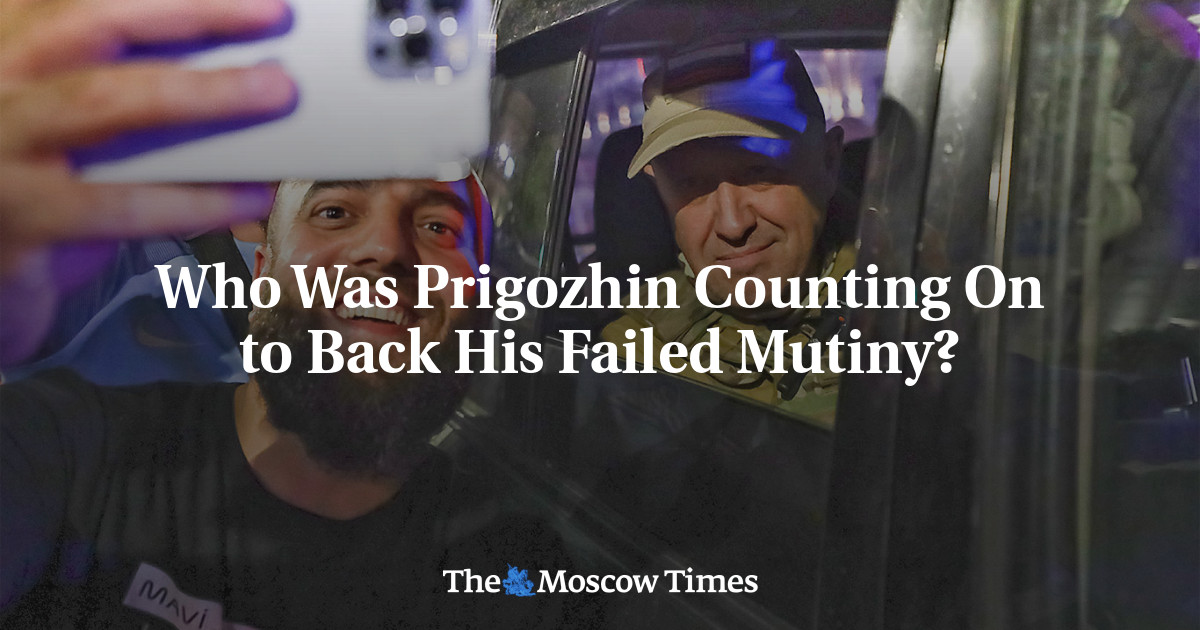
Who Was Prigozhin Counting On to Back His Failed Mutiny?

The Russian armed forces are not monolithic, but consist of a multitude of rival groups competing for positions and sources of income. Far from everyone within the military leadership is loyal to Shoigu and General Staff Chief Valery Gerasimov personally: as a rule, that’s only those who have been promoted through the ranks with their help, or who have been awarded lucrative Defense Ministry–linked contracts. In recent months, Prigozhin has been trying to win over another group of generals: those whose careers took off under the reformist respective predecessors of Shoigu and Gerasimov—Anatoly Serdyukov and Nikolai Makarov—and stalled after their departure.

Long before the mutiny, Prigozhin had said openly that he would like to see Shoigu replaced with Mikhail Mizintsev, and Gerasimov with Sergei Surovikin. Mizintsev, dubbed the “Butcher of Mariupol” by Western media for his supervision of the devastating siege of the Ukrainian city, was one of the most promising generals during the Serdyukov-Makarov military reforms in 2008–2012. In 2012, he was made head of the Central Command Post of the General Staff, an office that had just been established in order to streamline the archaic chain of command in the Russian armed forces.

Shoigu, who was appointed defense minister soon after, preserved the new institution and Mizintsev at its head, but never favored the general. After taking Mariupol, Mizintsev was first demoted and then apparently discharged from the army, after which he became a deputy commander of Wagner. There is no doubt that Mizintsev has retained his influence among those officers who rose up through the ranks under his command, and it’s possible that Mizintsev’s reputation among those officers played a role in Wagner’s ability to occupy the Rostov military headquarters without any bloodshed.

Surovikin also prospered under the Serdyukov-Makarov leadership. Back then, he was appointed head of another newly created institution: the military police. As in Mizintsev’s case, Shoigu confirmed the appointment, but limited the powers of the new establishment. Still, Surovikin managed to build a strong reputation—first in Syria and then as the commander of operations in Ukraine last October—before being replaced with Gerasimov in January. Prigozhin and his war blogger followers have frequently praised Surovikin, who remains a key figure within the top brass who is not part of Shoigu and Gerasimov’s inner circle. Of all those in the military leadership, Surovikin enjoys the most authority among rank-and-file officers.

The examples of Mizintsev and Surovikin confirm that the main group that Prigozhin was counting on to remain neutral or offer silent support was senior officers who made their careers under the reforms enacted by Serdyukov and Makarov. Interestingly, the establishment of Wagner and Prigozhin’s appointment as its head also date back to this time.

Under those reforms, 80 percent of colonels and 70 percent of majors were discharged from the armed forces, creating plenty of opportunities for more junior officers to rise up through the ranks. These (now senior) officers do not owe their careers to Shoigu or Gerasimov, and may be more inclined to agree with Prigozhin’s criticism of the military leadership in the belief that if Shoigu had continued those reforms, the Russian armed forces would be performing better in Ukraine. While the officers are not prepared to express their frustration openly, when speaking anonymously they are vocal in their criticism of both the Defense Ministry and Putin.

Taking all of the above into account, it’s entirely possible that by the start of his “march for justice,” Prigozhin believed he would find solidarity among many officers in the armed forces, and that if his uprising was successful, they would be joined by certain groups within the ruling elite, such as generals with no direct ties to Shoigu, or former members of Putin’s security detail seeking to boost their status within the system.

Prigozhin wasn’t wrong on the first count, and most of the armed forces made no attempt to stop him advancing on Moscow. But his hopes for support from elite groups who would also like to see a Defense Ministry reshuffle appear to have been dashed. Putin threw his unequivocal backing behind the armed forces, cutting off any ways for other bodies of authority to express solidarity with Wagner.
 
On this part of the eastern front, Russia is still on the attack

For five days, the attacking Russians threw everything they had at the Ukrainian brigade defending a patch of forest here on the eastern front — mortar, artillery, flamethrowers and tank fire — mowing down whatever stood in their way. By the sixth day, bodies littered the smoldering terrain. Only a scorched field and blackened tree stumps remained.

“We had to retreat,” said an infantryman, who goes by the call sign “Master,” describing the battle earlier this month. “It was very challenging for the infantry to hold the front, because we were being pushed very hard by the Russians, without adequate artillery cover.”
The forest, just west of Kreminna, a Russian-occupied town in Ukraine’s Luhansk region, is now an epicenter of some of the war’s fiercest fighting. But unlike elsewhere on the eastern and southern fronts, where Ukraine has mounted a long-anticipated counteroffensive, the fighting here is being driven by Russia — in its latest push to seize the entire eastern Donbas region.

According to Ukrainian soldiers, Moscow has bolstered its eastern forces and intensified its attacks, aiming to recapture towns and cities that Ukraine liberated in the fall.

Master, who was recuperating from the battle in Yampil, a front-line village on the outskirts of the forest in eastern Ukraine, said that as a result of the attack, the Russians had advanced roughly 300 to 400 meters — up to a quarter of a mile — on the north side of the forest. “They are certainly attacking more intensely and advancing in this direction,” he said. The Washington Post is not identifying Master or other soldiers because of security concerns.

Unlike in Zaporizhzhia, for instance, where the Russians are dug into heavily fortified defenses and the Ukrainians are trying to advance, in the Kreminna forest, the side that is attacking or defending can vary day to day or even hour by hour.

A Ukrainian platoon commander, who goes by the call-sign “Hephaestus,” said Russia’s operations in the east had “dramatically increased.” Within just one 24-hour stretch this week, he said, there were six attempted attacks on his brigade’s sector.
“They are losing the initiative in the south and near Bakhmut,” Hephaestus said. “Therefore, they need to give something to Russian society at a political level to show they have some ambition and advantage. The Donetsk and Luhansk regions have always been a priority for Russia.”

The Kreminna forest is now one of the most dangerous spots on the front line. Winding toward the forest through the moonscape of what used to be people’s homes, there are few signs of life. A lone soldier on a bicycle. A rusting basketball hoop. “People live here,” scrawled across the gate of a shrapnel-riddled house. The gargantuan task Ukraine faces in reclaiming its stolen territory is quickly apparent.

“The concentration of the enemy is now much higher in the forests of Kreminna than in any other areas of the front,” Hephaestus explained. “It is connected with the landscape. Thanks to the dense forests, it is easy enough for the enemy to hide a large number of troops and equipment.”
“Every movement should be gradual,” he added. “The priority for us is every human life. If we use them unplanned and irrationally, there will be unjustifiably immense sacrifices.”

A group of medics stationed at an evacuation point in the forest said the situation varied from week to week but had become more noticeably harder in recent days. In previous weeks, they were rotated every 10 days, but now, they are being rotated every two due to the uptick in fighting.
“Two days ago, we were working throughout the night, I lost track of how many calls there were,” said a 25-year-old medic known as “Priest.” He played a recording he had made on his phone of an assault near their position one night that week: a stomach-twisting soundtrack of relentless bombardments that lasted for hours.
Priest estimated that casualties for the Lyman region, which includes the Kreminna forest, has increased by 10 times. In his particular brigade, he said, there had been about 70 casualties in two days.

A web of threats lurk in the woods. The terrain itself — a mishmash of thick pine forests, swamps, lakes and hills — is difficult and hinders the rapid advance of assault units. Mines, drones and smoke from the near-constant fires that rage from the shelling make the territory even more lethal. Then there are roving reconnaissance groups.

One night last week, Hephaestus carefully led his unit on a mission to find weak spots in enemy lines. As the unit slowly made its way in the dark through the dense woodland, cutting through thickets of nettles and foxgloves, they could smell the burning pines. The Russians were bombing the woods again with flamethrowers, a tactic used to both obscure the view of reconnaissance drones and to smoke out the locations of Ukrainian positions and equipment.
Suddenly, the lead scouts signaled that they had spotted movement up ahead. The unit stopped. Looking through night-vision goggles, they identified the silhouettes of a Russian reconnaissance unit farther up in the woods, roughly 10 meters away. The unit opened fire. A few minutes later, all the Russians lay dead.
“This is the forest,” said Hephaestus with a shrug, adding that it is common to come face-to-face with enemy units in the woods. “Sometimes we are able to catch the enemy by surprise … if you stand still, you can hear a crunch, a whisper — especially at night when it’s quiet.”

Sometimes the Russians wear Ukrainian uniforms taken from the soldiers they killed or captured, to try to infiltrate Ukrainian lines. They can be a large, elite fighting group or a handful of inexperienced recruits who were sent directly to the front lines.

Their 40-year-old commanding officer, who goes by the call sign “Scythian,” has been stationed in the area for the past six months and said that the level of shelling from the Russian side had increased in recent weeks. He said the Russians had also amassed armored vehicles and tanks that had not been observed before. “That the enemy is building up forces in this area is clear,” he said.
An artillery commander of the National Guard, who goes by the call sign “Brave,” said that the battle lines in the forest were constantly shifting and rarely stable.

“The enemy, like us, retreats in places and conducts counteroffensive actions; they break through certain positions and lines. Like us, in some places, they advance and elsewhere they sacrifice some positions,” he said.


A senior Russian general had advance knowledge of Yevgeny Prigozhin’s plans to rebel against Russia’s military leadership, according to U.S. officials briefed on American intelligence on the matter, which has prompted questions about what support the mercenary leader had inside the top ranks.
The officials said they are trying to learn if Gen. Sergei Surovikin, the former top Russian commander in Ukraine, helped plan Mr. Prigozhin’s actions last weekend, which posed the most dramatic threat to President Vladimir V. Putin in his 23 years in power.
General Surovikin is a respected military leader who helped shore up defenses across the battle lines after Ukraine’s counteroffensive last year, analysts say. He was replaced as the top commander in January but retained influence in running war operations and remains popular among the troops.

American officials also said there are signs that other Russian generals may also have supported Mr. Prigozhin’s attempt to change the leadership of the Defense Ministry by force. Current and former U.S. officials said Mr. Prigozhin would not have launched his uprising unless he believed that others in positions of power would come to his aid.

On Tuesday, the Russian domestic intelligence agency said that it was dropping “armed mutiny” criminal charges against Mr. Prigozhin and members of his force. But if Mr. Putin finds evidence General Surovikin more directly helped Mr. Prigozhin, he will have little choice but to remove him from his command, officials and analysts say.

Some former officials say Mr. Putin could decide to keep General Surovikin, if he concludes he had some knowledge of what Mr. Prigozhin had planned but did not aid him. For now, analysts said, Mr. Putin seems intent on pinning the mutiny solely on Mr. Prigozhin.

Senior American officials suggest that an alliance between General Surovikin and Mr. Prigozhin could explain why Mr. Prigozhin is still alive, despite seizing a major Russian military hub and ordering an armed march on Moscow.

Still, American officials have an interest in pushing out information that undermines the standing of General Surovikin, whom they view as more competent and more ruthless than other members of the command. His removal would undoubtedly benefit Ukraine.

General Surovikin spoke out against the rebellion as it became public on Friday, in a video that urged Russian troops in Ukraine to maintain their positions and not join the uprising.
“I urge you to stop,” General Surovikin said in a message posted on Telegram. “The enemy is just waiting for the internal political situation to worsen in our country.”
But one former official called that message akin to “a hostage video.” General Surovikin’s body language suggested he was uncomfortable denouncing a former ally, one who shared his view of the Russian military leadership, the former official said.
There were other signs of divided loyalties in the top ranks. Another Russian general — Lt. Gen. Vladimir Alekseyev — made his own video appeal, calling any actions against the Russian state a “stab in the back of the country and president.” But hours later, he surfaced in another video, chatting with Mr. Prigozhin in the Russian city of Rostov-on-Don, where Wagner fighters seized military facilities.

Independent experts, and U.S. and allied officials said that Mr. Prigozhin seemed to believe that large parts of Russia’s army would rally to his side as his convoy of 8,000 Wagner forces moved on Moscow.
Former officials said General Surovikin did not support pushing Mr. Putin from power but appears to have agreed with Mr. Prigozhin that Mr. Shoigu and General Gerasimov needed to be relieved of duty.
“Surovikin is a decorated general with a complex history,” said Dara Massicot, a senior policy researcher at the RAND Corporation. “He is said to be respected by the soldiers and viewed as competent.”


Just want to emphasize that Surovikin is the commander of the Russian Aerospace Forces, and Wagner shot down 7+ aircraft, including several aircraft that weren't armed. Strange thing to do if the commander of the Russian Aerospace Forces was actively supporting you.
 
Last edited:
Quite a lot of discussion about exactly what's happening on the left (as you look downstream) bank of the Dnipro -- is it a bridgehead or not a bridgehead?

If the Ukrainians are able to establish something solid there it is a huge problem for the Russians, as it's well south of the east to west zone of conflict, and also the Russian trench lines.

Either way, here's a fantastic graphic. If you look at the geography the Ukrainians have a big advantage there -- their side of the river is much much higher, giving artillery a great look at the Russian positions.
 

Wagner is not, however, simply a mercenary organisation. Its finances and equipment for the most part come from Russia’s Main Intelligence Directorate of the General Staff, the GRU. GRU officers use Wagner units as cover and are deployed with their forces around the world. In Ukraine, transfers of equipment to Wagner were arranged through the 22nd Special Service Brigade of the GRU. When Wagner pioneered the mobilisation of convicts to regenerate disposable combat mass after the Russian Army expended that from the populations of Luhansk and Donetsk, Wagner received its recruits with the blessing of the Russian Ministry of Justice which permitted Wagner to recruit from Russian prisons. Almost every aspect of Wagner’s activities therefore was enabled by and intimately integrated with parts of the Russian state. Many of its personnel are also employees of Russia’s special services.

The officer responsible for much of this process of Wagner’s maturation over its nine years of existence was first deputy head of the GRU, Lieutenant General Vladimir Stepanovich Alekseyev. It is noteworthy that someone who has largely avoided publicity during Russia’s invasion of Ukraine – while being instrumental to many parts of Russian operations – was one of two Russian general officers to make a public statement when Yevgeny Prigozhin launched his ‘March of Justice’. That Prigozhin subsequently entered the command post of the Southern Military District and sat down with Alekseyev, who plenty of Prigozhin’s personnel work for, means that negotiations were ongoing throughout the subsequent movement of troops towards Moscow. Given much internet speculation founded on a few messages released on Telegram, it is important to acknowledge how much was not known by external commentators as to what was happening throughout 24 June. The question, therefore, is negotiations to what end?
 

Prigozhin originally intended to capture Defense Minister Sergei Shoigu and Gen. Valery Gerasimov, the chief of Russia’s general staff, during a visit to a southern region that borders Ukraine that the two were planning. But the Federal Security Service, or FSB, found out about the plan two days before it was to be executed, according to Western officials.

Gen. Viktor Zolotov, commander of the National Guard of Russia, a domestic military force that reports directly to President Vladimir Putin, also said authorities knew about Prigozhin’s intentions before he launched his attempt.
“Specific leaks about preparations for a rebellion that would begin between June 22-25 were leaked from Prigozhin’s camp,” Zolotov told state media on Tuesday.
Western intelligence agencies also found out early about the plans by Prigozhin, Putin’s former confidant, by analyzing electronic communications intercepts and satellite imagery, according to a person familiar with the findings. Western officials said they believe the original plot had a good chance of success but failed after the conspiracy was leaked, forcing Prigozhin to improvise an alternative plan.

Prigozhin’s plot relied on his belief that a part of Russia’s armed forces would join the rebellion and turn against their own commanders, according to this intelligence. The preparations included amassing large amounts of ammunition, fuel and hardware including tanks, armored vehicles and sophisticated mobile air defenses days before the attack, according to Western intelligence findings.
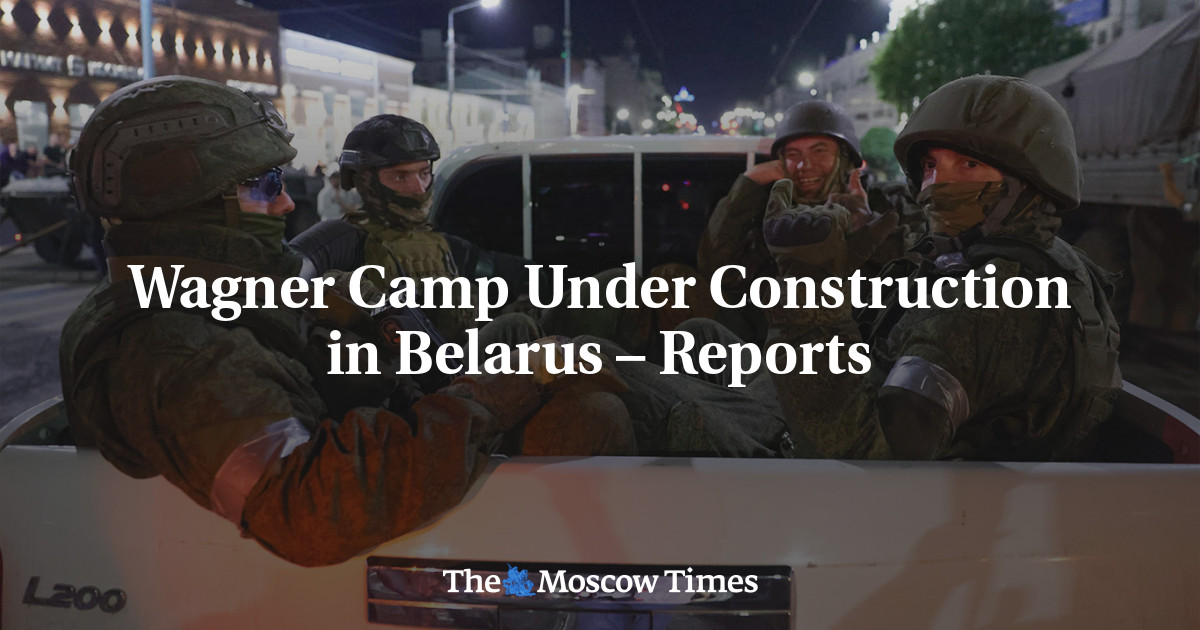
Made aware of the leak, Prigozhin was then forced to act sooner than planned on Friday and managed to capture the southern Russian city of Rostov, a key command point for the invasion of Ukraine. The ease with which Wagner’s troops took the city of one million that is home to a large military airport suggests that some regular forces commanders could have been part of the plot, according to Western intelligence.
Western officials said they believe Prigozhin had communicated his intentions to senior military officers, possibly including Gen. Sergei Surovikin, commander of the Russian aerospace force. It couldn’t be determined whether Surovikin passed this information on to the FSB, or how the agency found out about Prigozhin’s plans.

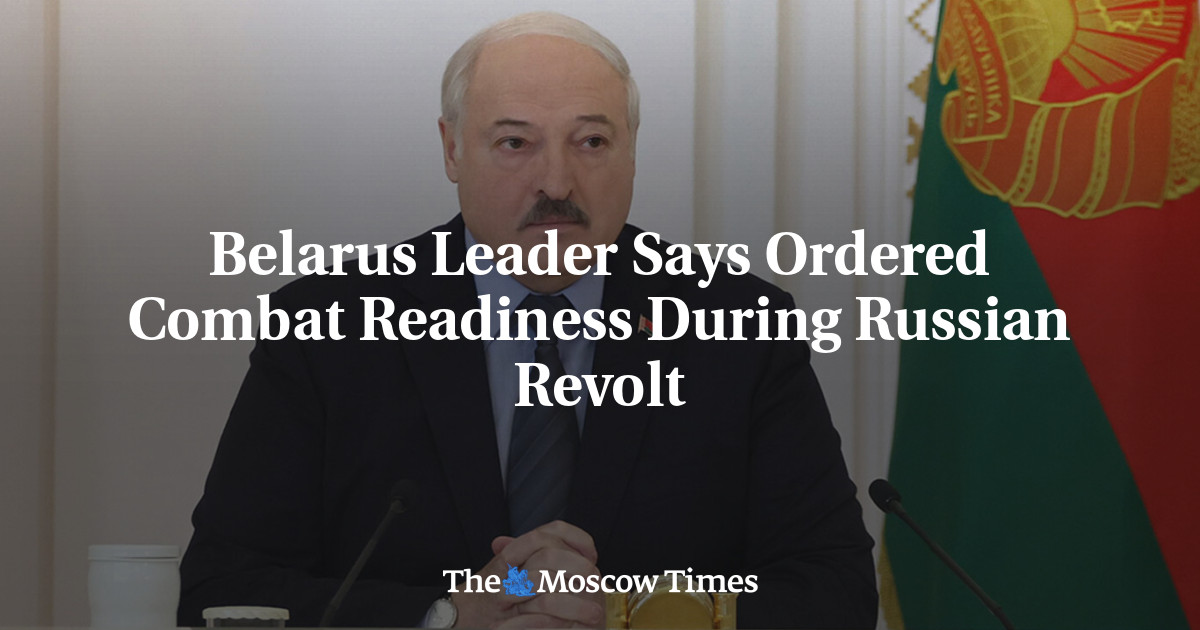
Lukashenko suggested hosting Wagner in his country, partly to bolster his own security against possible encroachment by Russia, according to Western intelligence. Putin has long sought to absorb Belarus into the Russian Federation.
The permanent stationing of Wagner troops agreed as part of the deal to defuse the crisis is meant to serve as Lukashenko’s personal security guarantee, Western intelligence say they believe.

Wagner troops faced little pushback on their way to Moscow and there is no evidence that any regular forces switched sides to join them.
 
Ukraine says ‘main event’ in counteroffensive still to come

Ukraine has hit back at doubters over the progress of its summer counteroffensive, insisting recent modest gains against Russian occupiers were merely a “preview” of a much bigger push to come.
Oleksiy Reznikov, Ukraine’s defence minister, told the Financial Times that the liberation of a group of villages under Russian occupation in recent weeks were “not the main event” in Kyiv’s planned attack.
“When it happens, you will all see it . . . Everyone will see everything,” said Reznikov, brushing aside media coverage of slow progress against well-fortified Russian positions.
He confirmed that Ukraine’s main troop reserves, including most brigades recently trained in the west and equipped with modern Nato tanks and armoured vehicles, have yet to be used in the operation.

Exclusive: Top manager at U.S. firm privately sold high-tech in Russia

What happened when Russia’s air force attacked Wagner’s rebels?

The air force’s most significant loss was a four-engined Il-22M “Coot” Airborne Command Post. This is a modified Ilyushin Il-18 airliner, packed with communications and computing equipment to relay data and to allow officers on board to oversee and control operations below. It has a crew of ten, all of whom were reportedly lost when the plane was brought down. The helicopters lost included one Kamov Ka-52 “Hokum-B” attack helicopter and one Mil Mi-35 “Hind-E” assault helicopter, plus four Mil Mi-8 “Hip” transports. Three of the Mi-8s are said to be rare mtpr electronic-warfare variants, equipped to carry out jamming against radar and communications. “We regret that we were forced to strike at air assets, but these assets were dropping bombs and delivering missile strikes,” Mr Prigozhin said later.

There are no reports of Russian jets being shot down, though they apparently did bomb the Wagner forces, as dramatic dashcam footage showed. The attack helicopters are armed with rockets, guided anti-tank missiles and cannon. Although designated as transports, the Mi-8s are equipped with rocket pods and have often carried out attacks in Ukraine. Wagner columns driving along main roads should have presented easy targets for air strikes—like the more than 1,000 retreating Iraqi vehicles destroyed by American forces on the notorious ‘Highway of Death’ between Kuwait and Iraq in 1991. This smaller encounter also seems to have been one-sided, but in favour of those on the ground.

How come? America’s Department of Defence notes that Wagner operates a wide range of Russian military equipment, including Sa-22 Pantsir mobile surface-to-air systems. The Pantsir is mounted on a truck and has a radar linked to twin 30mm automatic cannon, plus up to 12 surface-to-air missiles. Wagner also has portable, shoulder-fired anti-aircraft guided missiles. But no information is available yet on how the aircraft were shot down, or why an airborne command-and-control post was dangerously close to a combat zone. Friendly-fire incidents are not uncommon with Russian air defence.


A Ukrainian intelligence source tells me they have yet to see evidence of Wagner camps on Belarusian territory: “We’re watching of course. There may be a game to get us to move forces to the northern border. But we play games too.”
He adds: “We believe invasion from Belarus is very unlikely. The Wagner guys could be used for propaganda. For training.”


Among other interesting things in this post, Rybar says that, while Gerasimov is formally in charge of the war, VDV commander Colonel General Mikhail Teplinsky is the one actually running the war on the Russian side.
 

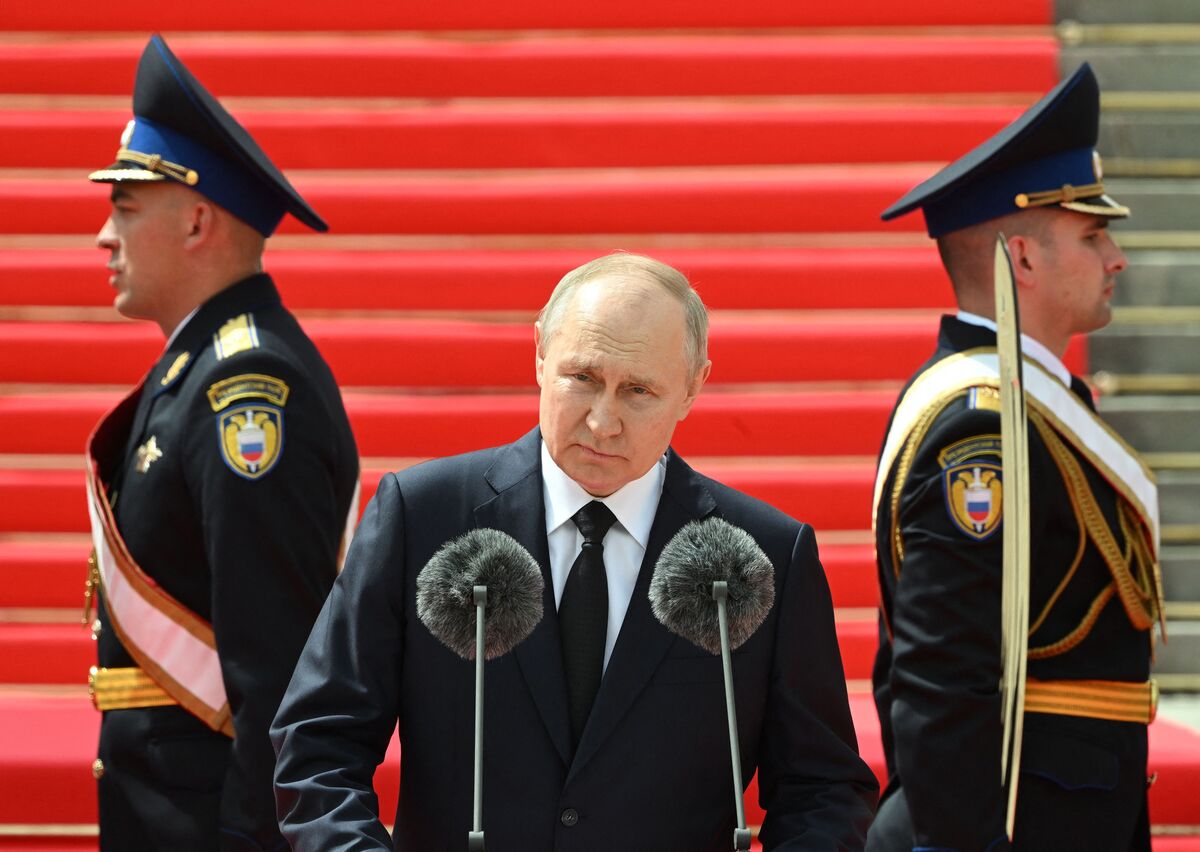
Vladimir Putin tried this week to show he was firmly in control after the dramatic attempted mutiny by mercenary commander Yevgeny Prigozhin.
But among the Kremlin and business elite, many powerful players aren’t buying it.
A banana republic was the phrase one former senior official who still maintains close government ties used to describe the spectacle of Prigozhin leading his column of tanks and fighters to within 200 kilometers (124 miles) of Moscow and then being allowed to leave for neighboring Belarus without facing criminal charges. A top business tycoon said the Russian president’s botched handling of the uprising was more of a shock than Putin’s decision to invade Ukraine last year.

For many insiders — including more than a dozen current and former senior officials and business leaders — the dramatic events shredded what remained of Putin’s carefully crafted image as the guarantor of ‘stability.’ They all spoke on condition of anonymity to discuss such sensitive issues.
The upheaval underlined how the 70-year-old leader is increasingly out of touch and unable to control events the way he once did, according to the people.

As Putin strives to reassert his grip on power, the turmoil only deepened the anxiety and alarm about the country’s direction that many among the economic and business elite have been feeling since the February 2022 invasion, they said. Some worried it could lead to even more repression inside Russia.

To some, Putin’s public efforts to appear on top of the situation looked foolish, only emphasizing the obvious reality of how ineffective and weak the events had shown his leadership to be, the people said.
For all the alarm among members of the elite, the insiders said they see no alternative to Putin. Despite the shock, there are many people who do see Putin as a stable leader, the people said. They still depend on his patronage and protection for their prosperity and security as the war and sanctions have cut off many of their remaining overseas ties.
 
From a pro-Ukrainian source, re: the bridgehead/not-a-bridgehead:

Day 489: June 27.

Today the most important news comes from the Kherson Oblast in southern Ukraine.

Ukrainians continue conducting amphibious operations on the Dnipro River to develop a bridgehead on the other side of the river, while the Russian defense is still weak in the aftermath of the destruction of many Russian fortifications due to flooding. Geolocated footage shows that day after day, Ukrainians are successfully reinforcing their assault group. Yesterday Russian sources reported up to 50 Ukrainian soldiers in the area. According to Russian military bloggers, this number has already increased to 100 troops.

At first, Russians tried to use their aviation to bomb the residential area, especially the Antonivskyy Bridge, which Ukrainians use as their main fortification and shelter. However, the usage of aviation proved to be highly problematic.

First, the munitions are not precise, requiring more airstrikes or getting closer to the contact line. And this is impossible because, secondly, Russian sources reported that Ukrainians had redeployed multiple S-300 air defense systems to the towns and villages near their bridgehead. Some Russian fighters also complained that they could not even use drones because they lost connection halfway toward the bridge due to the extensive use of electronic warfare systems by the Ukrainians.

That is why if Russians wanted to eliminate the enemy bridgehead, they needed to conduct direct ground assaults. The first Russian assault group tried to use armored fighting vehicles to deliver the assault units directly to the Ukrainian positions. This did not work very well because Ukrainians had mined the approach to the bridge, so the mine immobilized the vehicle, and Russians immediately ran away in all possible directions.

Russians considered it and drove to the first houses close to the bridge instead of a frontal assault on the bridge itself, where Ukrainian troops established their positions. Russian forces used three armored personnel carriers to deliver three assault squads, 30 soldiers in total.

Ukrainian reconnaissance drone operators spotted the movement of Russian troops and immediately communicated their coordinates to the Ukrainian artillery crews. Shortly, the artillery hit the area of the deployment of the Russian troops, inflicting significant losses and ending the planned assault. The remaining Russian troops dissipated throughout the area and requested support and evacuation.

Unfortunately for Russians, the coordination and communication between the assault units were nonexistent in the aftermath of the artillery strike. So, when the first Russian group that assumed positions in the forest noticed movement in the residential area, they assumed this was a Ukrainian counterattack and opened fire at the second group of Russians in the houses.

When the support arrived, the Russian armored fighting vehicle advanced while simultaneously firing precisely at the houses with the Russian airborne unit. The armored fighting vehicle picked up several wounded soldiers from the other group and drove away.

Judging by the footage, the machine gun fired indiscriminately at all the houses along the road. Given the caliber of the gun, the brick walls of the houses provided as much protection as paper, so Russian forces who successfully got a toehold in the residential area likely suffered heavy losses due to the friendly fire.

Overall, Russian forces proved incapable of controlling the islands, where Ukrainian troops reinforced their assault group. Even though the Russians had a paved road leading right to the residential area, the Ukrainians took it under total fire control, not allowing the Russian forces to deliver supplies or rotate troops.

Russian sources reported that small high-speed boats proved highly effective for controlling the river because they were extremely mobile and an impossible target for the Russian artillery. The only real danger for the Ukrainian boat crews is Russian troops near the river, on the shore.

With that in mind, we can see that by pushing Russians from these small islands and residential areas, Ukrainians gradually gain complete freedom of movement on the river, even without controlling the other bank. Russian analysts are warning that once Ukrainian forces push the Russians to the mainland, the Ukrainians will start looking for a weak spot.

 
A mobilised Russian soldier from the 1486th Regiment complains about his commanders who threw them like cannon fodder into the Battle of Bakhmut.The regiment replaced the "Wagner" PMC fighters that withdrew from Bakhmut at the end of May.It appears that things are not going smoothly for the Russian forces in Bakhmut as Russia continues throwing mobilised men into suicidal missions with no support.
 

While Putin and Wagner chief Yevgeny Prigozhin continue to spin dueling narratives about the rebellion, one thing appears certain: the Russian leader’s veneer of invincibility has shattered.
That does not mean the end of the Putin regime is imminent. But a host of hard-to-imagine and even bizarre scenarios are now being teased out as everyone speculates over what comes next.

There are “more unknowns than knowns,” said a senior Central European diplomat, who like others was granted anonymity to discuss sensitive security matters.

One Eastern European diplomat said their assessment is that Prigozhin was “used by a particular group of the Kremlin/FSB elite dissatisfied with the current leadership” in the defense ministry. And, the diplomat added, Putin could still change the terms of his deal with the Wagner boss at any moment.

And while most experts believe Putin will hold on to power, for now, there is recognition that the West needs to consider a scenario where he is replaced. Powerful figures within Putin’s orbit and the FSB intelligence service are likely already eyeing the unfolding events — and Putin’s muddled response — to spot any opportunity.

“Chaos always carries risks, but there will come a time when the position of Putin is eroded and he is replaced,” said a Western European diplomat.

Asked about the presence of Wagner in Belarus, former U.S. Army Europe commanding general Ben Hodges said on Tuesday that this poses “not more risk for Ukraine … but potentially strengthens Lukashenko’s hand vs. his opposition and/or a future push by Russia.”

“I imagine,” Hodges added, “he’ll also look at this Wagner connection as a business opportunity for himself in Africa.”

A senior Central European defense official underscored that if Wagner troops are no longer involved in Ukraine, it could change dynamics.

Wagner Group was for many months the most effective fighting force on the Russian side in Ukraine,” the official said. “If the group is disbanded and will no longer be deployed in Ukraine, it will reduce Russia’s military offensive capacity.”

And it’s not all about Wagner: the weekend mutiny could also impact the calculus of oligarchs, companies and commanders within Russia who control their own armed groups.

Rinkēvičs, Latvia’s foreign minister and president-elect, underscored that there are multiple private military entities in Russia — and that even more could emerge amid Putin’s weakening position.

“It’s not only about regular army in Russia, not about FSB,” Rinkēvičs said in a phone interview, “but also how this situation can develop if more and more oligarchs, or private companies or people in power are going to form their own private, mercenary forces, everyone needs to take this seriously.”
 

When asked about the WSJ report, two European security sources told CNN that while it was likely Prigozhin would have expressed a desire to capture Russian military leaders, there was no assessment as to whether he had a credible plan to do so.

There has been speculation about the role of senor Russian commanders as the mutiny got underway on Friday night. The New York Times, citing US officials who it said were briefed on American intelligence, reported that the commander of the Russian air force, Gen. Sergey Surovikin, “had advance knowledge of Yevgeny Prigozhin’s plans to rebel against Russia’s military leadership.”

Surovikin appealed to Prigozhin to halt the mutiny soon after it began, in a video message that made it clear he sided with Putin.

Asked about the New York Times story, Kremlin spokesman Dmitry Peskov said: “There will be now a lot of speculation and rumors surrounding these events. I believe this is just another example of it.”

One European intelligence official told CNN that there were indications that top Russian security officials had some knowledge of Prigozhin’s plans, and may not have passed on information about them, preferring instead to see how they played out. “They might have known, and might have not told about it, [or] known about it and decided to help it succeed. There are some hints. There might have been prior knowledge,” the official said.

Even though the mutiny failed, Putin prestige has been dented, the official said. “If that is what factions wanted, then that is what they got.”

Not surprising: Exclusive: Wagner mutineers included Russian convicts freed to fight in Ukraine
 
This is the kind of thing the US should be saying/leaking whether it’s true or not. Putins post-mutiny paranoia is likely dialed up to 11 as it is. Giving him targets he may then lash out at is a good move.

Regarding:

I thought the same thing myself - it's possible we didn't have any intelligence about any of this, but we might as well leak stories saying this guy knew stuff, that guy was in league, etc. Make Putin suspect everybody, both the guilty and the innocent. At least among the competent generals - we want them to think all the incompetents are great guys and deserve a promotion.
 

Vladimir Putin has moved to shake up Russia’s security services in the wake of the Wagner group’s failed insurrection, rewarding loyalists with promotions and freezing out figures sympathetic to the paramilitary organisation’s leader Yevgeny Prigozhin.
Sergei Surovikin, a senior Russian general known to have a good relationship with Prigozhin, has not been seen since recording a hostage-style video in the early hours of Saturday morning as the mutiny began, according to several people familiar with the matter.
The unexplained absence of one of the most prominent commanders in Russia’s full-scale invasion of Ukraine comes as Putin seeks to restore order and re-establish control over the security services after the first coup attempt in Russia in three decades, said the people.

While Putin has dropped charges against Wagner, Russia’s security forces “have started shaking down sympathisers and those who violated their oath”, said a person who has known Prigozhin since the 1990s. The warlord has held up his end of the deal and moved to Belarus, according to Belarusian president Alexander Lukashenko.
By contrast, Viktor Zolotov, a longtime Putin ally and former bodyguard to the president, has been rewarded with a promotion for his police force, the National Guard. The service did not play a big role in suppressing the mutiny, but Putin on Tuesday announced Zolotov will receive heavy artillery and tanks and play a larger role in the invasion of Ukraine. Zolotov said he was in touch with the president throughout the uprising.
The Kremlin is elevating other figures who have publicly professed their loyalty to Putin, while denying such promotions to Russia’s patriotic hardliners, who urged the president to go even further in his invasion and, in some cases, criticised his deal to end the Wagner uprising.

Putin “knows they look weak” after Russia dropped charges against Wagner to avoid an open firefight that would have likely killed thousands, said a sanctioned figure within Russia’s elite.
“It’s real tough guy stuff,” the person said. “It’s like when you go into the prison cell for the first time and punch the biggest guy you can find in the face to show nobody can mess with you.”

The Kremlin has dismissed rumours about Surovikin’s absence after the New York Times reported, citing US officials, that the general was aware of the coup plot in advance. Kremlin spokesman Dmitry Peskov said that he expected “a lot of speculation around these events”, adding: “I think this is an example of that.”

Surovikin and other Wagner-friendly generals, such as Mikhail Mizintsev, “were running around like idiots trying to convince [Prigozhin] to stop. Now they’re being treated like they could be traitors,” the person added.
Though Surovikin appeared sympathetic to Prighozin’s plans, the US is unsure whether he took any steps to support the uprising, said a person familiar with the matter. US officials are trying to learn more about his involvement, and believe there are also signs other Russian generals may have felt similarly, they said.

The main winner from the coup, Stanovaya said, appeared to be Shoigu, who had apparently succeeded in dismantling Wagner and convincing Putin to swing his authority behind the defence ministry.
“Whatever Surovikin’s real role was, Shoigu can be tempted to paint him as a plotter. It’s very easy to turn sympathisers into plotters,” she said.


Moscow Times and some Russian military bloggers report that Air Force commander General Surovikin, the former chief Russian commander in Ukraine, has been detained on suspicion of abetting the Wagner mutiny.


Two sources tell the Moscow Times that Army General Surovikin was placed under arrest.
 
Last edited:
I think Prigozhin is positioning himself for a coup attempt.

@Chadstroma looking like Nostradamus over here from June 1^

I'd like the winning lottery ticket numbers for the next drawing for the Mega Millions as well, sir.....TIA.
Dude.... if I could, I would, for me first though. I just have all this worthless (at least as a mortgage broker) knowledge and spend way too much time paying attention to stuff like this. There were some indications that it just seemed to me that he was trying to position himself for something like he did. I hit on that. Have missed on more than my fair share too. :lmao:
 
Watching this stuff unfold, it baffles me how anybody purported to be “in charge” looks good here. Prigozhin starts a march on Moscow, effectively abandoning both his offensive positions and now taking up arms against his employer/dictator, only to turn around despite encountering little resistance most of the way and even shooting down a few Russian aircraft. Putin calls him a traitor but apparently hops aboard the first flight to nowhere, then is either forgiving them outright or exiling them but still trying to use them, but he looks the worst he’s ever looked diplomatically speaking. Lukashenko reminds me of every henchman who is both kowtowing to his boss and resenting him at the same time, basically Starscream without the dreams of usurping his boss, and he doesn’t look very good either
 

Vladimir Putin has moved to shake up Russia’s security services in the wake of the Wagner group’s failed insurrection, rewarding loyalists with promotions and freezing out figures sympathetic to the paramilitary organisation’s leader Yevgeny Prigozhin.
Sergei Surovikin, a senior Russian general known to have a good relationship with Prigozhin, has not been seen since recording a hostage-style video in the early hours of Saturday morning as the mutiny began, according to several people familiar with the matter.
The unexplained absence of one of the most prominent commanders in Russia’s full-scale invasion of Ukraine comes as Putin seeks to restore order and re-establish control over the security services after the first coup attempt in Russia in three decades, said the people.

While Putin has dropped charges against Wagner, Russia’s security forces “have started shaking down sympathisers and those who violated their oath”, said a person who has known Prigozhin since the 1990s. The warlord has held up his end of the deal and moved to Belarus, according to Belarusian president Alexander Lukashenko.
By contrast, Viktor Zolotov, a longtime Putin ally and former bodyguard to the president, has been rewarded with a promotion for his police force, the National Guard. The service did not play a big role in suppressing the mutiny, but Putin on Tuesday announced Zolotov will receive heavy artillery and tanks and play a larger role in the invasion of Ukraine. Zolotov said he was in touch with the president throughout the uprising.
The Kremlin is elevating other figures who have publicly professed their loyalty to Putin, while denying such promotions to Russia’s patriotic hardliners, who urged the president to go even further in his invasion and, in some cases, criticised his deal to end the Wagner uprising.

Putin “knows they look weak” after Russia dropped charges against Wagner to avoid an open firefight that would have likely killed thousands, said a sanctioned figure within Russia’s elite.
“It’s real tough guy stuff,” the person said. “It’s like when you go into the prison cell for the first time and punch the biggest guy you can find in the face to show nobody can mess with you.”

The Kremlin has dismissed rumours about Surovikin’s absence after the New York Times reported, citing US officials, that the general was aware of the coup plot in advance. Kremlin spokesman Dmitry Peskov said that he expected “a lot of speculation around these events”, adding: “I think this is an example of that.”

Surovikin and other Wagner-friendly generals, such as Mikhail Mizintsev, “were running around like idiots trying to convince [Prigozhin] to stop. Now they’re being treated like they could be traitors,” the person added.
Though Surovikin appeared sympathetic to Prighozin’s plans, the US is unsure whether he took any steps to support the uprising, said a person familiar with the matter. US officials are trying to learn more about his involvement, and believe there are also signs other Russian generals may have felt similarly, they said.

The main winner from the coup, Stanovaya said, appeared to be Shoigu, who had apparently succeeded in dismantling Wagner and convincing Putin to swing his authority behind the defence ministry.
“Whatever Surovikin’s real role was, Shoigu can be tempted to paint him as a plotter. It’s very easy to turn sympathisers into plotters,” she said.


Moscow Times and some Russian military bloggers report that Air Force commander General Surovikin, the former chief Russian commander in Ukraine, has been detained on suspicion of abetting the Wagner mutiny.


Two sources tell the Moscow Times that Army General Surovikin was placed under arrest.
Surovikin was one of their better generals, so having him arrested should be good for Ukraine.
 
Are there good historical examples of a country getting involved in a quagmire and overturning the sitting ruler? Surely there is one.
 
Some footage here of an ex US Marine fighting in Ukraine


As early as March 2022, there was much conjecture that Russia’s supply of precision-guided missiles was dwindling. These reports may not have been entirely off the mark. Russia probably did quickly expend the portion of its long-range missile that it had initially allocated to its “special military operation.” Nevertheless, Russia maintained a steady drumbeat of missile strikes against Ukraine, likely by pulling munitions allocated to other theaters and drawing down its strategic reserves. Moreover, Russia has repurposed various surface-to-air and anti-ship missiles for land attack roles. Russia has also continued to manufacture missiles throughout the war, and evidence suggests that most (possibly all) Russian cruise missiles it has in its current inventory come from postwar production.

The exhaustion of prewar missile stockpiles has impacted the composition of current Russian strike salvos. Compared with previous phases of Russia’s air war, the composition of Russian missile attacks has trended away from high-end missile systems like cruise missiles toward cheaper, less capable “low-end” systems like Shahed-136 one-way attack munitions (see below). In the first three months of 2023, during the tail end of Russia’s strike campaign against Ukraine’s electric grid, Shahed-136s accounted for around 40 percent of long-range projectiles fired at Ukraine. Since April, 61 percent of long-range munitions Russia has employed have been Shahed-136 one-way attack munitions. Compared to cruise and ballistic missiles, Shahed-136 are generally easier to shoot down and more vulnerable to cheaper defenses like the German-made Flakpanzer Gepard and other gun-based systems. The Shahed-136’s warhead weight is also only between that of a cruise missile like Kh-101, and therefore causes less damage when they do make it through defenses.

However, the decline in the quality of Russian long-range strike salvos is unlikely to continue. Rather, the overall composition of Russian strike packages will likely level off as Russian missile use becomes fully tethered to how many missiles it can produce. But it is improbable that Russian production of higher-end cruise and ballistic missiles will ever fall to zero. Despite Western sanctions and export controls of key microelectronic components, Russia has been able to find workarounds to continue producing missiles. In May, Ukrainian intelligence estimated that Russia currently manufactures around 60 cruise missiles, five Iskander ballistic missiles, and two Kinzhals monthly. In June, President Zelensky noted that Ukraine continues to find Western-made microelectronic components amongst the wrecks of Russian missiles. These components are likely finding their way into Russia via friendly third parties such as China.

This would be big:

U.S. Close to Approving Long-Range ATACMS Missiles to Bolster Ukraine’s Fight

The U.S. is close to approving a long-range missile system for Ukraine that could shift the tide of Kyiv’s fight against Russian invaders in its favor, U.S. and European officials said.
The Army Tactical Missile System, or ATACMS, has a range of about 190 miles, enough for Ukrainian forces to strike Russian targets far behind the front lines. President Biden hasn’t signed off on the transfer, in part out of concern among U.S. officials that Ukraine could use it to strike Russian territory and escalate the conflict into a wider war with the West.
Officials said that the matter is pending approval at the highest levels. But officials in the U.S. and Europe have seen signs that previously reluctant quarters of the U.S. government, namely the White House, have come to see an urgent need to bolster Ukraine’s fight in the coming weeks.
 
I think Prigozhin is positioning himself for a coup attempt.

@Chadstroma looking like Nostradamus over here from June 1^

I'd like the winning lottery ticket numbers for the next drawing for the Mega Millions as well, sir.....TIA.
Dude.... if I could, I would, for me first though. I just have all this worthless (at least as a mortgage broker) knowledge and spend way too much time paying attention to stuff like this. There were some indications that it just seemed to me that he was trying to position himself for something like he did. I hit on that. Have missed on more than my fair share too. :lmao:

It was definitely a great call on your part. I was scrolling through the other day and saw that prophetic prediction and had to bring it up considering the last few days.
 

It remains unclear whether Surovikin, the deputy commander of Russia’s invasion force in Ukraine and head of its aerospace force, has been charged as a plotter in the uprising led by Prigozhin on Saturday, or simply detained for interrogation.

“Putin knew about [Prigozhin’s uprising plans] in advance, as we understand, and so could prepare to a certain extent,” a western government official said. “He was able to see who did what on that day. And he’s now cleaning house.”
The official said they believed Surovikin had been detained, adding, “we understand that there will be more people who will follow”.

Veteran Russian journalist Alexei Venediktov said on Wednesday that Surovikin “has not been in touch with his family for three days. His security guards do not answer either.”
Suspicions around Surovikin may have been generated by his good relationship with Prigozhin. While the Wagner warlord railed against other generals and the defence elite — blaming them for the high death toll among Russian soldiers during the invasion and accusing them of “genocide” — he maintained a dialogue with Surovikin.

Longer Twitter post here on Putin, Prigozhin, and Wagner: https://twitter.com/Stanovaya/status/1674422450585731074

AP sources citing US and Ukrainian intelligence assessments also say Surovikin has been detained: https://apnews.com/article/russia-u...in-surovikin-b2e942036548a05f1f65791d0e70ae17

This sourcing here may be suspect, but figured I'd pass along that Surovikin's daughter says he "has not been arrested and is fine." Russian media though, so take it with grain of salt.

My money is still on him being detained (perhaps charged or being questioned, I have no idea), but it is worth noting a previous episode of a senior FSB officer named Sergey Beseda who was reportedly to have been arrested in March of 2022, but later the Washington Post said in August of 2022 that, "Early reports that Beseda, responsible for the FSB’s Ukraine directorate, had been demoted or even imprisoned are viewed skeptically by U.S. and other intelligence officials, who say they have seen no information to suggest that any of Russia’s spy chiefs has faced such consequences. “We have pretty good reason to believe that he’s still in the job,” a senior U.S. official said of Beseda. Nor, the official said, is there any indication that FSB chief Alexander Bortnikov has been held to account for his agency’s failures. A senior Russian politician with close links to the Kremlin and to the FSB also said in an interview that Beseda was continuing to carry out his duties."

Different episode, different situation. Not saying anything in particular. Just reminded me of that story with Beseda. There seems to be more smoke here with Surovikin.

Another article on the matter: https://www.bloomberg.com/news/arti...-mutiny-challenging-putin-s-rule?srnd=premium

Investigators have questioned one of Russia’s top generals about the failed mutiny that presented the greatest challenge to President Vladimir Putin’s quarter-century rule.
Sergei Surovikin was quizzed by officials representing military prosecutors over several days about his links to Wagner mercenary leader Yevgeny Prigozhin, according to a person with knowledge of the matter, who asked not to be identified because the information is sensitive.
The general is being kept in one place but isn’t in prison, and investigators are treating him cautiously to avoid antagonizing others within the military who admire Surovikin’s record of achievements with the army, the person said.
 
Last edited:
I think Prigozhin is positioning himself for a coup attempt.

@Chadstroma looking like Nostradamus over here from June 1^

I'd like the winning lottery ticket numbers for the next drawing for the Mega Millions as well, sir.....TIA.
Dude.... if I could, I would, for me first though. I just have all this worthless (at least as a mortgage broker) knowledge and spend way too much time paying attention to stuff like this. There were some indications that it just seemed to me that he was trying to position himself for something like he did. I hit on that. Have missed on more than my fair share too. :lmao:

It was definitely a great call on your part. I was scrolling through the other day and saw that prophetic prediction and had to bring it up considering the last few days.
It is also one of those calls that if never happened no one would ever call me out on it. I am sure if someone went through all my posts in here there would be some things I said that would make me look silly.
 

Users who are viewing this thread

Back
Top