
Their CB's are easily the worst in the league. Too bad there aren't WR's who can take advantage of this.Still, it seems to vary week to week. I’m not sure how the Dolphins run defense is though
Closer to the bottom of the pack in total yards against, and YPC against. Have given up a decent amount of 20+ yard runs too. Overall, their defense is pretty meh in general.
So, likely won't have much of an issue shutting the Steelers' run game down.
Fantasy Football - Footballguys Forums
You are using an out of date browser. It may not display this or other websites correctly.
You should upgrade or use an alternative browser.
You should upgrade or use an alternative browser.
*** 2025 Pittsburgh Steelers: TJ Watt hospitalized with lung issue (32 Viewers)
- Thread starter Godsbrother
- Start date

steelers1080
Footballguy
NFL suspends Ravens Guard for 3 games. Perfectly after our game and he'll be back for the next game. Cool NFL, cool cool cool.

Godsbrother
Footballguy
Is he a starter?NFL suspends Ravens Guard for 3 games. Perfectly after our game and he'll be back for the next game. Cool NFL, cool cool cool.

The_Man
Footballguy
He's their 7th or 8th O Lineman, only ever plays on the Field Goal blocking unit and has been a healthy scratch for the last 3 games prior to the suspension. I think the Steelers will somehow overcome this massive adversityNFL suspends Ravens Guard for 3 games. Perfectly after our game and he'll be back for the next game. Cool NFL, cool cool cool.
steelers1080
Footballguy
No, good point. He used to be, but I guess not currently.Is he a starter?NFL suspends Ravens Guard for 3 games. Perfectly after our game and he'll be back for the next game. Cool NFL, cool cool cool.
steelers1080
Footballguy
It's projected to be a frigid game Monday night, and Tua hasn't been very good in any game under 40F, so here's hoping that holds up for 1 more game.

cdclopper
Footballguy
They should worry more about Achane. He'll probably go for 200.It's projected to be a frigid game Monday night, and Tua hasn't been very good in any game under 40F, so here's hoping that holds up for 1 more game.
On the other hand, they've struggled with quarterbacks who get rid of the ball real quick. And that's one thing that Tua is half decent at. Unless he's frozen stiff.
Leeroy Jenkins
Footballguy
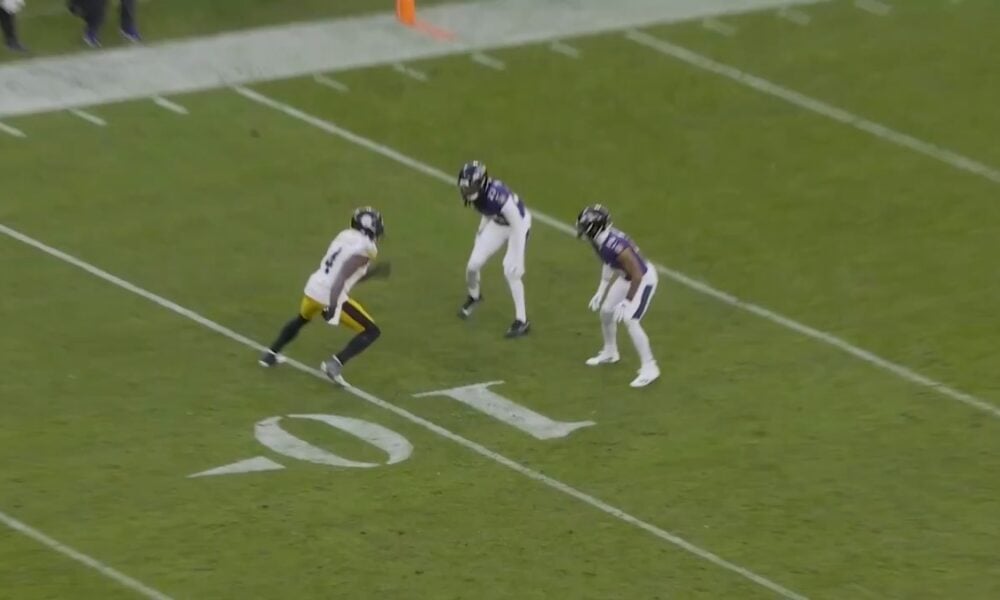
'Never Seen That Before': Teammates Reveal Additional Details On Metcalf's Gunner Snap
Late in the game facing a critical punting situation last Sunday at M&T Bank Stadium against the Baltimore Ravens, Pittsburgh Steelers wide receiver DK Metcalf stepped up in a big moment. Metcalf, who was in the midst of a season-best performance with seven receptions for 148 yards, showed just...
 steelersdepot.com

fred_1_15301
Footballguy
Just got an alert on my ESPN app that Watt is in the hospital experiencing lung discomfort. They’ve already ruled him out of practice for tomorrow. Hopefully something minor. 

HellToupee
Footballguy
Supposedly from a treatment they were doing at the facilityJust got an alert on my ESPN app that Watt is in the hospital experiencing lung discomfort. They’ve already ruled him out of practice for tomorrow. Hopefully something minor.

bryhamm
Footballguy
What the hell kind of treatment could they be doing that would effect his lungs?Supposedly from a treatment they were doing at the facilityJust got an alert on my ESPN app that Watt is in the hospital experiencing lung discomfort. They’ve already ruled him out of practice for tomorrow. Hopefully something minor.

Gold Fox
Footballguy
What the hell kind of treatment could they be doing that would effect his lungs?Supposedly from a treatment they were doing at the facilityJust got an alert on my ESPN app that Watt is in the hospital experiencing lung discomfort. They’ve already ruled him out of practice for tomorrow. Hopefully something minor.

Chargers' Taylor had lung punctured by team doc
A Chargers team doctor accidentally punctured Tyrod Taylor's lung just before kickoff Sunday while trying to administer a pain-killing injection, leading to the quarterback missing the team's game against the Chiefs, coach Anthony Lynn told ESPN.

fatness
Footballguy
T.J. Watt sent to hospital with lung issue after experiencing discomfort at Steelers practice facility
Pittsburgh Steelers star T.J. Watt was sent to a local hospital after experiencing lung discomfort at the team's practice facility Wednesday, the team announced. Watt will not practice Thursday and his status for Week 15 against the Miami Dolphins is in question. Steelers head coach Mike Tomlin spoke about the injury Thursday, confirming Watt was sent to the hospital for tests. Tomlin added that Watt's status for Week 15 was up in the air and that he expected more clarity depending on what tests showed Thursday.
Tomlin said he spoke with Watt on Wednesday evening, and said the pass rusher was "comfortable." Tomlin added that Watt was not dealing with an injury coming out of Week 14's game. Watt reportedly sustained the injury while receiving treatment at the team's facility and has been hospitalized since Wednesday, per ESPN's Adam Schefter. Tomlin was he was unaware when or how Watt's symptoms started.
fatness
Footballguy
Watt had a small hole in his lung which was supposedly fixed in the hospital.
https://x.com/gmfb/status/1999485315950739506
https://x.com/gmfb/status/1999485315950739506
Leeroy Jenkins
Footballguy
Herbig Show.Watt had a small hole in his lung which was supposedly fixed in the hospital.
https://x.com/gmfb/status/1999485315950739506
Will be interesting to see how this goes given that Watt hasn't had the big numbers -- but does draw attention.

Dizzy
Footballguy
On McAfee just now, Pat stating something to the effect of... after speaking to J.J. Watt, T.J. Watt was getting a "dry needle" treatment at the Steelers facility, had serious discomfort afterwards, rushed to the hospital and had to undergo immediate surgery to treat a collapsed lung and repair the hole.
Dry needling being compared to something like an acupuncture procedure to help in post-game recovery. Sounds very common, but occasionally - things do go wrong.
Dry needling being compared to something like an acupuncture procedure to help in post-game recovery. Sounds very common, but occasionally - things do go wrong.
fatness
Footballguy
That's what happened to Tyrod Taylor, isn't it?On McAfee just now, Pat stating something to the effect of... after speaking to J.J. Watt, T.J. Watt was getting a "dry needle" treatment at the Steelers facility, had serious discomfort afterwards, rushed to the hospital and had to undergo immediate surgery to treat a collapsed lung and repair the hole.
Dry needling being compared to something like an acupuncture procedure to help in post-game recovery. Sounds very common, but occasionally - things do go wrong.
Dizzy
Footballguy
That's what happened to Tyrod Taylor, isn't it?On McAfee just now, Pat stating something to the effect of... after speaking to J.J. Watt, T.J. Watt was getting a "dry needle" treatment at the Steelers facility, had serious discomfort afterwards, rushed to the hospital and had to undergo immediate surgery to treat a collapsed lung and repair the hole.
Dry needling being compared to something like an acupuncture procedure to help in post-game recovery. Sounds very common, but occasionally - things do go wrong.
That was A.J. Hawk's first comment (on McAfee). Others chimed in with stories of infections and blood clots that cost players games (extended in some cases).
Interesting to hear them all say (3 are former players) how common this dry needling technique is.
Leeroy Jenkins
Footballguy
That's what happened to Tyrod Taylor, isn't it?On McAfee just now, Pat stating something to the effect of... after speaking to J.J. Watt, T.J. Watt was getting a "dry needle" treatment at the Steelers facility, had serious discomfort afterwards, rushed to the hospital and had to undergo immediate surgery to treat a collapsed lung and repair the hole.
Dry needling being compared to something like an acupuncture procedure to help in post-game recovery. Sounds very common, but occasionally - things do go wrong.
His was from a pain injection I thought. This sounds more like acupuncture.
fred_1_15301
Footballguy
Yes it will be nice to see what this D is capable of without Watt.Herbig Show.Watt had a small hole in his lung which was supposedly fixed in the hospital.
https://x.com/gmfb/status/1999485315950739506
Will be interesting to see how this goes given that Watt hasn't had the big numbers -- but does draw attention.
Godsbrother
Footballguy
Not a doctor but just the term “dry needling” sounds sketch.
fatness
Footballguy
I thought so too so I looked it up.Not a doctor but just the term “dry needling” sounds sketch.

T.J. Watt's collapsed lung injury update, dry needling explained
Is dry needling common for NFL players? How long will the Steelers' star be sidelined? Here's what we know.
And then the iffy part.What is dry needling? What is required to legally administer dry needling? How safe is it?
Dry needling is a skilled intervention where the provider uses a thin needle to penetrate the skin with the goal of alleviating pain and improving movement. Unlike "wet" needling, which utilizes a hollow bore needle (which has a central channel to allow liquid to pass through it) to inject a medication, dry needling utilizes a solid needle and no substance is injected. Common applications for dry needling include, but aren't limited to, muscle pain/strains (e.g., hamstring, quad), tendinitis/tendinopathy (e.g., patellofemoral, biceps, rotator cuff), plantar fasciitis and headaches. Utilization has expanded within the past decade, in particular, and it is not uncommon to see dry needling in most athletic rehabilitation settings or training rooms.
Being a club worth millions of dollars, I'm sure (hopeful) that the Steelers employ someone competent to do the procedure.Requirements vary by state as to who may legally perform dry needling. The range of practitioners engaging in dry needling may include physical therapists, athletic trainers, acupuncturists, chiropractors, physicians, physician assistants, nurses and nurse practitioners. Health care professionals typically undergo post-graduate education specific to dry needling procedures. The requirements vary by state as to requisite hours of training as there is no nationally recognized board that oversees dry needling certification. Programs require completion of didactic and practical elements, and participants must pass written and practical exams that incorporate safety components.

rockaction
Footballguy
Man, I hope he’s okay just as a guy. Damn, what are they doing?
I don’t know. Not blaming anybody but that is massively uncool for him and then the club, in that order and with a serious distance between.
I don’t know. Not blaming anybody but that is massively uncool for him and then the club, in that order and with a serious distance between.
Dry needling fail
I've had it for back spasms. It 100% relaxes muscles immediately and surely can aid recovery (although my pinched nerve would still re-spasm)
From what my PT said it's pretty hard to screw up - someone is unemployed today and should be.
We'll see what post TJ might look like.
I've had it for back spasms. It 100% relaxes muscles immediately and surely can aid recovery (although my pinched nerve would still re-spasm)
From what my PT said it's pretty hard to screw up - someone is unemployed today and should be.
We'll see what post TJ might look like.

H8fulHuck
Footballguy
The depth of how cheap Art is supporting the team frustrates me as a Steelers fan. Smallest coaching staff. Refuses to let terrible coaches go so he doesn't have to pay someone else more. Made the city pay for a stadium shared with other teams resulting in sub-par field conditions. Poor survey results year over year by NFL players regarding ownership support and facilities.
I hope someone does some good investigative reporting here.
I hope someone does some good investigative reporting here.
Similar threads

- Replies
- 3K
- Views
- 65K

- Replies
- 12
- Views
- 793

- Replies
- 60
- Views
- 3K