What's new
Fantasy Football - Footballguys Forums

This is a sample guest message. Register a free account today to become a member! Once signed in, you'll be able to participate on this site by adding your own topics and posts, as well as connect with other members through your own private inbox!

*** Official Russia vs. Ukraine Discussion - Invasion has begun *** (3 Viewers)

 
In Ukraine, gamers make the best drone pilots

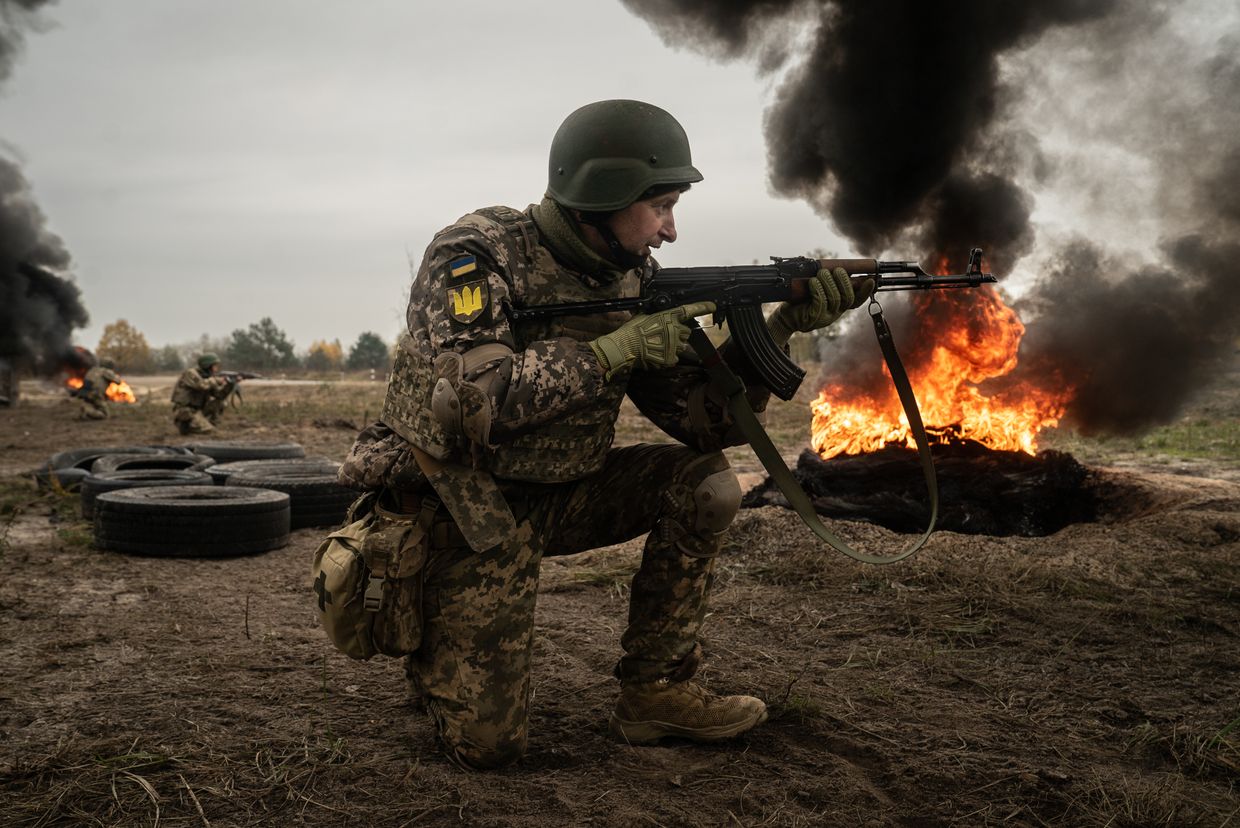
All you could see were their black or khaki caps, five heads bent in a semicircle, 10 eyes glued to a console. If it weren't for the fatigues, you'd think it was a gaming convention. But big insects were buzzing in the air, and the 92nd Assault Brigade was actually training in drone warfare in a snow-covered field near Kharkiv, northeastern Ukraine. "Of course we all play video games," smiled commanding officer Nikola, his cheeks reddened by the cold under a The North Face beanie. "Those who have had practice are definitely more proficient in piloting the drones."
"The face of war has changed. We are the 'new wave,'" said one of the supervisors of a drone manufacturing workshop hidden in the basement of an old Soviet building in Kharkiv. "The infantrymen of the trenches can do nothing nowadays without the new strategic battalions which, since 2023, have upended combat," he continued under a poster of a scantily clad woman wearing biker boots, a bra, and holding a Kalashnikov. Drones are now responsible for 70% of deaths among combatants, both Russian and Ukrainian, and their use has made the third year of the war deadlier than the first two combined.

Ukraine uses 10,000 of them every day and, in 2024, increased its crews sevenfold. In the long-running conflict, drone pilots are making up for the cruel lack of soldiers in the face of a numerically superior enemy. "They are now the army's elite," added Nikola, cheeks ablaze on the training field. At his side, Andri, 22, 1.96 meters tall, approved – and he knew what he was talking about: wounded in the leg on the Bakhmout side by an FPV drone (first person view; a term from the world of games that designates drones piloted by sight), he was enlisted as a drone pilot and proved to be excellent. "I've been playing video games since I was 17," he confided, proudly displaying on his phone a "real" video of Russian soldiers being ambushed by Ukrainian soldiers. "I still play today, all night long. Sometimes I can't tell the difference anymore."

On this day, "Yeti" (his pilot nom de guerre) was in charge of training the recruits. He's not just an instructor: His frequent trips to the front line help the developers to improve both the simulators and the games. "Drones are the new Kalashnikovs. And gamers' fingers are inevitably better than fingers used to tightening bolts. Flying fast is easy, but controlling your movements and hovering is more difficult. I also try to tell them that it's not a game." Instructors often warn against the dangerous feeling of all-powerfulness produced by uneven battles in which fighting back is impossible. "While I was with some guys from the 3rd Assault Brigade [formerly Azov], I was attacked and wounded by a Russian Uragan rocket launcher. I know there's nothing you can do against drones. A person who takes pleasure in it is sick."
Halfway between training on the computer and real-life training in the fields, there's Kill House, a vast hangar concealed in a neighborhood on the outskirts of Kiev. The name is emblazoned on the walls. Here, civilians and soldiers alike learn to fly from behind their FPV goggles: right and left turns, slaloming between squares and circles suspended from the ceiling, hovering above an artificial trench... "We put our students in the right conditions to learn how to fly," explained the instructor. "We put our students in front-line conditions," explained "Velo" and "Shadow," who are in charge of the training center attached to the 3rd Assault Brigade.

Ukraine begins deploying 20-km range fibre-optic drones in combat, says commander-in-chief

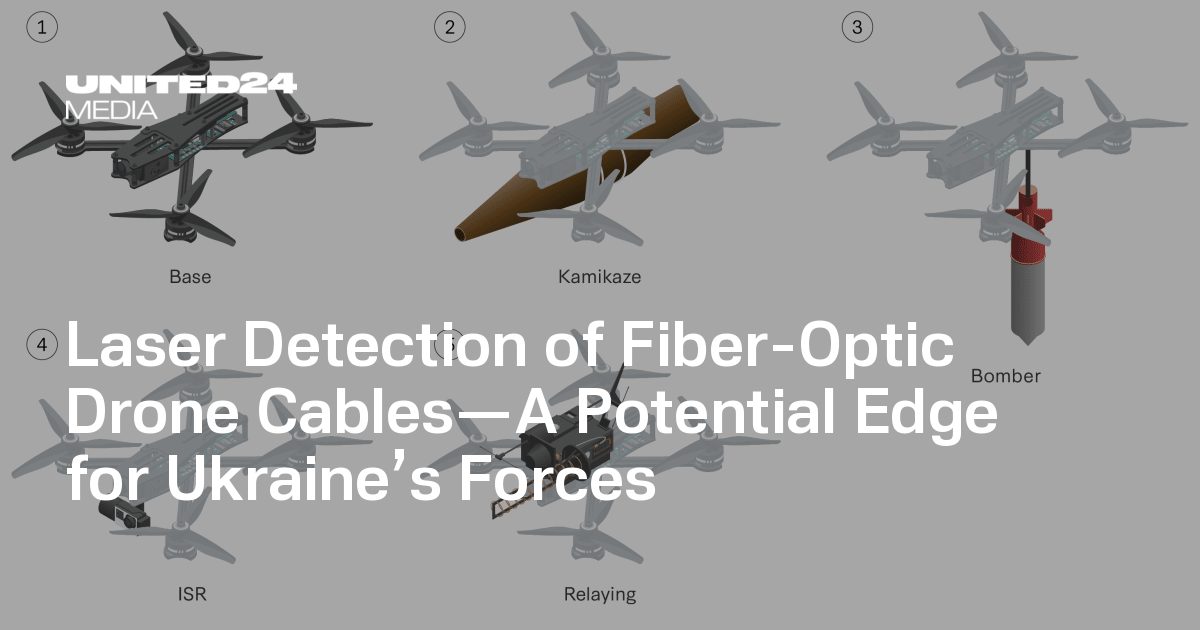
Ukrainian forces have begun using fibre-optic drones with a combat range of 20 km, as announced by Oleksandr Syrskyi, Commander-in-Chief of the Ukrainian Armed Forces. These UAVs are controlled and powered via an exceptionally long cable that unwinds over a long distance during flight, and present advantages over traditional drones in terms of jam-proof communication, data transfer speed and security, and resistance to electronic warfare.


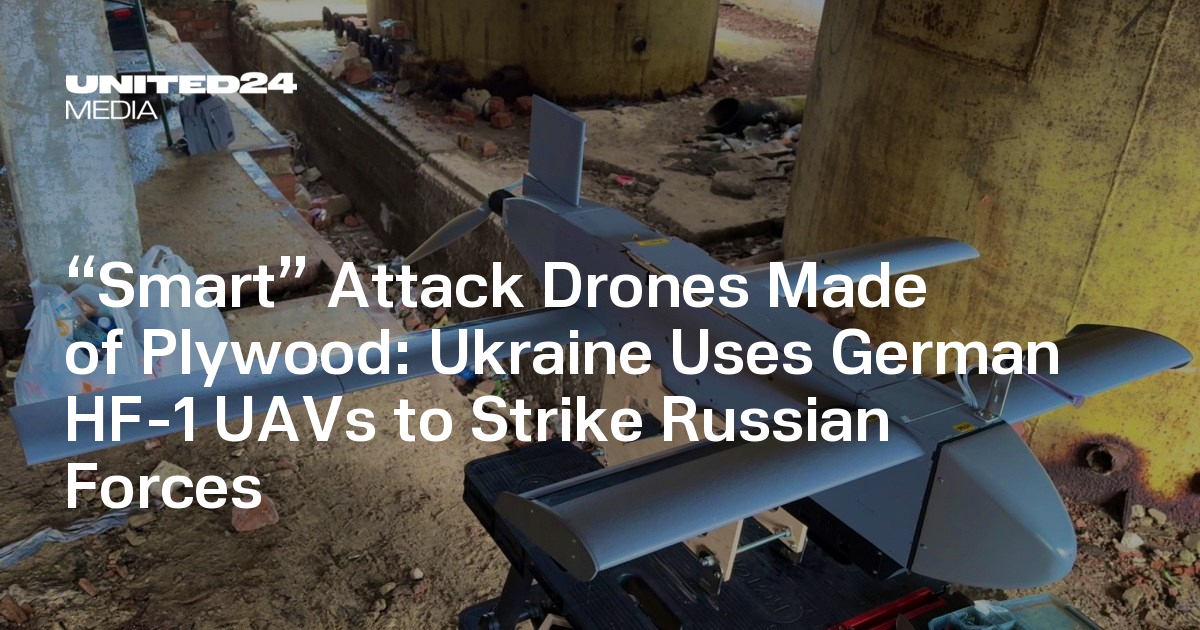
The Ukrainian Armed Forces showcased German "HF-1" AI strike drones. Per BILD, over 1,000 were delivered by April. With AI targeting, they fly 100 km—though troops favor 45-50 km—for up to an hour.


Footage of a Ukrainian air defense team engaging an incoming Russian attack drone with their 57 mm AZP S-60 antiaircraft autocannon.


Ukrainian forces double-tapped Russia's only domestic fiber optic producer yesterday morning, with a Ukrainian A22 Foxbat attack drone slamming into the facility.
 
During the night, new Russian strikes throughout Ukraine, including in Kiev

Russia "in the early hours of this morning launched a massive nationwide attack on Ukraine using ballistic missiles, cruise missiles and drones," First Deputy Prime Minister Yulia Svyrydenko said.

Russia launched 23 cruise and ballistic missiles and 109 drones, Ukraine's air force said, causing damage in six regions. The air force said it shot down 13 of the missiles and 40 drones, while 54 others caused no damage, according to Ukrainian authorities.

In Kyiv, explosions were heard overnight and thick black smoke rose from the city early Sunday morning, AFP journalists said. "One person was killed and three were wounded, two of them were hospitalized," the head of the city's military administration, Tymur Tkachenko, wrote on social networks. Fires broke out in Kyiv in non-residential buildings, damaging a business center, a furniture factory and warehouses, emergency services said. They posted videos of smoke rising from charred debris, a gutted hangar and a large multi-story administrative building with the roof torn off and windows blown out.

In the southern Kherson region, a drone killed a 59-year-old man, while in the northeastern Kharkiv region near the border with Russia, two people were wounded in an attack using guided aerial bombs, regional officials said.

1 killed in Russian attack on Kyiv as death toll from earlier missile strike rises to 19

Meanwhile, officials said that the death toll from Friday’s attack on the central city of Kryvyi Rih had continued to grow, with 19 dead — including many children — and a further 75 wounded.

Oleksandr Vilkul, head of Kryvyi Rih’s military administration, declared three days of mourning for the attack, starting on April 7. He said that there was “pain in the hearts of millions of people”.

“Together we will stand. And no matter how difficult it is, we will win,” he said. “The enemy will be punished for every Ukrainian and for every mother’s tear.”

A team from the U.N. Human Rights Office in Ukraine visited the impact site Saturday to document the damage and establish the identities of the nine children killed in the attack. They described it as the deadliest single verified strike harming children since the start of the full-scale invasion in February 2022.
 
Russia’s army is being subordinated to its security services

Two weeks after Russia invaded Ukraine in February 2022, Sergei Beseda’s mobile phone went dead. Mr Beseda, a general in the FSB, Russia’s main security agency, had been responsible for informing Vladimir Putin about internal dynamics in Ukraine. He was one of the bosses of the FSB’s Fifth Service, set up in the 1990s to spy on former Soviet republics. His information led to Mr Putin’s mistaken expectation that Ukraine would crumble.
When Ukraine instead fought Russia to a standstill, reports circulated that Mr Beseda had been arrested. Yet on March 24th the 70-year-old spy chief, now an adviser to the head of the FSB, sat in a hotel conference room in Saudi Arabia opposite Michael Waltz, America’s national security adviser, negotiating a possible ceasefire.

The security services’ prominence in the negotiations carries two messages, argues Andrei Soldatov, an intelligence expert living in exile. One is that Mr Putin sees the negotiations as a stage in his military operation rather than a path to ending the war. The other is that the spooks have been rehabilitated: the disastrous invasion is now presented as a success.
Those doing the fighting may disagree. Russia’s army has made almost no progress in two years. At least 200,000 soldiers are dead and 600,000 wounded, says Britain’s defence ministry. Yet the army must confront not just Ukrainian forces, but its own country’s security services. The FSB’s military counter-intelligence force, heir to Stalin’s infamous SMERSH, is the largest and fastest-growing directorate, says Mr Soldatov. Its job is to watch the armed forces, curb the influence of popular generals and prevent political self-organisation. The scale of purges evokes the Soviet era.

Russian Offensive Campaign Assessment, April 5, 2025

The Russian military command may have redeployed limited elements of the 98th VDV Division to Kursk-Sumy Oblast border area. One Russian milblogger, who is reportedly associated with the VDV, claimed on April 5 that elements of the 98th VDV Division's 217th VDV Regiment struck Ukrainian forces in the Sumy direction. ISW observed reports in February and March 2025 that elements of the 217th VDV Regiment were operating in the Chasiv Yar direction, and the VDV-affiliated Russian milblogger last claimed that elements of the 217th VDV Regiment were operating near Chasiv Yar in late March 2025. ISW cannot independently verify the milblogger's claim and has not observed other Russian reporting about this alleged redeployment. It is unclear if the 217th VDV Regiment is split between the Chasiv Yar and Sumy directions or if the regiment has entirely redeployed to the Sumy direction.

A Ukrainian servicemember operating in the Borova direction reported that Russian forces are accumulating equipment in preparation for a future large-scale assault and that Ukrainian forces destroyed 13 out of 16 pieces of equipment during a March 27 Russian attack. The servicemember noted that Russian forces continue to deploy small infantry groups of five to 10 soldiers and that Russian forces typically deploy personnel with three weeks of training before deploying better trained sabotage and reconnaissance groups that are usually better equipped and operate without body armor for increased maneuverability.
 
Russian Offensive Campaign Assessment, April 6, 2025

Russian forces conducted the largest series of missile and drone strikes against Ukraine in nearly a month on the night of April 5 and 6. The Ukrainian Air Force reported that preliminary data states that Russian forces launched nine Kh-101/Kh-55SM cruise missiles from Tu-95MS aircraft from the airspace over Saratov Oblast; eight Kalibr cruise missiles from the Black Sea; six Iskander-M ballistic missiles from Bryansk Oblast; and 109 Shahed and decoy drones from the directions of Bryansk City; Millerovo, Rostov Oblast; Primorsko-Akhtarsk, Krasnodar Krai; and occupied Cape Chauda, Crimea. The Ukrainian Air Force reported that Ukrainian forces downed six Kh-101/Kh-55SM cruise missiles, six Kalibr missiles, one Iskander-M ballistic missile, and 40 Shahed drones and that 53 decoy drones were "lost," likely due to Ukrainian electronic warfare (EW) interference. Ukrainian officials reported that Russian forces struck residential and civilian infrastructure in Kyiv, Sumy, Kharkiv, Kirovohrad, Khmelnytskyi, Cherkasy, and Mykolaiv oblasts and that five Iskander-M ballistic missiles struck Kyiv Oblast.

Ukrainian Air Force Spokesperson Colonel Yuriy Ihnat reported on April 6 that Russian forces are changing their strike tactics and constantly modernizing their Shahed drones and ballistic missiles, complicating Ukrainian forces' ability to shoot them down. Ihnat noted that the US Patriot air defense system is effective against ballistic missiles. Russian forces have repeatedly experimented with different strike packages in order to overwhelm Ukrainian air defenses and ensure that Russian missiles – particularly the ballistic missiles that are more difficult for Ukrainian air defenses to shoot down – are able to reach their intended targets. Russian forces likely launched missiles and drones on the night of April 5 to 6 from various locations in the Black Sea, Russia, and occupied Crimea, as part of these experimentation efforts.

The spokesperson of a Ukrainian brigade operating in the Kharkiv direction reported on April 6 that Ukrainian forces repelled a "fairly massive" Russian infantry assault in northern Kharkiv Oblast in the past week (March 31 to April 6) "for the first time in a long time." The spokesperson noted that Ukrainian forces detected the Russian forces before they began to accumulate. The spokesperson stated that Russian casualties in the brigade's area of responsibility amounted to more than 120 soldiers over a period of five to six days and that Russian forces in the area consist of penal recruits and servicemembers who have signed contracts with the Russian Ministry of Defense (MoD). Ukrainian Khortytsia Group of Forces Spokesperson Colonel Viktor Trehubov reported that Russian forces did not conduct offensive operations in the Kharkiv direction on April 6, as Russian forces are regrouping.

Russia replaces US components in its attack drones with Chinese ones, Ukrainian intelligence says

The electronic warfare part of Russian Shahed attack drones has almost lost its dependence on American components.

Source: War&Sanctions project of Defence Intelligence of Ukraine (DIU)

Details: Defence Intelligence of Ukraine has released information on almost 200 new parts and components used in six types of Russian weapons.

Among them are a Russian Shahed's CRP antenna, a North Korean KN-24 ballistic missile, a computer from the Kh-47 Kinzhal missile, and Supercam S350, Gerbera, and Zala UAVs.

Only two US-made chips were found in the new CRP antennas for the Geran-2 (Geranium-2) drone, the intelligence service said. This indicates Russia's attempts to reduce its dependence on components from countries that have imposed sanctions against it.

Earlier, DIU reported that new jamming antennas with Chinese language labelling appeared in the Shahed drones used in 2025. Out of 15 components in one of these antennas, only two are made by the American companies Texas Instruments and Linear Technologies.

Most of the other parts are made in China, including transceivers, generators, signal converters, and other chips. For example, the Beijing Microelectronics Technology Institute (BMTI) makes the main chip of the CRP antenna, which analyses incoming signals and decides which ones to ignore.

Revealed: Russia’s secret war in UK waters

Russian sensors suspected of attempting to spy on the UK’s nuclear submarines have been found hidden in the seas around Britain.
The discovery by the British military was deemed a potential threat to national security and has never been made public. Several were found after they washed ashore, while others are understood to have been located by the Royal Navy.
The devices are believed to have been planted by Moscow to try and gather intelligence on Britain’s four Vanguard submarines, which carry nuclear missiles.
One of these submarines is always at sea under what is known as the UK’s continuous at-sea deterrent. The Sunday Times has chosen to withhold certain details, including the locations of the sensors.

A senior serving British military figure added: “There should be no doubt, there is a war raging in the Atlantic. This is a game of cat and mouse that has continued since the ending of the Cold War, and is now heating up again. We are seeing phenomenal amounts of Russian activity.”

Three senior defence sources have revealed that prior to the full invasion of Ukraine, there was credible intelligence that superyachts owned by oligarchs may have been used to conduct underwater reconnaissance around Britain.

It is not clear what type of sensors were found. Several had washed up on the shore, but more have been identified using the Royal Navy’s fleet of mine-hunter vessels. As they searched, the navy found other sensors it did not know were there, The Ministry of Defence said the at-sea deterrent remains “undetected.”
Whether the UK has discovered evidence of other Russian activity is top secret. “It’s a bit like the space race,” said one senior UK source. “This is a world clouded in secrecy and subterfuge, it’s very hard to get absolute clarity. But there’s enough smoke to suggest something is on fire somewhere.”
 
Zelensky confirms Ukraine troops in Russia's Belgorod region

Ukrainian President Volodymyr Zelensky has publicly acknowledged for the first time that his troops are active in Russia's Belgorod region, which borders Ukraine.

"We continue to carry out active operations in the border areas on enemy territory, and that is absolutely just - war must return to where it came from," he said on Monday.

His comments also referred to Russia's Kursk region, where Ukraine still holds a small area after a major offensive last year. Moscow has since retaken most of the territory.

Zelensky said "the main objective" was to protect Ukraine's Sumy and Kharkiv border regions, and to "ease the pressure" on other parts of the vast front line, particularly in the eastern Donetsk region.

Zelenskyy confirms Ukrainian troops are fighting in second Russian region

Little is known about the Ukrainian operation in Belgorod, but soldiers with knowledge of past raids there said the latest fighting appears aimed at forcing Moscow to divert resources from its fight to take back land in nearby Kursk. Russian military bloggers have also reported clashes in Belgorod involving Ukrainian units.
Zelenskyy praised Ukraine’s 225th Assault Regiment for its role in the operations in Belgorod, which he said had helped “to ease the pressure on other parts of the front, particularly in the Donetsk region”.

EDF: Ukraine's warnings of a new Russian offensive must be taken seriously

In Pokrovsk, Ukrainian forces are still holding out well, according to the brigadier general. "The defense is holding. Of course, the Russians are constantly pushing forward. I'm not saying the Ukrainians are not retreating, but when they do, the withdrawal is organized. If they retreat from their positions, they inflict as many losses as possible on the Russian forces."

Ukrainian sources say Russia is preparing for a large-scale offensive that could continue throughout 2025.

Kalnitski said such warnings must be taken seriously. "Weather conditions are becoming more favorable for the Russians; it will certainly be possible to maneuver units there, and nature supports that. Another factor: the Russians have tactical operational reserves in place, and units are being replenished to full strength," he said.

Kalnitski noted that the number of mobilized personnel in Russia has increased and that they still hold superiority in artillery and armored vehicles.

"This must be taken very seriously, and we must also prepare for it," the brigadier general said.

‘Putin believes he has the upper hand’ — Ukraine braces for a new Russian spring offensive

Although Russia has slowed significantly near Pokrovsk, less-intense parts of the front have activated over March, threatening to flare up into larger offensives.

Taking advantage of a defense manned by less prepared Ukrainian units, Russian forces have managed to expand a bridgehead across the Oskil River north of Kupiansk in Kharkiv Oblast, while south of the city, a similar crossing was achieved on the Zherebets River, near the Ukrainian-held territory in Luhansk Oblast.

"If I had to guess, their main effort would still be around central Donetsk, Pokrovsk, Kostiantynivka directions, possibly seizing Toretsk and maybe even trying to advance toward Kramatorsk," Emil Kastehelmi, a Finnish military analyst and member of the Black Bird Group open-source intelligence collective told the Kyiv Independent.

In keeping with long-held goals to conquer all of Donetsk Oblast, Moscow could choose to breathe new life into its offensive on the embattled city of Pokrovsk, which has been the hottest sector of the front line for the last six months.

Further south, Ukraine's hold on the southern reaches of Donetsk Oblast continues to be chipped away by Russia following the fall of the cities of Kurakhove and Velyka Novosilka during winter.
In an early teaser of what could be a larger offensive push, Russia launched a large mechanized attack in the first days of April in the town of Andriivka, just west of Kurakhove, according to Ukraine's 46th Airmobile Brigade, which reported three Russian tanks, eleven armored vehicles, and 58 personnel destroyed in the unsuccessful attempt to break through Ukrainian lines.

Moscow's opening of a new front to spread the pressure on the Ukrainian defense would have precedent from last year's spring campaign.

The cross-border offensive on Kharkiv in May 2024, while failing to break into artillery range of Ukraine's second-biggest city, did force Kyiv to draw away some of its strongest brigades and drone units from the eastern front, likely helping Russia press the advantage in its push towards Pokrovsk.

Ultimately, where Russia chooses to move will be a question of priorities and forces available, argued Hardie.

"Despite the ill-fated Kharkiv offensive and attacks in other areas (in 2024), the Pokrovsk direction remained the main effort where Russia devoted the vast majority of its daily assaults and resources last year," he said.

"It's unlikely they could replicate what they're doing in Pokrovsk in terms of tempo and the number of bodies they throw at Ukrainian positions in two places at once. They would have to prioritize one or the other."
 
Footage reveals no military personnel in Kryvyi Rih restaurant targeted by Russian attack

Security footage shows that no military personnel were present at a Krivyi Rih restaurant, despite Russian claims of military targets amid a Russian attack on the city on April 4, France 24 reported on April 7.

Russia targeted Kryvyi Rih in a deadly attack on April 4, killing 20 people and injuring 75. Russian media claimed the attack targeted Ukraine's Armed Forces and foreign instructors training them.

No evidence of a military meeting in Kryvyi Rih on April 4 was found, Gulliver Cragg, a correspondent at France 24, reported.

The video segment can be found here: https://www.france24.com/en/europe/...kryvy-rih-residents-fear-more-russian-strikes
 

“Russia has built a multi-layered defense system that is hindering Ukraine’s use of naval drones, Ukrainian Navy Commander Oleksiy Neizhpapa said in an interview with RFE/RL on April 7.

‘In the past, we could easily enter Sevastopol Bay with our drones,’ said Neizhpapa.

‘Now it’s not so simple because the enemy has established a tiered defense system. It starts with a layered detection network—with long-, medium- and short-range zones designed to pick up our unmanned systems, followed by a protocol for their destruction.’”

Situation on Lyman front deteriorates: In some areas there are ten Russians for every Ukrainian soldier

The situation on the Lyman front has worsened over the past month, with Russian forces deploying large numbers of infantry and using many drones, including those with fibre-optic control.

Source: Anastasiia Blyshchyk, spokesperson for the 66th Separate Mechanised Brigade named after Prince Mstyslav the Brave, on Radio Liberty

Quote: "We can confirm that the situation has really worsened in the past month. The Russians are pressing with an enormous amount of infantry – they simply have a lot of it. These can be large or small infantry groups that take advantage of weather conditions. They are doing everything to break into our combat formations, get into our rear as fast as possible, and cause damage."

Details: Blyshchyk noted that Ukrainian defenders on the Lyman front are lacking manpower, while Russian forces quickly replenish their numbers despite heavy losses.

Quote: "In just a month, fighters from our brigade alone inflicted very heavy losses on the Russians – the equivalent of two battalions. But the Russians do not stop. Because they have this system for quickly replenishing their losses, they maintain their offensive potential, and it doesn’t diminish… Indeed, in some areas, there are ten Russian occupiers for every one of our infantrymen."

Ukraine soldiers push Russians back near Pokrovsk, but lose positions on other fronts – DeepState

DeepState reported that Ukraine's defence forces had pushed the Russians back in the village of Shevchenko, located south of Pokrovsk in Donetsk Oblast.

Meanwhile, the Russians advanced in Chasiv Yar and near Novoliubivka in Donetsk Oblast.

Russian troops also pushed Ukrainian forces back near the village of Guevo in Russia's Kursk Oblast.
 
Goldman Sachs says markets pricing in 70% probability of Ukrainian peace deal

U.S. investment bank Goldman Sachs said bond pricing inferred that markets believed there was 70% probability of a Ukraine peace deal, up sharply from before the November election of U.S. President Donald Trump.
"Our modeling suggests that current market pricing for a peace deal has risen from below 50% prior to US elections to around 70% at present," Goldman Sachs said in research note to clients.
It added, however, that this was slightly lower than a peak of 76% in February.

As oil plunges, Kremlin sees a global economic storm

Russia's 2025 oil price assumption in the budget assumes a rouble rate of 96.5 roubles per U.S. dollar, though the rouble has strengthened this year. The rouble was trading at 86.30 against the dollar in the over-the-counter market.
Russia uses a basket of Urals and more expensive ESPO Blend crudes when calculating the average price of Russia's oil blend for taxation.
According to Reuters calculations, the Russian oil price has declined to around 4,476 roubles per barrel, the lowest since June 2023, and down from the 6,726.05 roubles projected in the federal budget.

Russia's Q1 budget deficit narrows to 1% of GDP

Russia's budget deficit narrowed to 1% of gross domestic product (GDP), or 2.17 trillion roubles ($25.5 billion), in the first quarter of 2025, compared to 1.3% of GDP in the first two months, the finance ministry said on Tuesday.
The ratio remains substantially higher than in the first quarter of last year, when it stood at 0.1%. The ministry reported that state spending was up by 24.5% while oil and gas revenues were down almost 10%.
"It (increased spending) is due to the accelerated financing of expenditures in January of this year and will not affect the target parameters of the structural balance for 2025 overall," the ministry said in a statement.
Russia is targeting a fiscal deficit of 0.5% of GDP, or 1.17 trillion roubles ($13.7 billion). Russia's 2024 fiscal shortfall was around $34 billion, or 1.7% of GDP.
Increased spending to finance the military operation in Ukraine has kept the budget deficit close to 2% of GDP over the last three years.
High spending has spurred inflation, with the central bank citing fiscal stimulus as one of the factors that force it to keep interest rates high.
While keeping the key interest rate on hold at 21% last month, central bank governor Elvira Nabiullina stressed the importance of the government adhering to its plans for the deficit.
 
Russian Offensive Campaign Assessment, April 7, 2025

Ukraine's European allies continue to ramp up domestic materiel production and address shortages inhibiting artillery ammunition production. German arms manufacturer Rheinmetall announced on April 7 that the company will acquire and repurpose German nitrocellulose producer "Hagerdorn-NC" for weapons production as part of ongoing efforts to increase Rheinmetall’s capacity for manufacturing ammunition propellants, particularly for 155mm artillery shells. Nitrocellulose, also known as guncotton, is a crucial component of propellants for modern artillery ammunition and other munitions that use gunpowder. Rheinmetall currently produces nitrocellulose at facilities in Switzerland, Spain, and South Africa and plans to increase its production of gunpowder by over 50 percent by 2028. Rheinmetall subsidiary Nitrochemie Aschau — which produces nitrocellulose, other gunpowder components, and dynamite — has increased its production capacity by 60 percent since the start of Russia’s full-scale invasion of Ukraine in 2022 and plans for another 40 percent increase by mid-2025. Rheinmetall CEO Armin Papperger and Saab CEO Micael Johansson warned in April 2024 that the People's Republic of China (PRC) supplied an overwhelming majority of European ammunition components, including those necessary for nitrocellulose, resulting in bottlenecks inhibiting European artillery ammunition production. Bloomberg reported in March 2025 that Rheinmetall expanded its sourcing of cotton linters — a key component for nitrocellulose production that faced a critical shortage in Spring 2024 — from Europe and countries friendly to the European Union (EU) and built up a stockpile of several years' worth of linters. NATO General Secretary Mark Rutte told CBS News on April 7 that he has urged US and European leaders to ramp up defense spending and defense industrial production amid concerns of future Russian aggression against Europe. Rutte noted that NATO states combined manufacture four times fewer ammunition rounds than Russia manufactures on its own, despite the fact that NATO’s combined economy is 20 times larger than Russia’s.

The commander of a Ukrainian assault company operating in the Kharkiv direction stated that Russian forces are attempting to accumulate infantry for further assault operations as Russian forces do not currently have enough infantry in the area. A Russian milblogger claimed that most of central Vovchansk is a contested "gray zone."

The commander of a Ukrainian drone regiment operating in the Kupyansk direction reported on April 7 that Russian forces are trying to expand their bridgehead on the right (west) bank of the Oskil River near Dvorchina (north of Kupyansk). The commander stated that Ukrainian forces have prevented Russian forces from establishing pontoon crossings on the Oskil River and that Ukrainian forces are striking Russian engineering equipment.

The commander of a Ukrainian drone company operating in the Toretsk direction reported on April 7 that Russian forces are intensively using first-person view (FPV) drones with fiber optic cables while increasingly conducting guided glide bomb strikes. The commander noted that Russian forces are not conducting guided glide bomb strikes against buildings in which both Russian and Ukrainian forces maintain positions but are using the strikes to identify other Ukrainian positions. The commander noted that Russian forces are attempting to use motorized equipment and that Russian forces have doubled their number of assaults as compared to last week (roughly March 30 to April 5).

Ukrainian Khortytsia Group of Forces Spokesperson Colonel Viktor Trehubov stated that the intensity of fighting in the Pokrovsk direction alone is sometimes comparable to that along the entire frontline in eastern Ukraine. Trehubov reiterated that Russian forces conducted a temporary pause in the Pokrovsk direction following heavy losses in early March 2025 but have since restored their combat capabilities. Trehubov stated that Russian forces are attempting to bypass Pokrovsk from the west and advance toward Novopalivka (southwest of Pokrovsk) and the T-0504 Pokrovsk-Kostyantynivka highway.
 
Ukraine to increase drone, robotics production, Zelensky says

President Volodymyr Zelensky announced on April 7 that Ukraine is ramping up drone production to the "maximum."

In his nightly address, Zelensky said that Ukraine will increase production for the "full range of drones: from Mavics to long-range drones."

"We’re also expanding our domestic capacity to produce ground-based robotic systems. What we need is constant, stable growth in the production and supply of every necessary part of the unmanned component to our forces. And for this year, the outlook is promising," Zelensky added.

Earlier on April 7, the Defense Ministry also announced that a new, Ukrainian-made ground robotic system has been approved for military use.

Since the start of the full-scale invasion, Ukraine has been developing and deploying technological innovations and cutting-edge unmanned systems. Both Ukraine and Russia have increasingly relied on drone warfare, using aerial, naval, and ground-based drones for reconnaissance and combat missions.

Zelensky also noted that Ukraine is working on producing fiber-optic drones: "since the beginning of this year, more than 20 new certified drone models with fiber-optic control systems have emerged."

Norway to allocate around $454 million for artillery ammunition for Ukraine

Oslo will allocate around $454 million for the purchase of artillery ammunition for Ukraine, the Norwegian government announced on April 7.

Around $363 million will be devoted to the Czech-led initiative to provide Kyiv with artillery shells. Another $91 million will be allocated to the European Peace Fund (EPF), from which funds are allocated for the purchase of weapons for Ukraine.
 
Ukraine Is Sending Drones to Russia That, When Captured, Infect Military Systems With Malware
Experts previously considered these types of cyberthreats to be minor because they targeted individual devices like computers. However, they now seem to attack entire networks. Their use on the battlefield marks a significant shift in the cyber dimension of the conflict. Ukrainian malware. According to Forbes, the malware detected in Ukrainian drones is designed to serve specific functions. These include physically damaging USB ports, preventing system reflashing, and blocking drone reprogramming. More importantly, the malware would allow Ukraine to locate any new Russian operators if the drone is reused by Moscow. These malicious codes are crafted to sabotage any attempt by the enemy to repurpose the drones. They disable the electronics of the devices and create vulnerabilities that can be exploited remotely.
 

Ukrainian forces have captured two Chinese nationals who were fighting for the Russian army in eastern Ukraine's Donetsk region, President Volodymyr Zelensky has said.


He said on Tuesday that intelligence suggested the number of Chinese soldiers in Russia's army was "much higher than two".


Ukrainian Foreign Minister Andrii Sybiha said Chinese troops fighting on Ukrainian territory "puts into question China's declared stance for peace" and added that their envoy in Kyiv was summoned for an explanation.


It is the first official allegation from Ukraine that China is supplying Russia with manpower. There has been no immediate response to the claims from Moscow or Beijing.


In a statement on social media platform X, Zelensky said the soldiers were captured in Ukraine's eastern Donetsk region with identification documents, including bank cards which had "personal data" on them.


Ukraine's forces fought six Chinese soldiers and took two of them prisoner, he said.


The post was accompanied by a video showing one of the alleged Chinese captives in handcuffs, speaking Mandarin Chinese and apparently describing a recent battle.


"We have information suggesting that there are many more Chinese citizens in the occupier's units than just these two," he said.


"Russia's involvement of China, along with other countries, whether directly or indirectly, in this war in Europe is a clear signal that Putin intends to do anything but end the war," Zelensky added.


The Ukrainian president called for a response "from the United States, Europe, and all those around the world who want peace".


An investigation is under way and the captives are currently in the custody of Ukraine's security service, he added.


Tuesday, US State Department spokesperson Tammy Bruce called the reports "disturbing".


She added that China is a "major enabler" of Russia's war in Ukraine, citing its supply of dual-use goods such as navigation equipment, semiconductor chips and jet parts.


Ukraine's foreign minister said that he had summoned China's chargé d'affaires in Kyiv to "demand an explanation".


Writing on X, Andrii Sybiha said: "We strongly condemn Russia's involvement of Chinese citizens in its war of aggression against Ukraine, as well as their participation in combat against Ukrainian forces."


He added that the move "puts into question China's declared stance for peace" and undermines Beijing's credibility as a member of the UN Security Council.


French newspaper Le Monde has previously reported that it identified around 40 accounts on TikTok's sister app, Douyin - which is only available in China - belonging to Chinese individuals who claim to have signed up with the Russian army.


North Korea has sent thousands of troops to aid Russia's war effort against Ukraine, according to Kyiv and Western officials.


In a press conference on Tuesday, Zelensky said: "But there is a difference: North Koreans fought against us on the front in Kursk, the Chinese are fighting on the territory of Ukraine."


In January Ukraine said it captured two injured North Korean soldiers in Russia's Kursk Oblast.


While Beijing and Moscow are close political and economic allies, China has attempted to present itself as a neutral party in the conflict and has repeatedly denied supplying Russia with military equipment.
In a press conference on Tuesday, Zelensky said: "But there is a difference: North Koreans fought against us on the front in Kursk, the Chinese are fighting on the territory of Ukraine."

He said on Tuesday that intelligence suggested the number of Chinese soldiers in Russia's army was "much higher than two".
 
Last edited:

So Russia is going to catch up to us in military design using equipment that began development in the 1960's and entered service in the early 80's.

🤣🤣🤣
I saw that article and it made me chuckle also. Ha ha. One thing we have learned from the Ukraine war is that Russian military strength comes down to that one scary word.
 

So Russia is going to catch up to us in military design using equipment that began development in the 1960's and entered service in the early 80's.

🤣🤣🤣
I saw that article and it made me chuckle also. Ha ha. One thing we have learned from the Ukraine war is that Russian military strength comes down to that one scary word.
Yea, though I knew their equipment and training was inferior to ours, I really underestimated how much so until this war.

Reminds me of the up close picture of s SU-57 (supposed comparable to F-22) with deep rivets exposed of striped Phillips style screws in the wing. It explains the difference in RCS (Radar Cross Section) of 0.1-.5 for SU-57 AND .0001 for the F-22.

I can't wait to see their new BMP after all the lessons they learn from our old M2 Bradley's while we are rolling in our XM30'S.
 
To piggyback off of Dez's article about Chinese nationals in Russia, this summer saw the discovery of Chinese nationals in the Gaza-Egyptian tunnels this past summer, fighting against Israel. This is probably the strongest article regarding the connection and makes the most accusations about Chinese, but it's definitely a worthy story and can be corroborated by other stories, which I'l link a bit later. You're going to barraged with some pop-ups, but if you can bear it then the article is worth it.


Last edited:
If they are mercenaries or volunteers then why should we care? If they are acting on the orders of their country, supplied by their country, that's a different story. There are western volunteers fighting alongside Ukrainian soldiers and have been since the start. That's different than the UK sending a company of regular soldiers to fight as a unit, which is what NK has done.
 
Russia's spring offensive has 'effectively already begun,' Syrskyi says

Russia's new spring offensive against northeastern Ukraine "has actually already begun," Commander-in-Chief Oleksandr Syrskyi said in an interview with the LB.UA outlet published on April 9.

Syrskyi's comments come after President Volodymyr Zelensky warned that Moscow is amassing forces for a fresh offensive against the Kharkiv and Sumy oblasts this spring.

"I can say that the president is absolutely right, and this offensive has effectively already begun," Syrskyi said.

For nearly a week, Russian offensive operations have almost doubled in all main sectors, the commander-in-chief noted.

Some updates here:

For several months, some of the fiercest fighting has been taking place to the south of the town of Pokrovsk – a one-time key logistics hub for Ukraine’s armed forces in the Donetsk region.
Ukraine’s army has achieved several small tactical successes since the start of the year, pushing back some of the Russian advance towards Pokrovsk, which had bought it to within just a few kilometers of the town center.
But a Ukrainian reconnaissance officer deployed in the area told CNN that, over the last 10 days, Russia’s armed forces became more active again and were bringing forward further manpower and vehicles for future assaults.
“We see it on the drone footage, and we hear them talking about it on the radio intercepts,” said the officer, who CNN is not naming.
But with Pokrovsk itself heavily defended and the military supplies previously situated there largely relocated, Russia’s main effort in the area could be to push westward, rather than north.
Social media posts by Ukrainian soldiers in the last few days describe fears of possible encirclement in one location and breach of a defensive line in another.
“The frontline in this area has entered an active phase. The Russians will not stop,” one Ukrainian with the call-sign Muchnoi wrote on Telegram.
The aim of the advance is a town called Novopavlivka, he said.
“They will enter the Dnipropetrovsk region - this is one of the key tasks set by the Russian command.”
Moving into Dnipropetrovsk would be a significant moment because it would be the first time Russian troops have set foot there. Indeed, it would be the first new Ukrainian region to come under part-Russian occupation since the earlyweeks of the full-scale invasion more than three years ago.
The Ukrainian mapping service DeepState puts Putin’s forces just six kilometers (3.7 miles) away from the region while people living along the border are already being evacuated, Dnipropetrovsk officials say.

Ukrainian soldiers report a variety of Russian tactics in recent weeks.
In the south of Donetsk region, a Ukrainian officer with the call sign Alex described Russian troops moving forward in columns consisting of both armored and soft-skin vehicles– about four to five infantry fighting vehicles and tanks, while “the rest are trucks, cars and golf carts.”
He did not hide his scepticism at the prospects for major Russian advances if current maneuvers reveal a real shortage of armor.
“Yes, they have a lot of manpower, several times more than we do, but whatever one says, in a war in the 21st century, it is impossible to build on any successes and launch a rapid offensive without mechanized means of delivering and supporting infantry,” Alex wrote on Telegram.
Also writing on Telegram, Ukrainian commander Stanislav Buniatov said Russian forces there were suffering heavy losses but continued undeterred. “One unit in this area loses ten to 50 Russians per day,” he said.

Further west, close to the Dnipro River, where Russian forces last week gained control of the small settlement of Lobkove, a Ukrainian commander with a strike drone squad told CNN he was observing a build-up of manpower between 10-15 kilometers (6-9 miles) behind the line of contact.
“The Russians are operating in small tactical groups of five to seven men, maximum 10 people. As soon as it’s foggy or rainy, they start advancing using bad weather as cover from our drones.”
As spring progresses and the weather turns drier, tactics will change, the drone commander says.
“They can’t use heavy vehicles at the moment. It’s too wet, they will get stuck. As soon as the land dries up, they will make a move; it’s not in doubt, they will charge for sure.”


“Last year Ukrainian arms firms churned out $10bn-worth of kit, according to a report in March by the Ukrainian Institute for the Future (UIF), another think-tank. That represented an extraordinary three-fold increase from 2023, and ten-fold from 2022…

Oleksandr Kamyshin, who oversees the defence industry for Volodymyr Zelensky, Ukraine’s president, says that this year production will be about $15bn, but the sector will have the capacity to produce about $35bn. The constraint is simply lack of money, which he hopes allies will assist with.

It is not clear what share of the needs of Ukraine’s armed forces are being met through local production. The UIF report puts it at 30%, but Mr Zagorodnyuk thinks it nearer 50%. What is not in doubt is that production is steadily rising, despite constant Russian strikes on factories. ‘Some facilities have been hit five times or more,’ says Mr Zagorodnyk. ‘But they survive.’ The factories are both dispersed and sprawling, which makes them resilient to attacks.”
 
Russia ‘readies for attack on Sumy with 67,000 troops at border’

Moscow has positioned more than 67,000 troops on Ukraine’s northern border in preparation for an attack on the city of Sumy, President Zelensky has said.
With ceasefire talks ongoing, Russia has begun a spring offensive on multiple fronts — with the number of daily military operations doubling over the past week, Ukraine had said.
Having recaptured much of Kursk region, Russia is looking to strike at Sumy just over the border.
“Today, more than 67,000 Russian soldiers are located in the Kursk direction. [Russia] completed the relocation for an attack in the Sumy direction,” Zelensky said. “There are many attacks there. Most attacks, on average, are in that direction.”

Russian Offensive Campaign Assessment, April 9, 2025

Russian forces continue to marginally advance in the Sumy-Kursk Oblast border area, but the Russian force grouping in the area will likely be unable to launch a major offensive operation against Sumy City in the near term without receiving significant reinforcements. Ukrainian Commander-in-Chief General Oleksandr Syrskyi stated during an interview with Ukrainian outlet LB UA published on April 9 that Russian forces have intensified assaults in "all main directions" and begun offensive operations in Sumy and Kharkiv oblasts. ISW has observed gradual but consistent Russian gains and attacks along the Volodymyrivka-Zhuravka-Novenke line (north to northeast of Sumy City) in northern Sumy Oblast and ongoing Russian efforts to push Ukrainian forces from remaining positions south of Sudzha in southern Kursk Oblast since early March 2025. Russian forces made rapid advances in Kursk Oblast in early March 2025 as the United States temporarily paused intelligence sharing with Ukraine, but Russian gains slowed as Ukrainian forces retreated into Sudzha and later resumed use of HIMARS long-range strike systems. Russian forces pushed Ukrainian forces from Sudzha in mid-March 2025 but have continued to attack the remaining Ukrainian positions in Kursk Oblast while starting attacks into northern Sumy Oblast over the past month.

Ukrainian military observer Kostyantyn Mashovets stated on April 9 that elements of the Russian 76th Airborne (VDV) Division and 83rd VDV Brigade recently seized Basivka (south of Novenke) and are attempting to advance towards Loknya (further south of Novenke) and interdict the H-07 Yunkivka-Sudzha highway. Mashovets stated that unspecified Russian units are also attacking in the Volodymyrivka-Veselivka area (north of Sumy City) and are trying to advance toward and merge at the Russian salient near Basivka. Mashovets stated that elements of the Russian 106th VDV Division and 11th VDV Brigade are attacking from Gogolevka and near Oleshnya (both west of Sudzha) in Kursk Oblast and the Sudzha checkpoint along the international border, and that elements of the Russian 155th Naval Infantry Brigade (Pacific Fleet) and 810th Naval Infantry Brigade (Black Sea Fleet) with support from North Korean troops are pushing Ukrainian forces from any remaining positions near Guyevo and Gornal (both south of Sudzha). Russian milbloggers claimed on April 8 and 9 that Russian forces have marginally advanced in eastern Oleshnya and southeast of Guyevo in Kursk Oblast.

Mashovets estimated that there are roughly 62,000 to 65,000 Russian troops and border guards currently operating in Kursk Oblast, and Syrskyi estimated in January 2025 that Russian forces had concentrated roughly 67,000 Russian troops and 11,000 North Korean troops in Kursk Oblast. Russian forces have likely sustained some losses during intensified attacks in March and early April 2025, and ISW has observed several claims that elements of the 155th Naval Infantry Brigade redeployed from Kursk Oblast to Belgorod Oblast in order to respond to ongoing Ukrainian attacks in northwesternmost Belgorod Oblast. The Russian military command does not appear to be significantly bolstering its force grouping in Kursk Oblast — which would be a leading indicator for a larger offensive operation against Sumy Oblast — and in fact appears willing to redeploy small numbers of troops away from the Sumy effort — suggesting that the command believes that it can achieve its operational goals with the forces it has already gathered in Kursk Oblast.

The Russian military command is likely attempting to form a buffer zone along the international border in Sumy Oblast, although Russian commanders may intend to press further into Sumy Oblast and towards Sumy City in the future. ISW previously assessed that Russian forces would not attempt to advance further into northern Sumy Oblast or attack Sumy City so long as Ukrainian forces maintained their salient in Kursk Oblast. Recent Russian attacks into northern Sumy Oblast indicate that the Russian military command may attempt to capitalize on the collapse of the Ukrainian Kursk Oblast salient in order to create a buffer zone in Sumy Oblast or launch an offensive on Sumy City. Russian President Vladimir Putin asked Russian Chief of the General Staff Army General Valery Gerasimov during a visit to a Russian command post in Kursk Oblast on March 12 to "think in the future about creating a security zone" along the Ukrainian-Russian international border. Russian Foreign Minister Sergei Lavrov suggested that Russia form a similar buffer zone in Kharkiv Oblast in order to justify the Russian offensive into northern Kharkiv Oblast in March 2024, and Putin's statement indicates that the Russian military command is either considering or actively working towards creating a buffer zone in northern Sumy Oblast.

Putin likely intends to use a buffer zone in northern Sumy Oblast and an offensive towards Sumy City to justify expanding his claims over Ukrainian territory. Russian officials are currently demanding that Ukraine cede unoccupied territory in Donetsk, Zaporizhia, and Kherson oblasts as part of a future peace agreement to end the war, and Russian officials have previously claimed that Mykolaiv Oblast (which Russia occupies a miniscule part of on the Kinburn Spit) and Kharkiv Oblast (which Russian occupies limited areas of) are "historically Russian lands." Putin may intend to leverage further advances in Sumy Oblast and pressure on Sumy City to demand that Ukraine cede part of Sumy Oblast to Russia during future peace negotiations. The Russian force grouping in Kursk Oblast is unlikely to be sufficiently combat capable to seize a major Ukrainian city after eight months of combat operations unless it receives significant reinforcements from another frontline area — which would require Russia to abandon a major operational effort in another area of Ukraine and possibly leave that area vulnerable to Ukrainian forces — and is therefore unlikely. Russian forces likely intend to establish a limited and defensible "buffer zone" in northern Sumy Oblast and advance within artillery range of Sumy City in order to pressure the city and make it uninhabitable for civilians. The Russian military command may also intend to establish limited, defensible positions in northern Sumy Oblast and then transfer these forces to reinforce other operational efforts in Ukraine, although the informational and political pressure that a push on Sumy City could generate may be more enticing for Putin than advances in other frontline areas.

A communications officer of a Ukrainian bigrade operating in the Pokrovsk direction reported on April 9 that Russian forces leverage decreased visibility caused by poor weather conditions in the Pokrovsk direction to conduct additional attacks. A Ukrainian reconnaissance officer operating in the Pokrovsk direction reported on April 9 that Russian forces have become more active in the Pokrovsk direction over the past 10 days (since about March 30) and are deploying more personnel and equipment for future assaults.
 
Politics never cease to amaze me.

Russia does not want the USA to bomb Iran...while they are pounding Ukraine with bombs and missiles every day.
 
Chinese nationals fighting for Russia in Ukraine are mercenaries-US officials

More than one hundred Chinese citizens fighting for the Russian military against Ukraine are mercenaries who do not appear to have a direct link to China's government, two U.S. officials familiar with American intelligence and a former Western intelligence official said.
Chinese military officers have, however, been in the theater behind Russia's lines with Beijing's approval to draw tactical lessons from the war, the former official told Reuters.

But Chinese military officers have, with Beijing's approval, been touring close to Russia's frontlines to draw lessons and tactics from the war. The officers "are absolutely there under approval," the former official said.

Putin’s Secret Dealmaker Emerges From the Shadows in Ukraine Peace Talks

Beseda’s appointment shows how Putin’s spy services are supplanting the foreign ministry at high-level international negotiations—something security analysts say has never happened, even during the height of the Cold War.

Intelligence officials and diplomats who have sat opposite him say the involvement of Beseda—who helped plan the invasion of Ukraine—represents a message to Kyiv that Putin remains committed to gaining political control over Ukraine, these people said. That is an objective neither Ukraine nor most European capitals say they can accept.

Vladimir Putin’s war chest under threat as oil prices slide

Moscow’s budget — about a third of which comes from oil and gas — may be as much as 2.5 per cent lower than expected in 2025 if crude prices stay at current levels. That would force the Kremlin to increase borrowing, cut nonmilitary spending or draw down its remaining reserves.

If oil prices hold near current levels, Russia could lose about a trillion roubles this year, the equivalent to 2.5 per cent of its expected budget revenues, according to chief economist at Moscow-based T-Investments Sofya Donets. That would mean GDP growth falling by 0.5 percentage points, she said.
Still, it would take several months for lower oil prices to feed through into budget revenues, according to Janis Kluge, a Russia expert at the German Institute for International and Security Affairs.


Ukraine says an F-16 pilot was killed on a mission today. Presumably the plane is also gone.


In general, many of the NATO systems provided to Ukraine are too complex and difficult to maintain, but maintenance issues are partially a result of a lack of spare parts (Western companies often lack a sense of urgency to produce them) and that Ukraine adopted the systems mid-war with insufficient time for proper training. Despite the PzH 2000's maintenance issues, one battalion we met with said they thought the PzH 2000 was the best artillery system in the war.
 
More than 30 Ukrainians killed by Russian ballistics in Palm Sunday strike

A Russian missile strike on a Ukrainian city killed more than 30 people as civilians gathered to celebrate Palm Sunday, officials said.

Two Russian ballistic missiles struck the city of Sumy at around 10:15 a.m., according to Ukrainian officials. Images from the city show a building blasted to rubble, vehicles on fire in a street and several bodies on the ground.

"On this bright Palm Sunday, our community has suffered a terrible tragedy," Acting Mayor Artem Kobzar said in a statement on social media. "Unfortunately, we already know of more than 20 deaths."
An initial investigation determined at least 32 people were killed in the attack, the Prosecutor General's Office said. At least 84 others were injured, including 10 children, Minister of Internal Affairs Ihor Klymenko wrote on social media.

Video here: https://www.bbc.com/news/live/cd02zgrd3nnt?post=asset:975d63e6-9aa0-4b55-8c39-3c8ee74ef38c#post

Dashcam footage in Sumy, that has been authenticated by BBC Verify, shows the view from a vehicle as a blast rocked the city earlier today.

This short clip shows a nearby, street-level perspective of today's missile strike on the city:

Sumy struck by Iskander-M ballistic missiles - Ukraine officials

In the last few minutes, Ukraine's Intelligence Service says the strike on Sumy came from two Iskander-M ballistic missiles from the Voronezh and Kursk areas of Russia.

Second Russian missile strike caused mass casualties in Sumy – City Military Administration

The high number of fatalities and injuries in the missile attack on the city of Sumy on the morning of 13 April was caused by a second Russian ballistic strike.

Source: Serhii Kryvosheienko, Head of the Sumy City Military Administration, on Telegram

Quote: "This morning, two missile strikes were launched on the centre of Sumy. It was the second ballistic missile strike that caused most of the casualties, with many killed and wounded.

The second missile, likely packed with fragmentation elements, exploded in mid-air to inflict maximum damage on people in the city streets. Early assessments indicate that most civilians died due to these deadly fragments.

The blast occurred roughly 200 metres from the initial strike, in an area with residential buildings, educational facilities, and shops."

Regarding the F-16 that was lost the other day: https://x.com/RALee85/status/1911184539600158969

The BBC reports that the F-16 was likely shot down by Russian forces, either by a R-37 air-to-air missile or by an S-400 air defense system. 3/

EDF intelligence: Ukrainian forces still present in small area in Kursk

Ukrainian Armed Forces remain present in Russia's Kursk Oblast, but only in a small area, Lt. Col. Janek Kesselmann, deputy commander of the Estonian Defense Forces' (EDF) Military Intelligence Center, said Friday.

"Regarding Kursk Oblast, our assessment is that the Ukrainian Armed Forces are still present in Kursk," he noted. "However, on a very small area of land. An estimated 50 square kilometers remain under the control of the Ukrainian Armed Forces."

Kesselmann also pointed out that Ukraine isn't interested in, nor able to, pull forces from the Kursk direction or the broader northern Ukrainian front in the near future.

"It's evident that Ukraine is pressuring other directions to the north as well, such as the Belgorod direction," he noted. "In this way, Ukraine is tying up the resources of the Russian forces, which prevents Russia from reinforcing its main offensive direction and opening up a direction."


Driven by high sign-on bonuses and speculation that the war will soon be over, more than 1,000 men join the Russian military every day. Several independent reports from Russia point to this high recruitment rate. My dataset of 37 Russian regions seems to confirm it.
The method: I extract regional spending on sign-on bonuses (37 regions publish it) and use the size of regional bonuses to estimate the pace of recruitment. The result appears to be consistent with a recent report by Vyorstka, which looked at actual recruitment data from Moscow.
I estimate that total spending on sign-on bonuses alone is currently about 2 billion rubles per day ($24 million). If this continues for a year, it would be 0.4% of GDP (!). On average, regions spend ~2.7% of their total budget on these bonuses.


Deputy Head of Ukraine's President's Office Pavlo Palisa says that around 500 people have signed contracts as part of the initiative to recruit 18-24 year old volunteers so far.
 
Last edited:
Russian Offensive Campaign Assessment, April 12, 2025

Russian state-owned and pro-Kremlin media amplified a Russian official's blanket rejection of any peacekeeping force in Ukraine on April 12. Russian Ministry of Foreign Affairs (MFA) Ambassador-at-Large Rodion Miroshnik responded to Kellogg's statements on April 12 and reiterated the Kremlin's objection to the presence of any peacekeeping contingent in Ukraine following a possible future ceasefire or peace agreement because a peacekeeping force would preserve the "level of toxicity" that supposedly prompted Russia to launch its full-scale invasion of Ukraine in February 2022. Russian state-owned and pro-state media widely amplified Miroshnik's statement. Kremlin officials have repeatedly rejected the idea of a possible future peacekeeping force in Ukraine or any European involvement in post-war Ukraine. Miroshnik's accusation of "toxicity" in Ukraine is an indirect reference to the Kremlin's continued demands that any conclusion to the war in Ukraine must address Russia's so-called "root causes" of the war. Russian Foreign Minister Sergei Lavrov previously defined Russia's perceived "root causes" of the war as NATO's alleged violation of obligations not to expand eastward and the Ukrainian government's alleged discrimination against ethnic Russians and the Russian language, media, and culture in Ukraine. Russian officials frequently directly invoke these "root causes" to justify Russia's continued war effort and pre-war demands amounting to total Ukrainian capitulation, and Miroshnik's April 12 statement is an indirect restatement of this concept.

Russian forces have resumed a more typical strike pattern in late March and early April 2025 after a temporary spike in the size of Russian long-range strike packages in mid-February and early March 2025. Russian forces conducted notably larger strike packages in mid-February and early March 2025 but have launched strike packages more comparable to trends last observed in January and early February 2025, albeit using fewer missiles, in recent weeks. Russian forces notably conducted no strikes against Ukraine on April 7 - the day after conducting their largest strike in over a month on April 6 — but have since resumed daily strikes. Russian officials have thus far refused to engage with or have outright rejected the US-Ukrainian temporary ceasefire that US Special Envoy for the Middle East Steve Witkoff presumably proposed to Russian President Vladimir Putin during a meeting on March 13. The proposed long-range strikes ceasefire on energy infrastructure would not require Russia to cease all long-range drone and missile strikes, but the proposed general ceasefire along the current frontline and in the air and sea would likely require Russia to end all strikes on Ukraine. Russian forces are likely delaying negotiations on a general ceasefire in order to continue making gains along the frontline in Ukraine and continue devastating long-range strikes against Ukrainian defense industrial and civilian areas in order to intimidate civilians and undermine Ukraine's ability to defend itself against future Russian aggression.

Russian forces have reportedly adjusted their long-range strike tactics in recent weeks, likely as part of an effort to inflict significant damage with strike packages of sizes similar to those they had been using earlier in the year and to intimidate Ukrainian civilians. Ukrainian sources and German outlet BILD reported in late March and early April 2025 that Russian forces are loitering long-range drones at high altitudes several kilometers from large Ukrainian cities and other targets before conducting synchronized strikes with multiple drones. Ukrainian sources reported that Russian forces are flying Shahed drones in the densest possible formations in order to overwhelm Ukrainian air defense systems and that Russian forces concentrate a group of 10 to 15 Shahed drones outside of a city before striking the city. Ukrainian Air Force Spokesperson Colonel Yuriy Ihnat reported on April 6 that Russian forces are constantly modernizing their Shahed drones, ballistic missiles, and strike tactics, complicating Ukrainian forces' ability to shoot them down. Russian forces previously launched Shahed long-range drones in a series of waves against various targets each night, and this reported effort to operate drones in denser formations suggests that Russian forces believe this new tactic will overwhelm Ukrainian air defenses more effectively.

An officer of a Ukrainian brigade operating in the Sumy direction reported on April 12 that small Russian sabotage and reconnaissance groups continue efforts to identify weak points in Ukrainian defensive lines in the Sumy Oblast border area but that Ukrainian forces repel the Russian groups. The Ukrainian officer stated that Russian forces lack the manpower to conduct an offensive operation to seize Sumy City.

Ukraine's Khortytsia Group of Forces reported on April 12 that Russian forces in the Kharkiv direction are attempting to replenish units following high losses and preparing to resume offensive operations. A servicemember in a Ukrainian brigade operating in the Kharkiv direction reported on April 12 that Russian forces occasionally conduct reconnaissance missions with small infantry groups during assaults but do not use armored vehicles due to robust Ukrainian artillery and drone capabilities in the area.

Russians advance in Donetsk Oblast and in Russia's Kursk Oblast – DeepState

DeepState, a Ukrainian group of military analysts, has reported that Russian troops have advanced near two settlements in Donetsk Oblast and in Russia’s Kursk Oblast.

Source: DeepState

Quote: "The enemy has advanced in Kursk Oblast [Russia] and near the villages of Yampolivka and Valentynivka [Donetsk Oblast]."

Background: A total of 95 combat clashes occurred on the battlefield over the past day, with the most intense fighting reported on the Kursk front – 23 clashes, and the Pokrovsk front – 22 clashes.
 

Ukraine Unleashes Tryzub Laser Weapon System: A Game-Changer in Air Defense

The Tryzub laser weapon system has been unveiled by Ukraine, showcasing its impressive capability to target and destroy a wide array of airborne threats. From attack drones to ballistic missiles, the Tryzub system boasts a striking range of up to 3,000 meters, making it a formidable force to be reckoned with

But that’s not all – the Tryzub system can also take down helicopters, manned aircraft, and reconnaissance drones from distances of up to 5,000 meters. Its versatility extends to blinding or disrupting sensors on various aerial targets such as drones, cruise missiles, helicopters, and planes at ranges reaching an astounding 10,000 meters

During a recent demonstration, the Tryzub system was put to the test against both aerial and ground targets, showcasing its dual capability for electronic disruption and physical destruction. In a dramatic display, the system successfully blinded the camera of a fibre-optic FPV drone, highlighting its effectiveness in combat situations.

While the current prototype of the Tryzub system relies on manual targeting controlled by an operator, future versions are expected to feature automated tracking and engagement, further enhancing its precision and efficiency in neutralizing threats.

Despite being in the prototype phase, the Tryzub system is already operational for live testing, demonstrating Ukraine’s rapid progress in its development. Initially introduced by Sukharevskyi in December 2024, the weapon system has surpassed expectations, with the ability to shoot down aircraft flying at altitudes exceeding 2,000 meters. Subsequent tests in early 2025 revealed its capacity to melt metal, solidifying its position as a crucial component of Ukraine’s robust air defense strategy.
 
Germany willing to send Taurus missiles to Ukraine, says Merz

Germany is willing to send Taurus long-range missiles to Ukraine, the country’s chancellor-in-waiting has said, as he stressed the need to put Kyiv on the front foot and force concessions from Russian President Vladimir Putin.

Friedrich Merz, who is set to take office as the leader of Europe’s largest nation next month, denounced a Russian attack on the Ukrainian city of Sumy on Sunday as “a serious war crime” and said that Kyiv needed help to “get ahead” in the conflict.

Asked if he would follow through on a previous call for Germany to supply Ukraine with the Taurus missiles that Kyiv has long asked for, he said that he would be willing to do so if done in co-ordination with European allies.

“Our European partners are already supplying cruise missiles,” he told the public broadcaster ARD on Sunday night. “The British are doing it, the French are doing it, and the Americans are doing it anyway.”

He added: “This must be jointly agreed. And if it agreed, then Germany should take part.”

But on Sunday Merz indicated not only that he was willing to supply Taurus missiles but also suggested that they could be used to strike targets such as the Kerch bridge that links Russia to Crimea, and is seen as a symbol of Putin’s occupation of the peninsula.

It is unclear, however, whether Merz’s coalition partners from the Social Democrats (SPD) would support supplying Taurus missiles.

German article. Translation via Google.

In the Feldwebel-Boldt barracks in Delitzsch, Saxony, the mothers of the company have been trained for more than 20 years. The sergeants and non-commissioned officers, who have always been considered the backbone of every army. At the end of January, around 200 soldiers listened to the lecture of the deputy military attaché at the German Embassy in Kiev at the Army Non-Commissioned Officer School. It was about Ukraine's experience in the fight against the Russian armed forces and the experiences of Ukrainians with German weapons.
What the diplomat in uniform had to say about the latter resembles a testimony for the German arms suppliers that threatens to be transferred. Ammunition that is too expensive, technology that is too vulnerable - and hardly repairable at the front, is the sobering analysis of the battle-hardened Ukrainians. The only exception: the cheetah. The old anti-aircraft tank, which was decommissioned by the Bundeswehr in 2010, is the "most popular, efficient and reliable weapon system" from the Ukrainian point of view. The tank, which was developed back in the 1970s, not only reliably takes Russian drones out of the sky, it has also proven itself at the front, is considered robust and less vulnerable.

The conclusion of an internal paper: "Hardly any large German equipment is fully suitable for war"
The aging Marder infantry fighting vehicle, affectionately referred to by the Ukrainians as a front-line taxi, is also high on the popularity scale of Kyiv fighters. However, state-of-the-art military equipment, such as the Patriot air defense system, the Iris-T air-to-air guided missile, the self-propelled howitzer 2000 or more modern Leopard 2A6 battle tanks are sometimes failing with the Ukrainian fighters. At least that's what it says in a protocol of the lecture of the deputy military attaché in Delitzsch, classified as "classified information", which is available to the Süddeutsche Zeitung, NDR and WDR. The conclusion of the paper: "Hardly any major German equipment is fully suitable for war."
The self-propelled howitzer 2000, which is highly praised in this country, is characterized by "such high technical vulnerability" that its "suitability for war is strongly questioned." In the case of the pride of the German arms industry, the Leopard 2A6 main battle tank, the cost of repair is high, and often no field maintenance, i.e. repair at the front, is possible. Its predecessor, the almost 60-year-old Leopard 1, is considered "reliable" on paper, but is "often only used as makeshift artillery due to weak armor."

The Ukrainians' verdict on the missile systems supplied by Germany is not much better. The Iris-T SLM air defense system is very effective, but the price of the ammunition is too high and it is "not available in the necessary numbers." The Patriot missile batteries are also basically an "excellent weapon system", but "unsuitable for war use because the carrier vehicle is too old and no longer possible to supply spare parts from the manufacturer," according to the paper.
With regard to the Bundeswehr, and what it could learn from the Ukrainian experience, the military attaché drew a thoughtful conclusion, according to the minutes: "Complicated equipment remains unused (...) The operational value of state-of-the-art and complicated large-scale equipment is low if troops cannot carry out repairs on site."

In Ukraine, one learns a lot about the so-called electronic battlefield
Meanwhile, Bundeswehr circles say that the experiences from Ukraine are being taken very seriously. However, there is a special situation there: Because many Western countries have supplied different equipment in recent years, the Ukrainian armed forces are forced to improvise considerably. Not only is there a lack of experience and appropriate training in dealing with Western systems, for example in terms of knowledge for repairs at the front. The weapons are sometimes used differently than would be provided for by the Bundeswehr in the event of war, for example.
However, the fact that the older German weapon systems in particular are valued in Ukraine does not mean that the conclusion cannot be drawn in principle that modern, even high-tech weapons systems should be dispensed with in the future, says former General Hans-Lothar Domröse. After all, you need both: high-quality tanks, but also high-tech, with far-reaching precise hit capabilities at long range, says the ex-general.

"What a drone costs and what an 'Iris-T' armament costs are disproportionate"
Despite the special conditions in Ukraine, the Bundeswehr and the arms industry must take a close look there and consider what consequences must be drawn from this for future procurement, says Marie-Agnes Strack-Zimmermann, front woman of the FDP on defense policy. This is also done, after all, it is vital to know what dangers soldiers are exposed to in combat. Ukraine is learning a lot about the so-called electronic battlefield and how to fend off massive drone attacks, for example, according to the Chair of the Committee on Security and Defence in the European Parliament. But the economic efficiency of the use of different weapon systems also plays a role. The ammunition of the Iris-T-SLM anti-aircraft missile system, for example, is extremely expensive in the fight against drones and "is disproportionate to the value of a drone". Therefore, more work is being done on what military means can otherwise be used to respond to drone swarms.
However, it is also clear that a practical test of weapon systems that have so far been used by the Bundeswehr mainly under training conditions is currently taking place on the battlefield in Ukraine. Whether the carrier vehicle for the Patriots is outdated in this country in the event of peace does not matter, but it does on the Ukrainian front.
In any case, the Ukrainian experience puts a finger in the wound. The self-propelled howitzer 2000, for example, has long been considered vulnerable in the field: There are software problems or the gun barrel overheats and needs to be replaced, according to Ukraine. The weapon system is generally considered to be powerful and precise. But in Ukraine, the weapons are driven to wear and tear. Although Ukrainian personnel are also trained in repair, it often takes months before weapon systems such as howitzers can be repaired. According to Bundeswehr representatives, there is often a shortage of spare parts - and the bureaucracy with complicated and sometimes lengthy export licenses complicates the situation.


Russia has likely sustained approximately 138,000 casualties (killed and wounded) in the Russia-Ukraine conflict so far in 2025
 
Russian Offensive Campaign Assessment, April 13, 2025

Ongoing milblogger complaints about the Russian military's conduct of the war in Ukraine reinforce ISW’s assessment that Russian tactics will degrade Russia’s manpower and materiel resources and contribute to slowing Russian advances along the frontline. A Russian milblogger and former Storm-Z instructor claimed on April 12 that the Russian military command is using a "thousand cuts" tactic against Ukraine to the detriment of Russian forces and complained that deploying poorly equipped and poorly trained Russian infantry to attack Ukrainian defensive positions only results in marginal gains and heavy losses. The milblogger argued that the Russian military command is attempting to present high manpower and materiel losses as necessary by falsely portraying the preceding combat engagements as evidence of Russia‘s coordinated "grinding" down of Ukrainian defenses. The milblogger claimed on April 12 and 13 that the Russian military command is ignoring the fact that Russian forces are facing shortages of materiel necessary for offensive operations, which contributes to issues conducting assaults and to the failure of small group assaults along the frontline in Ukraine. The milblogger claimed that frontline Russian commanders are under significant pressure from their superiors to conduct more infantry assaults, do not have sufficient time to plan new assault routes, and that some frontline commanders order assaults simply to be able to report something back to their superiors. ISW previously assessed that these grinding assaults will likely degrade available Russian manpower and materiel significantly enough that Russian forces will have to decrease offensive tempo on lower-priority sectors of the front. The milblogger speculated that Russian forces are in a self-perpetuating cycle, where poorly trained infantry killed or injured in failed assault attempts are replaced with similarly poorly trained infantry, who are again sent into doomed assaults. The milblogger’s claims reflect the general trend of slowing Russian advances along the frontline recently and highlight some of the critical issues that Russian forces will have to address if they intend to make significant territorial gains or conduct more sophisticated offensive operations in Ukraine in the future.

The commander of a Ukrainian drone regiment operating in the Kupyansk direction reported that Ukrainian forces repelled five Russian mechanized assaults with light armored vehicles from April 4 to 12. The Ukrainian Khortytsia Group of Forces published footage of Ukrainian forces repelling a roughly reinforced platoon-sized mechanized assault in the Kupyansk direction on April 11, potentially the mechanized assault previously reported near Nova Kruhlyakivka and Lozova (northeast of Borova) - although the footage only shows isolated strikes against Russian armored vehicles. A Ukrainian brigade operating in the Kupyansk direction reported on April 13 that the brigade repelled another Russian reinforced platoon-sized mechanized assault with five tanks in the Kupyansk direction. Russian milbloggers amplified a complaint from a Russian soldier purportedly of the Russian 272nd Motorized Rifle Regiment (47th Tank Division, 1st Guards Tank Army [GTA], Moscow Military District [MMD]) claiming that Russian forces have not been able to advance more than five kilometers from Kotlyarivka (southeast of Kupyansk) since about May 2024 due to Ukrainian drone and artillery strikes.

An officer in a Ukrainian brigade operating in the Lyman direction reported that Russian forces have intensified assaults in the Lyman direction and ultimately aim to advance on Slovyansk (southwest of Lyman). The spokesperson of the same Ukrainian brigade operating in the Lyman direction stated that Russian infantry are attempting to advance in Ukrainian near-rear areas to create chaos and that Russian forces conduct either infantry or mechanized assaults daily. The spokesperson of another Ukrainian brigade operating in the Lyman direction reported that Russian forces are attacking with one to three poor quality vehicles to distract Ukrainian forces and enable infantry to advance. The spokesperson reported that Russian forces continue assaulting with poorly trained infantry, including personnel who only joined the Russian military in February or March 2025.

A senior non-commissioned officer (NCO) of a Ukrainian battalion stated on April 13 that Russian forces have marginally intensified infantry assaults over the last month in the Kramatorsk (Chasiv Yar) direction. Zaporozhets noted on April 12 that Russian forces recently began using more armored vehicles during assaults in the Kramatorsk and Toretsk directions and have also intensified shelling in the Kramatorsk direction.

Number of casualties in Russian attack on Sumy rises to 119: 2 children killed

As of the morning of 14 April, the number of people injured in the Russian missile strike on Sumy has risen to 119, including 15 children. Thirty-four people have been killed, including two children.

EU secures two-thirds of 2 million rounds for Ukraine, Kallas says

The European Union has secured two-thirds of the 2 million artillery rounds pledged to Ukraine, EU foreign policy chief Kaja Kallas said on April 14.

"I'm happy to see we already have two-thirds of my ammunition initiative together," Kallas told reporters ahead of a meeting of EU foreign ministers in Luxembourg, referring to an initiative to provide Ukraine with 2 million high-caliber rounds worth 5 billion euros ($5.7 billion).

The initiative seems to be progressing, as Kallas said on April 3 that the EU had obtained only around half of the needed amount from its members.

The 2 million shells are part of a broader proposal initially suggested by Kallas for a 40-billion-euro ($45.6 billion) defense fund for Ukraine. This more ambitious plan has yet to gain full consensus among EU leaders.
 

Trump’s patience with Putin is running out – this is what it means for Ukraine​


The one-sided bromance between Donald Trump and Vladimir Putin seems to have come to an end.

Once fascinated by the ruthless tactics of the Russian president, Trump said last month that he was “very angry” and “pissed off” at him for failing to agree to his ceasefire in Ukraine and dragging out talks without delivering concrete results.


“Russia has to get moving. Too many people are DYING, thousands a week, in a terrible and senseless war,” Trump said on social media before his envoy Steve Witkoff met Putin in St Petersburg on Friday.

Despite the Kremlin spokesman Dmitry Peskov claiming that “everything is moving ahead very well”, the meeting – the third between Witkoff and Putin this year — failed once again to produce meaningful results.

Furthermore, Moscow launched another brutal attack on civilian infrastructure on Sunday, killing more than 30 people, including 11 children, and injuring nearly 100 others in the Sumy region.

The attack was condemned by Trump’s Ukraine envoy, Keith Kellogg, who said it had crossed “any line of decency”, and the President said it was “terrible”, although he added that he had been “told they made a mistake”, without elaborating.

Trump’s patience with Putin will not last much longer, the US Secretary of State Marco Rubio has suggested, saying: “We will know soon enough, in a matter of weeks, not months, whether Russia is serious about peace or not.”

New phase of negotiations​

Although Russia’s special envoy Kirill Dmitriev characterised the talks between Putin and Witkoff, which lasted over four hours, as “productive”, Trump’s frustration with the lack of progress is clear — and may soon prompt him to take more forceful action.

“I think the fact that Witkoff has gone to St Petersburg suggests that the Trump administration is entering a crucial moment now where they initially thought they could move very quickly. Now these peace negotiations are stalled,” said Neil Melvin, director for international security at the Royal United Services Institute (Rusi).

“And so we’re moving into a new phase, I would say, of the whole process around Ukraine. And that’s important because actually the settlement of the Ukraine conflict will be a real settlement of European security more broadly.”

As a former businessman, Trump prides himself on being a dealmaker, and has previously claimed that he will end the Ukraine war “in a day”, although his advisers have since clarified it would more realistically take months.

As Trump seeks a swift deal — one he can claim delivers gains for the US as well — concerns are mounting that rushed negotiations could produce a flawed outcome for Kyiv, with potentially detrimental consequences not only for Ukraine but also for Europe.


“There is a risk that what Russia tries to do, is offer the United States some wins in their wider relationship,” like co-operation around energy projects in the Arctic and American companies returning to the Russian market, Melvin said.

Putin may also seek to offer assistance to the US on matters related to Iran, he pointed out.

“So if Putin tries to put a bigger package, which isn’t so much about Ukraine, on the table, on the basis that then the United States would basically agree to sort of abandon Ukraine, that is a risk that we have to, I think, be aware of in the current negotiations.

“There’s always that possibility that Russia will try and position itself as a kind of an equal with the United States in global affairs, and Ukraine will be just reduced to a side issue in that bigger conversation,” said Melvin.

At the same time, “I think the fact that Russia has not been able to achieve its maximalist goals so far suggests, in fact, that things may be starting to swing back to some degree towards support for Ukraine.”


‘Bone-breaking’ sanctions​

While a whirlwind of talks is taking place in European capitals and beyond, the US is reportedly preparing a crushing package of sanctions aimed at pressuring Putin to agree to a deal.

“I think it would be quite a useful combination at this moment to get a deadline from the President of the United States with a sanctions package coming from the Senate,” Finnish President Alexander Stubb has said.

Stubb, who met the Ukrainian President, Volodymyr Zelensky, and played golf with Trump at his West Palm Beach golf club last month, has alluded to a plan for a deadline of 20 April, by which time Putin should be required to agree to a full ceasefire.

“I think we’re probably moving into the direction where the Americans are seeing Russia for what it’s worth. In other words, the overall ceasefire has been agreed by the United States, by Ukraine and by Europe, but not by Russia,” Stubb said after spending two days with Trump in Florida, according to The Guardian.


Stubb, just like Keir Starmer, has emerged as a critical figure in the Ukraine peace negotiations, asserting that engagement with the US President is the most efficient way to secure continued backing for Ukraine.

Stubb noted that Republican Senator Lindsey Graham, who joined the two leaders on the golf course, has introduced in the US Senate a “bone-breaking” sanctions bill against Russia if it fails to comply with a ceasefire.

“I think America, and my sense is also the President of the United States, is running out of patience with Russia,” he said.

Tariffs turmoil complicates plans for additional barriers​

Notably, Russia was not included in the latest wave of sweeping tariffs that the US had prepared. “We’re not doing business essentially with Russia, because they are at war”, Trump said when asked about the exception.

Moscow has been hit with multiple rounds of sanctions by the United States and the European Union over its full-scale invasion of Ukraine, yet it has thus far managed to revamp its economy and sustain its military machine.

“There has to be a wall at some stage. And I think that wall is approaching,” said Stubb.

As a way to intensify pressure on Moscow, Trump has said he supports secondary sanctions on countries that buy Russian oil.


“I should say that there’s a lot of scepticism about this secondary sanctions idea,” which has been complicated further by “the mess that’s been created around Trump’s broader tariff position”, said Melvin.

“He’s fired this enormous tariff shotgun at the world,” but it’s not clear how imposing tariffs on India for example would change its behaviour towards Russia.


“By the time this had an impact on Russia, it might take many months anyway,” and Trump wants to do a deal very quickly, he said.

Russia launching new offensive, Ukraine says​

Despite discussions with US officials, Moscow has continued pounding Ukraine and has further expanded its foothold in the east.

President Zelensky said last week that Russia was preparing a new offensive, while Ukraine’s armed forces chief, Oleksandr Syrskyi, said on Wednesday that Russia had “already begun” a new offensive against the Sumy and Kharkiv regions in the north-east.

Read Next: ‘Chinese soldiers’ in Ukraine may give Zelenksy new advantage in peace talks

“For several days, almost a week, we have been observing almost a doubling of the number of enemy attacks in all main directions [on the front line],” Syrskyi said in an interview with Ukrainian news outlet LB.

Furthermore, a report released by the United Nations last week points out that civilian casualties nearly doubled in March compared with the previous month, with at least 164 Ukrainians killed and 910 injured.


“What it shows is that at the moment Putin, actually, he’s not terribly interested in a ceasefire or a peace agreement because the Russians, I think, calculate that they have the upper hand, that they can actually grind down Ukraine’s resistance,” especially if the United States loses interest, Melvin said.

The dynamics could shift, however, if the US “makes an offer to Russia that’s so amazingly positive that Putin will take it”, said Melvin.

Putin “is playing, I think, all these different options and time he feels is on his side”.

 

German Leopard 2 tanks flop on battlefield in Ukraine​

Germany’s prized Leopard 2 tanks are failing on the battlefield in Ukraine, according to an assessment by its defence ministry.

In a classified transcript of a meeting between a German defence attaché stationed in Kyiv and about 200 Bundeswehr soldiers, the diplomat revealed the difficulties Ukrainians are facing in operating the heavy weaponry.

Eighteen of the Bundeswehr’s mainstay Leopard 2 tanks made their way to Ukraine in 2023 after months of foot-dragging by Chancellor Olaf Scholz and a full-on national public debate about whether Berlin should send heavy weapons to Ukraine.

Mr Scholz finally agreed to do so after the Biden administration agreed to send Abrams tanks and public sentiment in Germany began to shift in Ukraine’s favour.

But for all the fanfare, Ukrainian soldiers are finding the Leopard 2 has limited use, says the transcript, which was obtained by three German media outlets.

Some of the problems have to do with the way warfare itself is changing.

Leopard 2s are vulnerable to drone strikes, like tanks in general, the transcript reads. However, the Leopard 2’s complicated design makes it difficult to repair on the battlefield, meaning that damaged Leopards must be sent to specialised repair crews in west Ukraine or even go all the way to Poland to be fixed and maintained.

In many cases, the Leopard 2’s problems have forced Ukrainian battalions into using them mostly as glorified artillery.

“The main problem with Leopard 2s given to Ukraine is that there’s too few of them. If one or two have to be repaired, that’s a big part of what Ukraine has that’s suddenly out of commission for a while,” said Sergej Sumlenny, managing director of the Berlin-based European Resilience Initiative Center.

He has made almost monthly trips to the frontline since 2022. He added: “Leopard 2s were also not designed for the Ukrainian battlefield. They function well when they have good air support, but Ukraine is short on this.”

Mr Sumlenny said German post-war thinking plays a role too. “They were designed by a generation of German manufacturers that hadn’t seen war, and so tended to overcomplicate the system.

“Older systems, designed in the 1960s by those who actually saw war, are far more useful on the battlefield but have weaker armour.”

Defence experts in Germany say Ukraine’s battlefield experience has clear lessons for the country’s own procurement, particularly if Russia chooses to test Nato.

Sara Nanni, the German Green Party defence spokesman, said one clear lesson is that the country simply needs to have more systems available. “We can no longer think in such small quantities. We have to assume that vehicles have a long downtime after they’re damaged and simply need to be serviced.”

Germany is the second-largest supplier of military equipment to Ukraine after the US, with the leaked transcript also identifying other issues with German-supplied systems, noting that even well-functioning equipment – such as air defence assets – suffered from inadequate ammunition stocks.

In December, Jake Sullivan, the former US national security adviser, admitted that US-supplied Abrams tanks were “not the most useful piece of equipment” for Ukraine.

Ukrainian media reported that, like the Leopard, the logistics of maintaining the tanks had become “too much of a burden”.

Mark Hertling, a retired US army general, told CNN in June last year that Abrams tanks were a technological marvel, but they had immense maintenance demands.

“These are incredible tanks, but they require a sophisticated supply chain to keep them running. Fuel consumption is enormous, and they demand specialised maintenance that could strain Ukraine’s existing capabilities,” he said.

Of the around 80 Abrams tanks given to Ukraine by the US and Australia, roughly 20 are reported to have been destroyed, disabled or captured.

Kyiv has reported similar issues with the British-donated Challenger 2 tank, with a Ukrainian crewman telling The Sun last year that they often broke down and could not be repaired easily.

“It takes a long time to get spares. The logistics are very complex, at this end and your end,” the servicemen said.
 

Ukraine unveils new Alligator-9 naval drone


Ukraine’s Unmanned Systems Forces have introduced the Alligator-9, a multi-role naval drone platform designed for precision strikes and electronic warfare operations against Russian maritime threats.


The development was first reported by the Ukrainian defense outlet Militarnyi, which also published a screenshot from an official video showing the construction of two Alligator-9 drones.


According to the report, the Alligator-9 is a modular surface drone capable of carrying a range of payloads tailored to specific mission profiles


The platform can be outfitted with the “Tryzub 90” laser weapon system, used for intercepting aerial threats, or operate as a mother ship for smaller kamikaze or electronic warfare drones.


In one configuration, the drone can launch between six and ten Alligator-5 ToD drones, described as loitering munitions or torpedo-like assets optimized for engaging small enemy surface vessels. In another variant, the drone acts as a carrier for three to five Alligator-5 EW drones, providing electronic warfare and reconnaissance capabilities to breach enemy defenses and conduct mine-clearing or navigation support tasks


A separate loadout integrates the Tryzub 90 laser system, reportedly capable of destroying attack drones, guided bombs, cruise and ballistic missiles at distances up to 3,000 meters. The system can also neutralize helicopters, aircraft, and reconnaissance drones at ranges up to 5,000 meters, with potential for dazzling or blinding aerial targets at distances up to 10,000 meters.


The unveiling of the Alligator-9 comes amid Ukraine’s continued investment in autonomous systems, particularly those aimed at countering Russian naval presence in the Black Sea and near occupied ports.


While officials have not disclosed the number of drones in production or deployment schedules, the footage released suggests the program is advancing beyond the conceptual phase.
 

Ukraine produced $9 billion worth of arms in 2024, up from $3 billion in 2023 and $1 billion in 2022, according to Herman Smetanin, Ukraine's minister of strategic industries. His predecessor, Oleksandr Kamyshin, currently an advisor to Zelenskyy, said: “Today, according to various estimates, 30% to 40% of what our soldiers are fighting with is produced in Ukraine.”


Herman Smetanin, Ukraine's minister of strategic industries, claimed that Ukraine’s production of cruise missiles grew 8x in 2024 relative to 2023 and production of long-range OWA drones more than doubled and was 22x greater than in 2022.


Ukrainian Minister of Strategic Industries Herman Smetanin said Ukraine produced 340x more electronic warfare equipment in 2024 than in 2023. As of February 2025, Ukraine had more than 140 companies making EW equipment for the AFU, according to Deputy PM Mykhailo Fedorov.

Russia doubles down on the Shahed

Despite a steady flow of Shahed 136s from Iran, Moscow is heavily investing in its own production facilities, and the Alabuga Special Economic Zone (SEZ) has long been assessed to be a production facility for Russian-manufactured systems.

At the time of its initial operation in early 2023, the production site consisted of two warehouses with an approximate area of 80,000 square metres. Satellite imagery from April 2025 indicates that the facility has doubled in size, with at least five new buildings in the vicinity of the original site. Three of the new buildings appear to have the same anti-UAV cages identified at the original site, a precaution implemented in the wake of a Ukrainian attack in April 2024.

There is evidence to suggest that Russia has established a second production line for Shahed 136 copies in the city of Izhevsk. In late 2023, Reuters reported that Russia was producing a new OWA-UAV that is externally almost identical to the Shahed 136 but which uses a Chinese copy of the Limbach 550 engine rather than the Iranian original. According to the report, this production line is operated by IEMZ Kupol, a subsidiary of Almaz-Antey that was previously involved in developing target drones. Shahed assembly at an undisclosed facility matches the unique design features of the OWA-UAV described by Reuters. The structure also corresponds with the layout of a newly acquired and refurbished Kupol facility in Izhevsk. Vehicle presence at the facility, coupled with Ukrainian Military Intelligence reports linking new Shahed UAV serial prefixes to Izhevsk, suggests that the IEMZ Kupol plant is not only operational but may already be engaged in high-volume production.

Russia has sought to enhance the operational capabilities of its OWA-UAV systems through technical modifications to the Geran. Developments include the integration of new jamming-resistant controlled reception pattern antennae, the introduction of different warheads, and the use of datalinks that can use Ukraine’s mobile telephone network. According to Ukrainian military intelligence, Russia is also currently establishing a production line for the jet-powered Shahed 238. This claim, however, has not been independently verified.


On April 11, the Ukrainian Air Force said Russia has dropped 67,000 guided bombs over the course of the war.


The moment of two Russian missile strikes in the Ukrainian city of Sumy on Sunday, as experienced by people during Mass in a nearby church.

Sumy Oblast governor confirms award ceremony plans ahead of Russian strike but denies responsibility

Sumy Oblast Governor Volodymyr Artiukh said he was invited to a military awards ceremony in Sumy planned for the same day when Russia launched a deadly attack but denied initiating the event in comments for the Suspilne outlet published on April 14.

Russia launched a devastating missile attack against the Sumy city center on Palm Sunday on April 13, killing 35 people and injuring more than 100. It marked one of the worst attacks against the northeastern city throughout the full-scale war.

Artem Semenikhin, the mayor of the Sumy Oblast city of Konotop, accused Artiukh of planning an awards ceremony for the 117th Brigade in the regional center on the same day, thus posing undue risk to civilians and military personnel.

"It wasn't my initiative. I was invited," Artiukh told Suspilne, without commenting on who was behind the planned event.

Sumy, Luhansk oblasts governors dismissed

The Ukrainian government approved the dismissal of Volodymyr Artiukh as the Sumy Oblast governor and of Artem Lysohor as the Luhansk Oblast governor, said Taras Melnychuk, the government's representative in parliament, on April 15.

Artiukh's dismissal comes amid accusations that the governor planned a military awards ceremony in Sumy on April 13, the same day that Russia launched a deadly missile attack that killed 35 people.

Artiukh has confirmed the plans for the event but denied responsibility for initiating it.

Secretive Russian military satellites release mystery object into orbit

A trio of secretive Russian satellites launched earlier this year has released a mysterious object into orbit, sparking interest among space trackers and analysts.

The three satellites, designated Kosmos 2581, 2582 and 2583, launched on a Soyuz-2.1V rocket from Plesetsk cosmodrome early on Feb. 2 (GMT). Since then, the satellites, whose purpose is unknown, have displayed interesting behavior, while in a near-polar orbit roughly 364 miles (585 kilometers) above Earth.

In March, the satellites appeared to be conducting potential proximity operations, or maneuvering close to other objects in space, according to Jonathan McDowell, an astrophysicist and spaceflight activity tracker.
 

Users who are viewing this thread

Back
Top