What's new
Fantasy Football - Footballguys Forums

This is a sample guest message. Register a free account today to become a member! Once signed in, you'll be able to participate on this site by adding your own topics and posts, as well as connect with other members through your own private inbox!

Random funny/fascinating/cool/odd stuff: ESPN tribute to Coach Corso (tissue alert!!!!) (1 Viewer)

Terns (a kind of bird) had almost vanished from the Chesapeake Bay, due in part to vanishing of their nesting grounds. So a group of people built a small floating island out of wooden barges which they covered with crushed clam shells to simulate beaches where terns nest. And lo and behold, it began the Return of the Terns.
This is cool stuff.

 
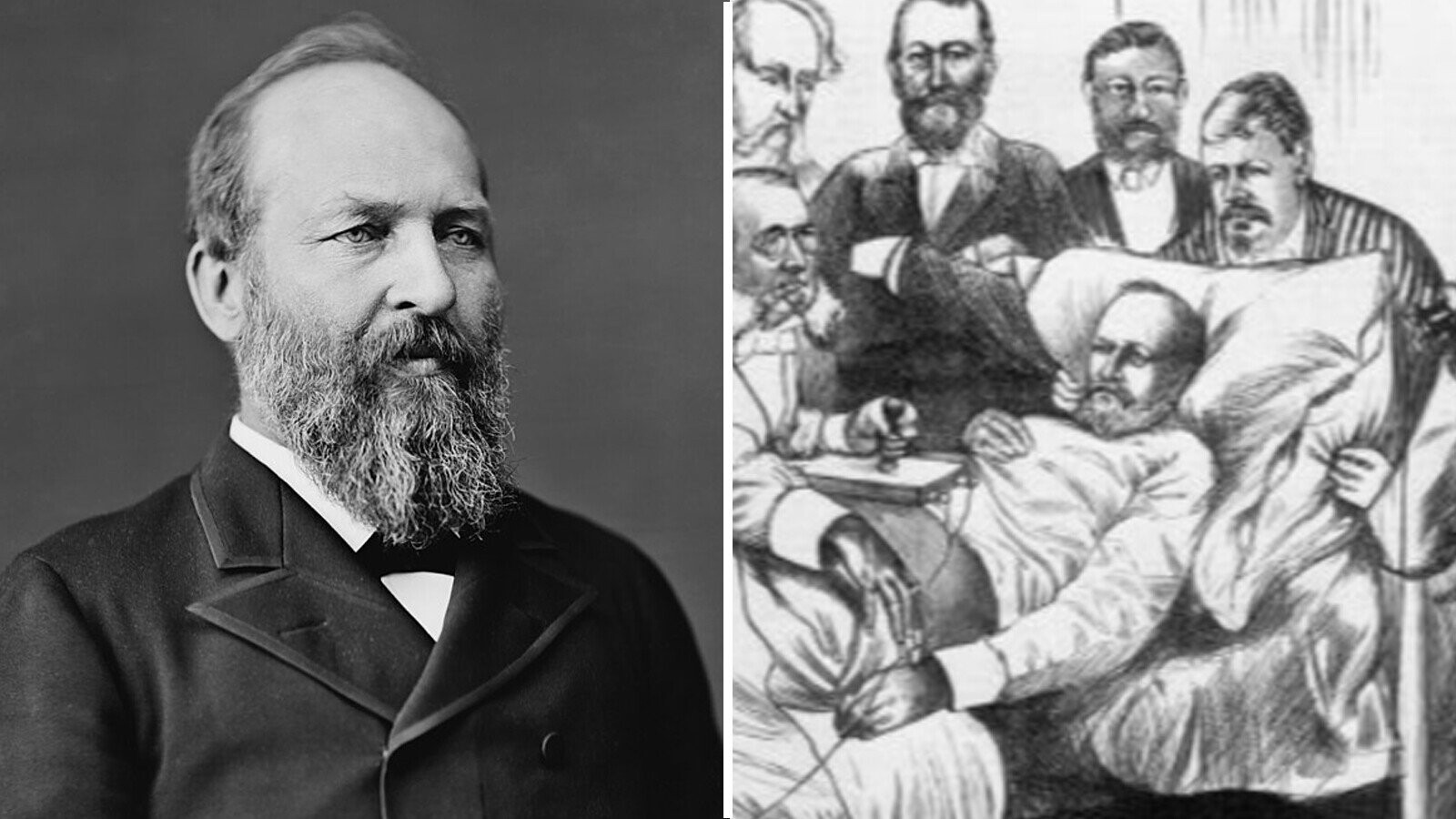
Perhaps one of the most flabbergasting cases of deep medical mistreatment comes from the 20th President of the United States, James Garfield. You may know James Garfield from bar trivia as the president that everyone forgets was assassinated. Though, the more you learn about the attempts to save him, the more it becomes apparent that the assassin's attempt may have only come to fruition when doctors tried to fix it. In fact, even though he’s listed as assassinated, historians are in pretty solid agreement that his actual cause of death was massive infection from stuff like having an entire team of doctors poking around inside his body for a whole summer without ever popping a glove on. Even more hilariously, the assassin himself argued the same thing at his trial, saying “the doctors killed Garfield, I just shot him.”

Garfield was left with a single bullet wound and zero damaged vital organs. With that, he was turned over to an era of medical professionals that would probably kill most goldfish while trying to change their tank water.
If you want further proof of how little damage the actual gunshot did, Garfield would live for another 2 MONTHS after the injury, even with doctors treating his wound like a sock puppet.
You see, the doctors were concerned that Garfield’s intestines might have been punctured by the bullet, and as such, all but forbade him from eating. Which feels like the closest to common sense we’ve gotten throughout this whole escapade. Unfortunately, as we said, he lived for 2 months, which you can’t do without sustenance. Understanding this, the doctors put their ill-informed heads together and prescribed, and I hate this as much as you do, “rectal feeding.” It’s exactly what you think it is. They shoved food up his ***. To be clear, as well, I do mean food. We’re not talking about suppositories, or any sort of medical concoction. We are talking about egg yolks, beef bouillon, milk, and, yes, bourbon. These guys were piping alcoholic versions of Rocky Balboa’s breakfast straight up Garfield’s exit.
 

Hats off to this company. Told by the feds that they couldn't offer 10% off groceries to SNAP recipients, they extended the offer to all shoppers, who can either ask for it or not, depending on their needs.

The McGintys, who own the McMinnville Grocery Outlet, tried to offer a 10% discount to all SNAP recipients whose food-assistance money had been frozen. But when the feds told them no, they came up with a go-around: Extending the offer to all customers. “Now there’s a catch to it, and I need your help as a community,” Mike McGinty announced in an Oct. 31 video posted to Facebook. “If you do not need a discount, please do not ask for it.” But if you do, “Take it. Ask for it.”
Six days into the offer, McGinty told The Oregonian/OregonLive Thursday that the honor system appears to be working. More than 200 customers have used the discount so far — with the overwhelming majority, he suspects, SNAP recipients or people who are otherwise struggling financially.
 

“Has the ocean been sprayed for sharks?”
“Does the water go all the way around the island?”
“Do I need to know how to swim in order to snorkel?”
“Don’t be ridiculous! They wouldn’t put wild animals inside a national park."
“How many birds does a giraffe eat in a day?”
“At what age does a rhino turn into a hippo?”
“Who paints the aspens?”
“You’ve gone to so much trouble lighting the trees for Christmas.” --- said by someone seeing lightning bugs
“Is that island always there?”
 
A seal fleeing a pod of orcas jumped into a photographer's boat, and wisely stayed there despite 15 minutes of orcas trying to knock it out of the boat.


Charvet Drucker was on a rented 20-foot (6-meter) boat near her home on an island in the Salish Sea about 40 miles northwest of Seattle when she spotted a pod of at least eight killer whales, also known as orcas. The orcas’ coordinated movements and tail slaps suggested they were hunting. Drucker used the zoom lens on her camera to spot a harbor seal that was trying to flee from the pod. One of her shots showed the seal flying through the air above the scrum of orcas frothing the water, and she assumed she was witnessing the seal’s last moments alive. But as the orcas got closer to the boat, Drucker and her group realized the pod was still chasing the seal. In line with wildlife boating regulations, they had cut the engine to prevent any injury to the whales. The seal clambered out of the water and onto a swimming platform at the stern of the boat near the motor — claiming it as a life raft of sorts.
The orcas did not give up immediately, but instead appeared to team up to rock the boat and make the seal fall off. Drucker’s cellphone video shows the orcas lining up and moving in on the boat with staggered dives to create waves. The “wave-washing” technique has been documented since by scientists since at least the 1980s, according to the National Oceanic and Atmospheric Administration. The seal on Drucker’s boat slid off at least once, but managed to climb back on, and the orcas swam away after about 15 minutes.
with video
 
Wolves on and around Vancouver island have learned to use a tool of sorts. First instance of wolves using tools.


The traps, set up near Bella Bella, on B.C.'s central coast, were being used to control the invasive European green crab, and some were in deeper water submerged at all times, leading researchers to believe the damage that started in 2023 was caused by marine mammals. "We were going, 'Well, what the heck is doing this, right?'" said Artelle, a researcher with State University of New York's College of Environmental Science and Forestry, who was involved with the Heiltsuk Nation's efforts to respond to the green crabs. "It can't be a bear, a wolf. They're not going to dive down to get to the trap. So, what is getting the traps?"

Their assumptions were wrong. Within a day of the cameras being set up in May last year, researchers captured footage of a sea wolf emerging from the water with a buoy hanging from its mouth. The footage then showed the wolf dropping the buoy on the beach, picking up the exposed line, and pulling it until the crab trap emerged from the water.
with video
 

In April, Johnson saw that bricks around his home’s crawl space were torn out, and the wooden frame covering the crawl space was broken. After spotting more damage in June, he installed a camera. Last week, the 63-year-old finally identified the culprit: a bear had moved in and made a home underneath Johnson’s abode. “I don’t know how it got under there. It must be a contortionist,” he told The Times. “This thing is so big its stomach touches the ground.”

According to camera footage obtained by Johnson, the bear appears to have a yellow tag on its left ear. The bear, whose sex is unknown, has brown fur but the type of species is yet to be confirmed by authorities. In one video, the bear seems to struggle to get out of the tight space, using its paws to move its body out. “It’s uncomfortable walking into the kitchen thinking there’s a bear over there,” Johnson said. “I don’t think he’s any harm to me as long as I don’t go down the side of the house while he’s coming out.” The bear, however, startled Johnson when it roared at him Friday morning.
 

In April, Johnson saw that bricks around his home’s crawl space were torn out, and the wooden frame covering the crawl space was broken. After spotting more damage in June, he installed a camera. Last week, the 63-year-old finally identified the culprit: a bear had moved in and made a home underneath Johnson’s abode. “I don’t know how it got under there. It must be a contortionist,” he told The Times. “This thing is so big its stomach touches the ground.”

According to camera footage obtained by Johnson, the bear appears to have a yellow tag on its left ear. The bear, whose sex is unknown, has brown fur but the type of species is yet to be confirmed by authorities. In one video, the bear seems to struggle to get out of the tight space, using its paws to move its body out. “It’s uncomfortable walking into the kitchen thinking there’s a bear over there,” Johnson said. “I don’t think he’s any harm to me as long as I don’t go down the side of the house while he’s coming out.” The bear, however, startled Johnson when it roared at him Friday morning.
Californian walks a mile in an Alaskan's shoes.
 
Sick ants invite self-sacrifice to save colony, scientists discover: "Hey, come and kill me"

Sick young ants release a smell to tell worker ants to destroy them to protect the colony from infection, scientists said Tuesday, adding that queens do not seem to commit this act of self-sacrifice. Many animals conceal illness for social reasons. For example, sick humans are known to risk infecting others so they can still go to the office — or the pub. Ant colonies, however, act as one "super-organism" which works to ensure the survival of all, similar to how infected cells in our bodies send out a "find-me and eat-me" signal, according to an Austria-led team of scientists.

Ant nests are a "perfect place for a disease outbreak to occur because there are thousands of ants crawling over each other," Erika Dawson, a behavioral ecologist at the Institute of Science and Technology Austria and lead author of a new study titled "Altruistic disease signaling in ant colonies," told AFP. When adult worker ants get an illness that could spread through the colony, they leave the nest to die alone. Young ants, known as pupae, in contrast are still trapped inside a cocoon, making this kind of social distancing impossible. Scientists had already figured out that when these pupae are terminally ill, there is a chemical change that produces a particular smell. Adult worker ants then gather around, remove the cocoon, "bite holes in the pupae and insert poison," Dawson said. The poison acts as a disinfectant, which kills both the colony-threatening pathogen and the pupae.

 

On Saturday morning, an employee at the Ashland, Virginia-area liquor store found the trash panda passed out on the bathroom floor at the end of his drunken escapade.

“I personally like raccoons,” said Samantha Martin, an officer who works at the local animal control. “They are funny little critters. He fell through one of the ceiling tiles and went on a full-blown rampage, drinking everything.”
 

Claude, the beloved albino alligator who called the California Academy of Sciences home for the better part of two decades, has died at age 30. The San Francisco museum announced his death on Tuesday and said that the reptile had in recent weeks received treatment for a “suspected infection”. Claude, with his unusual white scales, had become a sort of mascot for the academy and the city. He was the subject of a children’s book and regularly received fan mail and gifts from around the world, the museum said.

“He brought joy to millions of people at the museum and across the world, his quiet charisma captivating the hearts of fans of all ages,” a statement from the museum read. “Claude showed us the power of ambassador animals to connect people to nature and stoke curiosity to learn more about the world around us.” In September, the museum celebrated his 30th birthday with a month of festivities in honor of the “iconic swamp king”.
RIP Claude.
 

One morning in 1960, amid the euphoria of Barbie’s first year, Mattel co-founders Ruth and Elliot Handler held a kind of debate. They brought in the toy marketing team. And the ad guys, Cy Schneider and his cohort from Carson/Roberts, thought they were there mostly to listen. The real presence was the exuberant doctor with a shrinking halo of red hair. Ernest Dichter, the self-styled Freudian marketer who claimed to plumb the psyches of the American consumer, was visiting from New York. On this particular day, as Schneider later remembered, the Handlers called him in to discuss a controversy that had been tearing the office apart, dividing old allies and forging unlikely alliances, and which so far seemed to have little prayer for resolution. The hope was that the Freud of Madison Avenue could bring some much-needed clarity to the question of Ken’s penis.
. The research and development department found Ruth’s suggestion ludicrous. In fairness, maybe it was. Barbie’s breasts had been plenty controversial, and she didn’t even have nipples. The doll’s claims to anatomical realism ended with the plastic strip between her legs. For Ken to hit the scene with anything more articulated was an invitation for outrage. The Ken question became so controversial it sucked in staff from across the company—sculptors, costumers, market researchers, advertisers, high-ranking executives. Ruth found an ally in fashion designer Charlotte Johnson; both felt strongly about the doll’s penis, though they could barely speak of it. Ruth called it a “bulge.” Johnson called it a “bump.” When the sculptors pulled up their first mold, all but identical to Barbie below the waist, the women voted it down. The designers came back with a Three Bears assortment of possible Ken crotches. “One was—you couldn’t even see it,” Johnson recalled. The second was “a little bit rounded,” and the third “really was.” She and Ruth picked the Goldilocks option, the middle one “that was nice-looking.”
The men were “terribly embarrassed.” The vice presidents, whom Ruth called the “guys who made the decisions in all these things,” wanted a “permanent swimsuit”—painted on, to avoid the suggestion of something below. But paint, Johnson later told historian M.G. Lord, would merely whitewash the problem: “Do you know what every little girl in this country is going to do?” she asked. “They are going to sit there and scratch that paint off to see what’s under it.”
 

On Saturday morning, an employee at the Ashland, Virginia-area liquor store found the trash panda passed out on the bathroom floor at the end of his drunken escapade.

“I personally like raccoons,” said Samantha Martin, an officer who works at the local animal control. “They are funny little critters. He fell through one of the ceiling tiles and went on a full-blown rampage, drinking everything.”
was coming here to post this story.... the photo is fantastic
 

On Saturday morning, an employee at the Ashland, Virginia-area liquor store found the trash panda passed out on the bathroom floor at the end of his drunken escapade.

“I personally like raccoons,” said Samantha Martin, an officer who works at the local animal control. “They are funny little critters. He fell through one of the ceiling tiles and went on a full-blown rampage, drinking everything.”
was coming here to post this story.... the photo is fantastic
Drinking that bottom shelf stuff is going to give that raccoon a hell of a hangover.
 

One morning in 1960, amid the euphoria of Barbie’s first year, Mattel co-founders Ruth and Elliot Handler held a kind of debate. They brought in the toy marketing team. And the ad guys, Cy Schneider and his cohort from Carson/Roberts, thought they were there mostly to listen. The real presence was the exuberant doctor with a shrinking halo of red hair. Ernest Dichter, the self-styled Freudian marketer who claimed to plumb the psyches of the American consumer, was visiting from New York. On this particular day, as Schneider later remembered, the Handlers called him in to discuss a controversy that had been tearing the office apart, dividing old allies and forging unlikely alliances, and which so far seemed to have little prayer for resolution. The hope was that the Freud of Madison Avenue could bring some much-needed clarity to the question of Ken’s penis.
. The research and development department found Ruth’s suggestion ludicrous. In fairness, maybe it was. Barbie’s breasts had been plenty controversial, and she didn’t even have nipples. The doll’s claims to anatomical realism ended with the plastic strip between her legs. For Ken to hit the scene with anything more articulated was an invitation for outrage. The Ken question became so controversial it sucked in staff from across the company—sculptors, costumers, market researchers, advertisers, high-ranking executives. Ruth found an ally in fashion designer Charlotte Johnson; both felt strongly about the doll’s penis, though they could barely speak of it. Ruth called it a “bulge.” Johnson called it a “bump.” When the sculptors pulled up their first mold, all but identical to Barbie below the waist, the women voted it down. The designers came back with a Three Bears assortment of possible Ken crotches. “One was—you couldn’t even see it,” Johnson recalled. The second was “a little bit rounded,” and the third “really was.” She and Ruth picked the Goldilocks option, the middle one “that was nice-looking.”
The men were “terribly embarrassed.” The vice presidents, whom Ruth called the “guys who made the decisions in all these things,” wanted a “permanent swimsuit”—painted on, to avoid the suggestion of something below. But paint, Johnson later told historian M.G. Lord, would merely whitewash the problem: “Do you know what every little girl in this country is going to do?” she asked. “They are going to sit there and scratch that paint off to see what’s under it.”
My favorite line is probably "The hope was that the Freud of Madison Avenue could bring some much-needed clarity to the question of Ken’s penis."
 
A seal walks into a bar.................


Then it was a brief wait for conservation rangers to arrive. It turned out they were already tracking the wandering seal. “It was their fourth call for the day,” Evans said. “They had been driving around this new-build subdivision trying to find this baby seal.”

New Zealand’s conservation agency confirmed it received “numerous” reports from the public about a seal spotted in Richmond on Sunday before the fugitive turned up at the pub. Bar staff “did a great job keeping the seal safe” until rangers arrived, said Department of Conservation spokesperson Helen Otley. The seal was released on nearby Rabbit Island, considered a safe location because of its dog-free status, Otley said. It’s not unusual for curious young seals to show up in unexpected places at this time of year, she added, as they follow rivers and streams up to 15 km (9 miles) inland. “They can turn up in unusual places, like this pub, but this is normal exploratory behavior,” Otley said.
There's my excuse.
 

On Saturday morning, an employee at the Ashland, Virginia-area liquor store found the trash panda passed out on the bathroom floor at the end of his drunken escapade.

“I personally like raccoons,” said Samantha Martin, an officer who works at the local animal control. “They are funny little critters. He fell through one of the ceiling tiles and went on a full-blown rampage, drinking everything.”
The way he's splooted out on the floor just kills me.
 
A seal walks into a bar.................


Then it was a brief wait for conservation rangers to arrive. It turned out they were already tracking the wandering seal. “It was their fourth call for the day,” Evans said. “They had been driving around this new-build subdivision trying to find this baby seal.”

New Zealand’s conservation agency confirmed it received “numerous” reports from the public about a seal spotted in Richmond on Sunday before the fugitive turned up at the pub. Bar staff “did a great job keeping the seal safe” until rangers arrived, said Department of Conservation spokesperson Helen Otley. The seal was released on nearby Rabbit Island, considered a safe location because of its dog-free status, Otley said. It’s not unusual for curious young seals to show up in unexpected places at this time of year, she added, as they follow rivers and streams up to 15 km (9 miles) inland. “They can turn up in unusual places, like this pub, but this is normal exploratory behavior,” Otley said.
There's my excuse.
Oh wow, what a cute tiny guy.
 
A seal walks into a bar.................


Then it was a brief wait for conservation rangers to arrive. It turned out they were already tracking the wandering seal. “It was their fourth call for the day,” Evans said. “They had been driving around this new-build subdivision trying to find this baby seal.”

New Zealand’s conservation agency confirmed it received “numerous” reports from the public about a seal spotted in Richmond on Sunday before the fugitive turned up at the pub. Bar staff “did a great job keeping the seal safe” until rangers arrived, said Department of Conservation spokesperson Helen Otley. The seal was released on nearby Rabbit Island, considered a safe __cpLocation because of its dog-free status, Otley said. It’s not unusual for curious young seals to show up in unexpected places at this time of year, she added, as they follow rivers and streams up to 15 km (9 miles) inland. “They can turn up in unusual places, like this pub, but this is normal exploratory behavior,” Otley said.
There's my excuse.
Oh wow, what a cute tiny guy.
I'd like more animals in bars. Best I've seen so far is at a dive bar we used to go to on the Eastern Shore where lizards would come in after dark, and in years of low fresh water flow dolphins would swim right by the seawall.
 

A 9-year-old boy in Iowa is being rewarded for taking action that helped the fire department save lives.

City and state crews have been clearing snow from Fort Dodge’s sidewalks and roads since last weekend’s winter weather. With such heavy snowfall, the city put out a call for families and their kids to clear another essential part of city infrastructure: fire hydrants. And that’s where Colton Holmes came to the rescue. “I want to help people out. And be a hero,” Colton said.

Amidst his time in the snow, Colton answered the city’s call, clearing out the fire hydrant near his house to make it easier for firefighters to access, a nice gesture that turned into a life-saving action just a day later. “Given the situation, the heavy snowfall recently, time was of the essence,” Lt. Devon Schuster, Fort Dodge paramedic, said. The Fort Dodge Fire Department used the fire hydrant to help them put out a structure fire that ended up displacing several people and pets. “Fire actually doubles in size every minute. So, the fact that we didn’t have to dig out a fire hydrant saved us an immense amount of time,” Schuster said.
 
This is incredible -- a plane landing on a car while trying to land on a busy highway, filmed by the car behind it.


They had dropped off Peter’s friend at UCF, then got onto 95 off State Road 520. “We just saw this plane drop out of the sky,” Jim Coffey told Spectrum News.
They were seconds away from the plane colliding with their vehicle. Instead, it flew over and crashed into another car. “I noticed it was there, because there’s a plane right there, I was like, 'Hopefully it lands to the side,'" Peter Coffey said. "I thought it might maybe aim around and not hit the car, but bam, the wheel just smacked right dab on the back of the car."
 
How monogamous are humans? A study ranks us between meerkats and beavers.
archived link: https://archive.ph/BXjBJ
Though his results showed considerable variety among human societies, they lend weight overall to the theory that monogamous mating is a “core human characteristic” that has helped us establish the intricate and vast co-operative groups that are “crucial to our success as a species,” Dyble wrote.

The study used preexisting data from 103 human societies and 34 nonhuman mammal species to produce a “monogamy league table” comparing the percentage of siblings that were born to the same parents. On top was the California deermouse — a tiny creature that forms lifelong pair bonds — which had a 100 percent rate of full siblings. That was followed by the African wild dog (85 percent) and the Damaraland mole rat (79.5 percent). Humans ranked seventh among those analyzed with 66 percent full siblings, making us slightly less monogamous than the Eurasian beaver but more so than the Lar gibbon, meerkat and red fox. Least monogamous was the soay sheep, a breed that lives in Scotland, which had just 0.6 percent full siblings, while human relatives such as the mountain gorilla and common chimpanzee also lived in much less monogamous societies.
There's a table of different species and how monogamous they are, and I'd just like to say that I'm surprised that chipmunks are such hound dogs and harlots.
 
How monogamous are humans? A study ranks us between meerkats and beavers.
archived link: https://archive.ph/BXjBJ
Though his results showed considerable variety among human societies, they lend weight overall to the theory that monogamous mating is a “core human characteristic” that has helped us establish the intricate and vast co-operative groups that are “crucial to our success as a species,” Dyble wrote.

The study used preexisting data from 103 human societies and 34 nonhuman mammal species to produce a “monogamy league table” comparing the percentage of siblings that were born to the same parents. On top was the California deermouse — a tiny creature that forms lifelong pair bonds — which had a 100 percent rate of full siblings. That was followed by the African wild dog (85 percent) and the Damaraland mole rat (79.5 percent). Humans ranked seventh among those analyzed with 66 percent full siblings, making us slightly less monogamous than the Eurasian beaver but more so than the Lar gibbon, meerkat and red fox. Least monogamous was the soay sheep, a breed that lives in Scotland, which had just 0.6 percent full siblings, while human relatives such as the mountain gorilla and common chimpanzee also lived in much less monogamous societies.
There's a table of different species and how monogamous they are, and I'd just like to say that I'm surprised that chipmunks are such hound dogs and harlots.
And that sheep are the worst indicates that all those sheep jokes are probably accurate.
 
While removing a woman's 22-pound tumor, doctors discovered an 8-pound baby that had developed entirely outside the woman's uterus. The baby was delivered and has few health problems.


"It was profound to see this full-term baby sitting behind a very large ovarian tumor, not in the uterus," said Dr. Michael Manuel, who works at Providence Cedars-Sinai Tarzana Medical Center. "In my entire career, I’ve never even heard of one making it this far into the pregnancy."
"We had to figure out how to deliver the baby with a placenta and its blood vessels attached in the abdomen, remove the very large ovarian mass and do everything we could to save mom and this child," he continued.
 
While removing a woman's 22-pound tumor, doctors discovered an 8-pound baby that had developed entirely outside the woman's uterus. The baby was delivered and has few health problems.


"It was profound to see this full-term baby sitting behind a very large ovarian tumor, not in the uterus," said Dr. Michael Manuel, who works at Providence Cedars-Sinai Tarzana Medical Center. "In my entire career, I’ve never even heard of one making it this far into the pregnancy."
"We had to figure out how to deliver the baby with a placenta and its blood vessels attached in the abdomen, remove the very large ovarian mass and do everything we could to save mom and this child," he continued.
Wow
 

Users who are viewing this thread

Back
Top